Dear Microsoft Word,

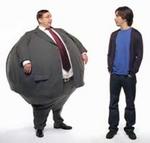
mac-vs-pc.JPGI thought I understood what was going on.

I mean, it seemed fairly reasonable. I’m writing this new story, and I’m using a lot of footnotes — a LOT of footnotes — and I’ve never used them before, and for all I know that cross-referencing and so forth might require a lot of behind-the-scenes data-tracking 1 to handle — the fact that my 35+ page document was already one and a half megabytes in size… around 1750k… well, it surprised me, I’ll admit, but I assumed it was mostly my fault for using all those footnotes.
But something happened yesterday, Microsoft Word. I was using a different laptop than normal, one on which I had tried to put my copy of Office 7. But it didn’t work — you decided that I’d hit my limit on the number of home computers on which I could install the software THAT I HAVE PURCHASED, so not only is the new Office not working, but the install wiped out the old Office 2000 install that HAD been on there.
So, out of desperation, I grabbed a copy of Open Office 3 and installed it. It was quick (the entire software suite is the same size as just the Word 7 installation), it was easy, and it was free, but even more importantly it actually let me install it on as many computers as I liked. I’ll admit that I was nervous that if I opened my super-hyper-complicated-footnotey story in Open Office, that I’d lose formatting or the footnotes would all become endnotes or the world would drop to a Blue Screen, or something.
But none of that happened.
I shut off Open Office’s inexplicable word-completion option, set hot keys for the two main special functions I needed (“Insert Footnote Here” and “Word Count”), toggled off two settings in the screen appearance, and off I went.
When I was done, I saved it and emailed myself a copy.
During the save, Open Office warned me that I might lose some OpenOffice formatting options if I saved to the Microsoft Word format — and that the size of the file itself might be affected. I sighed and confirmed the save, knowing that if the venerable Microsoft Word couldn’t squeeze my story down under a meg, the open-source, free Open Office was probably going to hand me a file that was barely small enough to be attached to an email.
The save completed, I attached the file to my email, and checked the file size.
103k.
Less than 1/12th of the size it had been before.
I reopened the file in Open Office, in a bit of a panic. All my precious words were there. 1
I opened it on another machine using Microsoft Word… and the formatting was perfect.
In short, nothing was wrong; my story’s file was just much, much much smaller.
I’m sorry to tell you this way, Microsoft Word, but we need to break up.

  • You’re using too many of my resources.
  • Your new Version 7 outfit is distracting. And not in a good way.
  • You won’t go all the places I need you to go.
  • Finally… and I hate sounding so superficial, but you’re just… you’re getting too big. And you make all my friends fat, too.

Please don’t call me; it will be hard enough seeing you every day at work.
Best regards,
Doyce


1 – By the way: “behind-the-scenes” is three words, and “data-tracking” is two. According to you, those five words only count as two; it seems like a small thing, but the way I write, believe me when I say it adds up. I like working with someone who gives me credit for what I do; you’re just not there for me when I hit Ctrl-Shift-G.

Humorless excerpts

I’m currently working on two stories, one of which is called Humorless; sort of a horror comedy1 about the intra-dimensional invasion of an otherwise harmless clockpunk-fantasy world. The cast currently includes:

  • Grayson Dawes, antisocial alchemist and captain of the airship Humorless
  • Hugh, his friend
  • Emma Elsa Eliza Cassini, math-wiz
  • Her suspiciously competent horse
  • Grand Duke Jonathan Jacob Jorgen Cassini
  • Simon Sayers, the Duke’s youngest and most gifted adviser
  • Rebecca Vaughn, senior engineer aboard the Humorless
  • Thaddeus Vaughn, one of the most gifted spies within the League of Professionals; bit absentminded, though

As the title of the story clearly conveys, this is meant to be be somewhat funny2, and I thought I’d share a few bits I like.
The Humorless:

The bag of the dirigible was oblong from starboard to port as well as stem to stern – like a fat cigar that had been stepped on – and was woven of asbestos and glass silk. The whole of the thing was encrusted with sensor arrays, weapons, armor plating, landing platforms for smaller craft, several clockwork mechanisms of undetermined and likely illegal purpose, and one transplanted roof garden. The overall effect, when viewed from the city below, was that one was looking up from the bottom of a pool at a fat woman floating on the surface, wearing an ugly dress and too much jewelry.

Bit more on the zeppelin:

No one in Bodea-Lotnikk looked particularly surprised that their city was talking; it wasn’t a terribly common occurrence, but it happened often enough that most people knew what to expect when it did.
A talking zeppelin, though; that was something else entirely. That was something worth paying attention to.

A bit on the city below:

The irregular, winding, and most of all narrow streets of Lotnikk reminded Thaddeus Vaughn (not uncomfortably) of the moment of birth. That was always the first impression that came to him – claustrophobic, yet disconcertingly Oedipal.

Thaddeus encounters the worst that the world has to offer — professional adventurers:

It goes (almost) without saying that the man had companions. Professional adventurer types almost never travel in packs of less than four and, if separated, have a preternatural habit of ‘accidentally’ stumbling upon their lone companions just before or just after said companion is about to attract some kind of potentially profitable violence to their person.

There’s a few other bits that I’ve emailed out to the defenseless folks on in my contacts list, but these are what’s caught my eye today. Cheers.


  1. Too many re-viewings of movies like Army of Darkness, House, and Shawn of the Dead, I think. There’s been (so far) only one or two scenes that went in the way of the Spooky, but I think they came off fairly well. My goal is to try to convey (through showing) the kind horror-via-non-euclidean-wossnames that Lovecraft enjoyed telling about.
  2. Being funny, as others have already said many times, is exhausting. I don’t really know how some authors manage it.3
  3. There’s also quite a lot of footnotes.

Down the same road, sideways

Updates.jpgI’m writing a novel this month , and once again I’m surprised by the (recurring) fact that the process is different than anything that’s gone before. I keep hoping that eventually my writing process will develop some kind of pattern, but it hasn’t happened yet.

Unlike previous efforts, however, I’m not entirely comfortable with this one. Here’s a few ways this year’s effort is deviating.
1. Due to the technical limitations of the software I prefer to use vs. the story I’m writing, I am forced to use Microsoft Word for the first-draft writing. This is entirely my fault, because I’m including some typographic elements that more plain-jane programs don’t (and shouldn’t) support.
2. I had two pretty clear ideas for a story, and had to pick one, because they aren’t remotely similar. Hell, I’m not even sure they’re in the same genre. Normally, I have about half of one idea. I’m actually writing the story I came up with more recently, and not at all the one I’d planned on.
3. I’m reading other books while I’m writing. Not at the same moment, but interwoven with the writing. I do not usually do that, simply because I’m a bit compulsive about wanting to finish a story once I start it, and that gets in the way of the writing. Also, I’m reading something that’s much more in tune with the story I’m NOT writing (Stephen King), than something that is (Terry Pratchett or maybe To Say Nothing of the Dog, but with airships and flamethrowers).
4. I’m not at all sure I picked the right story to write. I tend to write stories set in places I could live in (with a twist, but still) and not in made-up fantasy worlds. (That’s not entirely fair, because I wrote Spindle, and that’s a made up fantasy world, but by the time I was done with it, it didn’t feel like one, and the caricatures felt like regular people, so maybe I’m being a over-dramatic artist type and I should just cut it out.) My main reason for thinking this is that almost every single word in this story has come hard. I’m not saying that that never happens — everyone has days where you have to just pound the words out of the keyboard one painful syllable at the time — but I’ve never had it happen this close to the beginning of the story.

It’s close enough to the start that I still fiddle with the idea of switching to the other thing that (I think) would be easier to write, if not as much fun. I don’t think I will, mind you — it’s just one of those thing I mull1 over consciously, while my lizard brain works in the background to unearth the next part of the story for me — but it’s odd all the same, even to be pondering switching horses once the race starts.
I guess I’ll be interested to see where things are at ten thousand words.
________________
1 – De opines that I’m not allowed to say I muse, so instead I mull.

Borromean rings – Wikipedia musing

Borromean rings are a configuration of three rings arranged so that no two rings are interlocked but all three together are.
Let me put that another way. If you look at any two of the three rings, and were able to take the third ring out of the equation, the first two rings would have nothing linking them; nothing in common. But once that third ring is introduced, all three of the rings are basically inextricable.
I find the concept fascinating, especially as I (immediately) tried to find a parallel example within human relationships, especially considering this key fact: the circles (people) comprising a Borromean Ring cannot be perfect — in order to actually work, they need to be imperfect — they have to be, in a word “eccentric” to greater or lesser degrees.

Historically, people have used such rings to symbolize strength in unity (A and B would fly apart, were it not for C), and that’s interesting… but equally interesting 1 is the interpretation that A and B could fly apart, if it weren’t for C.

I still can’t quite get my head around a ‘real’ example. To a degree, it’s easy: “Divorced Man A and Divorced Woman B would have no connection were it not for Shared Child C”; okay, yes, that works. Except that in order to be a true social Borromean Ring, the following would also have to be true: “Divorced Man A and Shared Child C would have no connection were it not for Divorced Woman B” and vice-versa.

I’m not saying such an example doesn’t exist — where, in a group of three people, any of the two would fly apart in the absence of the third — I just can’t seem to think of one.

Yet.

The last part

IMG_2142.JPGThree days after we got home from our trip to South Dakota, I heard my phone chime to announce an incoming text. It was about three in the morning, and while I have a few calendar reminders that routinely ping my phone, there’s absolutely no reason for that to happen at that time of night.

In short, if I was getting a text at that time, someone was sending me something personally, which means they were also up.

I pushed out of bed, pulled clothes on, and somehow found my phone. It was Mom.

On our way to town grandpa failing rapidly.

I shot a text at my sister, who bounced one back inside of two minutes. She was up.

Right.

I sat in front of my computer, looking at the phone. I knew I wouldn’t sleep, so I flipped on one of my MMOs and ran around in the game while I waited for word that my grandfather had died.

The text came at a quarter to five, then the call. His breathing had simply gotten more and more shallow and then, finally, stopped.
I don’t remember what I did after the call. I imagine I must have kept puttering around at that game until Kaylee woke up about an hour later.

((Just at this moment, it occurred to me that I haven’t logged back into that game since that morning.))

I got her ready for school, headed to work, and waited for someone to tell me when the funeral was going to be.

No, I don’t mean I simply sat there, but in my memory, the day is monochrome, punctuated by moments of Turneresque color during which I was talking to one family member or another.

Smaller memorial on Friday. Funeral on Saturday. Burial at his old church, so far out in the country it’s five miles of gravel road to get there.

Right.

I made flight arrangements, using up most of my Frontier miles from two years of flying to see Kate. Kate would be staying in Denver, since her mom was coming into town, and of course Kaylee wasn’t coming either.

I’m not sure about the rest of the week.

Friday, 5am, I’m at the airport. Boarded, fly to Omaha, rental car to Sioux Falls, then a drive to the farm with Bonnie and Reggie and the kids, the backseat filled with the sounds of Spiderman 3 on DVD. I rode shotgun, reading Little Brother and sharing the best parts with my sister as she drove.

We stop at the farm, wash off the road dust, eat some supper, and get ready to go. I’m one of the few in a tie for the Friday evening memorial.

His hands are so cold.

They polished his wedding ring.

It doesn’t look like him. It doesn’t look like him at all. His mouth is too wide, like the Joker without face paint – christ it’s horrible. Mom’s found one place you can stand and look at him and it looks okay; where you can’t see his mouth. I stand there.

The flower arrangements behind the casket are roses, wheat stalks, and the tail feathers from ringneck pheasants. Perfect, really.

The ceremony started. Pastor speaks and asks anyone else who wants to do so.

My aunt gets up and talks about grandpa as a teacher.

My sister gets up and reads a poem, then pulls out a wicker basket filled with all the different types of candy he used to ‘hide’ in his candy drawer in the house, just at the right height for the grandkids. She passes it through the crowd.

She hands me the mic as she sits down, knowing I’ll say something. I always do, don’t I?

I try. I try my absolute damndest. It takes me six tries to get through the first sentence; to explain who I am and why I’m talking. Trying to talk, anyway. Dad isn’t looking at me, and it’s because I’m having as hard a time as he would have, which is why he had the good sense to stay sat down.

I talk about how he lived, filling up every day with stories. Laughing. Really living. That laugh of his, that chuckle. I think I repeated myself a lot.

I try to explain what he was to us, a grandfather only his 40s when I was born — another parent, another kid to play with. A friend.

My friend.


There’s some kind of snack service afterward. We stand in small circles and tell funny stories about my grandpa and any number of hunting adventures, mis- and otherwise.

When we get home, we pull out a huge set of dominoes and play Turkey Feet until we’re gasping for air between laughs. It helps.


Saturday morning, we have to be in town at 9:30. This is the general service. It’s more impersonal, I suppose. The casket is closed. The Masons do their thing after the pastor speaks, then we all exit outside.

He’s brought to the door of the church, and the pallbearers will carry him to the hearse. That’s us; the grandkids.

There are nine of us there, out of ten. We are grown now, with kids of our own, and we carry our grandfather, who taught us checkers and gave us rare coins on our birthdays, out of this life. The casket is heavy. We move through the crowd in a private bubble filled only with the sounds of shuffling feet a very quiet sobs. As a group, we pass a very dark milestone in our lives.


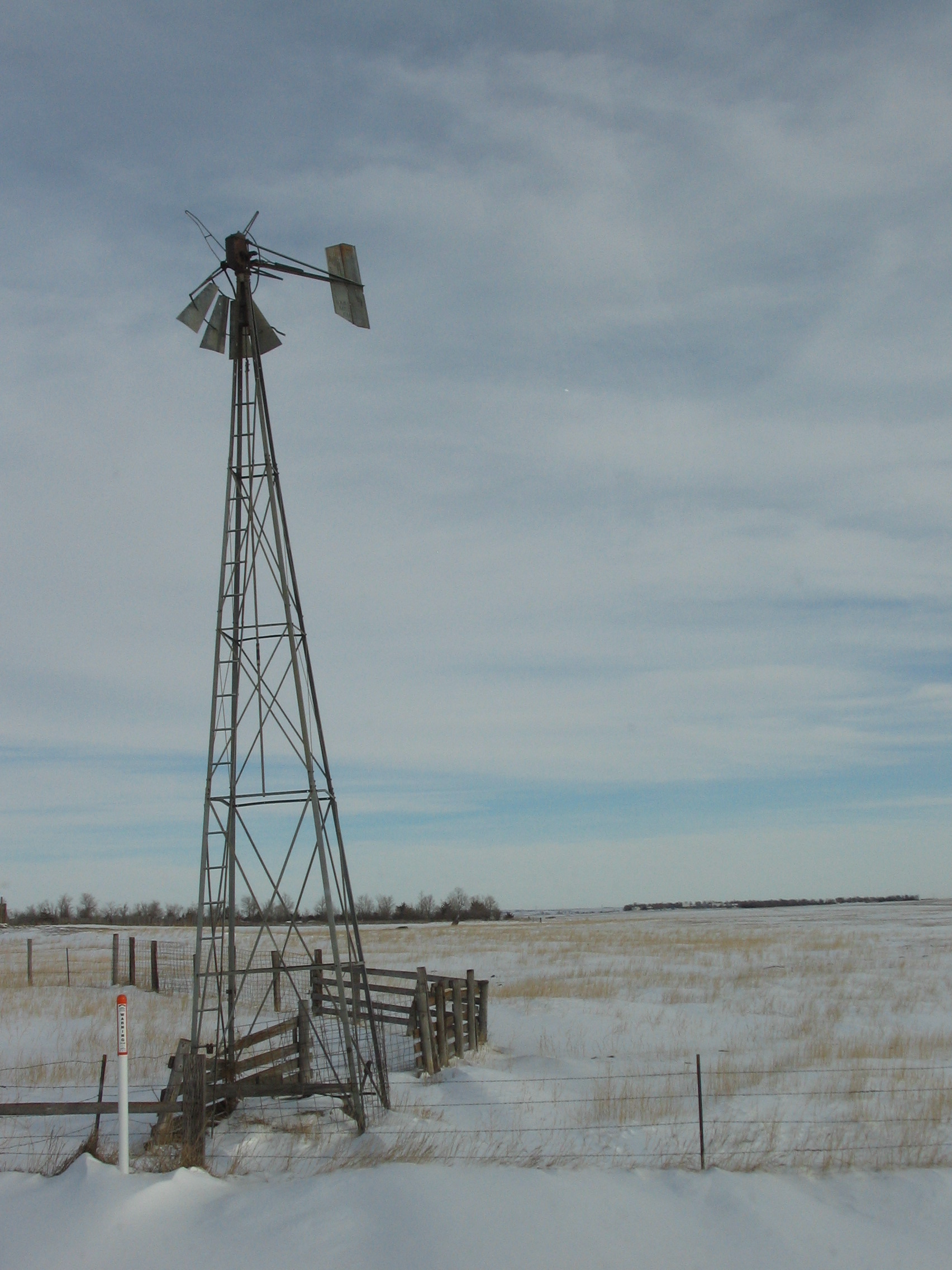
We drive to the cemetery on old county roads. The gravel, the barbed wire fences along the road, the summer-going-to-fall grass on rolling hills; all of it is home in a way that no other place will ever be.

We set the casket above the hole.

The honor guard comes to arms, turns to the treeline and fires their salute.

Gun smoke in an autumn grassland.

That was my granddad.

Summary

I’m going to tell you about my trip home to see my Granddad. I’m doing this so I remember. Apologies now for shifts in verb tense and the like — it’s not the most edited of posts, and that’s all right.


We left Thursday night, in Kate’s car, because it’s a little roomier. The plan was to drive to North Platte that night (four hours), stay at a hotel there, then finish the rest of the trip (another six hours) on Friday morning, and that’s basically what we did.

Kate had her iPod wired into the car’s stereo. The soundtrack for Dr. Horrible’s Sing-along Blog made an appearance during each leg of the trip, as did songs from our wedding reception and an extensive exploration of Johnny Cash hits that fit right into the grass-over-sand of Nebraska. Kaylee turns out to be an excellent highway traveler; almost perpetually self-entertaining and quite able to get a laugh out of her friends in the front seat.

I drove most of the way on Friday (for some reason I was in the mood to drive). We got into Miller about three in the afternoon, and drove straight to the nursing home. My folks spotted us as we pulled up and walked out to greet us while we were still unfolding from the car.

We talked a bit outside and I got the current updates on Grandpa’s health and Grandma’s state of mind. (She has Alzheimer’s, and it has progressed quite a bit since I’ve last seen her.)

I’m one of the first of the grandkids to make it into town (one of the reasons I set out so early), but I’m told nearly everyone will be here this weekend. Friday may be the first and best chance to talk to him on my own before interruptions and before he gets too tired.

He’s in pain, you see, and he hasn’t quite acclimated to the pain medication, so he dozes often and his speech is sluggish when he’s awake.

Dad also tells me to be ready for what he’ll say.


The facility is nice, and the staff is friendly and helpful and personable.

The commemorative plaques for those who have donated to the facility are permanently affixed to each door; the names of the room’s occupants are printed on sheets of paper, attached with scotch tape.


“What’s all this nonsense about you being sick?” I call out as I walk into the room.

He gestures at himself in his recliner. He’s thinner — mostly in his face and neck — and paler. “I’m done,” he says. He grips my hand as I sit down next to him. “I’m tired of this. I just want to be done.”

I don’t know what to say to that. He is tired, and he doesn’t want to go out in a recliner, unable to walk where he will and go where he likes. He is stoic and unapologetic for his desire to see an end to things, and if nothing else, I respect his courage and honesty about it. Right now, he’s not going to have a conversation with me — he’s trying to tell one more person in his family that he’s ready to go; that he’d speed things up if he could.

Not that there’s much more that could be done in that regard — he’s not on a respirator or any kind of machinery; the medicine given to him is for comfort, not longevity — the cancer is beyond any available treatment even if he were strong enough for it, which he is not. We are playing a waiting game; a balance of comfort and control – quality of life over quantity. This is not when he and I can talk; he is speaking, and everyone else in the room is trying to convince him that they hear what he’s saying.

I hold his hand, and introduce Kate and his great-granddaughter to him; Kaylee is shy on my lap, but says hello to him and holds his hand. Over a dozen great-grandchildren will see him this weekend (his great-great-grandson will play at his feet that evening), but he is charmed by this blue-eyed redhead, and tugs at her finger and gasps at her in mock surprise — a game I remember from thirty years ago — that I have played with her since she was old enough to giggle, not realizing who I’d learned it from.

I have trouble understanding him through the slur that the pain medication puts in his words, and we don’t talk much, but I spend time with him until some of the rest of the family arrives, then make room for another cousin to take my seat.

I walk down the hall to my grandmother’s room and visit her. She doesn’t remember me, but admits that I look quite a bit like my dad, which is ‘interesting’.


We go back to the farm with my folks, and spend the evening going through some of the boxes of photos my grandparents have accumulated in the last six decades or more. Photos of my grandfather as the third oldest in a family of nine(!). Another of my great-great-grandfather, as a child. Photos of a young man in an army uniform. Dad tells me about things he’s learned since my last visit about Grandpa’s service in World War Two; it’s a shared piece of detective work for him and I, as Grandpa will tell other visitors about his time in Europe, but rarely speaks of the time to his family; it seems he had command of 20 other men, and was a forward observer during the Allied offensive into eastern Czechoslovakia toward the end of the war. He used to tell us he never even saw the front lines; apparently that was because they were behind him.

I can’t sleep when the house gets quiet. Dad and I stay up til midnight; I ask questions about my grandfather’s more recent past. Dad answers anything he can and corrects incorrect assumptions I’d made here and there. I know him, perhaps, best of all the grandkids — I’ve spent the most time with him, at least — but it seems at times that I barely know a fraction.


By the time we’re back into town in the morning, most of the rest of the family is there. Grandpa refused the pain medication ‘patch’ when it was brought in by the staff in the night, and it isn’t until my dad talks to him and reassures him that it is not prolonging anything and just for his comfort that he lets them apply it. His schedule is now askew, and the first wave of medicine washes over him mid-morning instead of midnight; he’s very drowsy. Few real conversations take place between him and anyone, let alone me.

In fact, he barely seems to know who, specifically, is there.

Grandma doesn’t know me, or even if I look like family, but opines that I look strong enough to help her walk around the building a bit.

My sister arrives just after lunch, and the room’s visitors magically clear when she arrives — it’s either consideration for her first visit, or a welcome excuse for those in the room to take a break.

I follow her into the room after a minute and find her bent halfway over his chair, within inches of his ear — trust her to know exactly what she needed to do to get her words to him. She is just finishing when I walk in.

“– we spent all our childhood with you,” I hear. “We wouldn’t be the people we are, without you. I love you.”

She steps away, and another cousin walks in, and I walk with her out of the room. We hug.

“I’m so glad you could tell him that,” I say, thinking of everything I want to say to him and somehow can’t find the time or the words.

“No regrets,” she replies, repeating a conversation we had not more than a week ago, before we knew any of this was about to happen.

We take a break from the visits, and go to the bed and breakfast that the family has taken over a few blocks away. I spend several hours catching up with cousins I haven’t seen in years; over a decade in some cases — since I moved to Denver. I and one of the oldest of ‘my’ generation — beautiful and funny and (unbelievably) already a grandmother — spend a half-hour in the kitchen cutting up vegetables for a salad and talking about some of my stories and why I always seem to write about someone losing a loved one.

I decide to walk back over to the nursing home. My dad comes with me and we talk about time lines and what’s most likely with Grandpa’s prognosis. We are not pessimists, he and I, but I think it’s fair to say that we are realists.

I hope to talk to grandpa when I get there, but he’s asleep when I arrive and needs help from the nurses when he wakes up — I do my best to stay out of the way and let the professionals do their work (despite my aunt telling them from the doorway that I’ve had “Training” (a CNA for a year during college) and can help them).

Two hours go by, but having to move around the room with the nurses help has wiped him out and he is never fully awake in that time. I sit with him while the rest of the family stays down in the building’s day-room and catches up with one another — I’m not the only one who rarely makes it home. My sister walks in to find me sitting next to him, holding his hand and staring at the ceiling, tears tracking quietly down my cheeks. She tells me we’re getting out of the building, informs the family, and off we go.

Bonnie takes me to the city park, where Kate and Mom have brought a couple of the younger kids, including Kaylee.

(I am not writing enough about Kate and her part in this trip, during which she somehow kept me facing the right direction at all times and kept me from misplacing everything from my wallet to my keys to my daughter. She is a rock throughout this whole recounting.)

As Bonnie expected, I spend the better part of an hour clambering over the the ladders and slides and rings and fireman poles and slides with my daughter and get things back into perspective. She and Kate visit at the side of the park, watching me and the rest of the kids playing.


We are a mid-western family, and that means when someone is sick, the rest of us eat. It’s a logistical impossibility that we could have missed supper no matter how long we’d have stayed at the park. I visit a bit, and make the rounds of each cluster of relatives, then make my excuses and walk back to the nursing home to see Grandpa before it’s time for bed.

I wait while he dozes (the mis-timed medication in the morning has thrown the whole day off), and when he wakes up he’s agitated and needs the nurse. I step out while they work and visit my grandmother, who has also just woken from a nap.

She doesn’t know who I am – the boy she babysat for well over a decade – and doesn’t recognize my name when my aunt reminds her, but says “he looks pretty smart”.

Grandpa is in bed when I go back to his room, and the talk in the hallway is that he probably won’t be gotten back out of bed in the morning – moving him around is getting to be too much for him. He is fast asleep when I go in to see him, and only stirs a bit when I take his hand.

I try to tell him something – anything – while he’s still awake; one of the dozen things spinning around in my head.
I tell him we have to go back to Denver in the morning.

I leave the room defeated, and nod agreement when my aunt asks if I will stop in for one more visit in the morning before we go.


We are doing the whole trip back to Denver in one day, rather than the two it took to come out, so we try for an early start. Someone calls from town while we’re having breakfast and tells us that Grandpa was awake and alert in the morning and wanted out of bed; his slight fever from the day before is down and he’s feeling better. Good news.


We get into town by eight-thirty.

The room is mostly mine when I get there; everyone knows we’re heading back and they want to give me time to say goodbyes.

Grandma is there as well, sitting next to him, and he is dozing.

She looks over when I sit down, and pats his hand and says “Russel, it’s Doyce.” By her expression, it is the most natural thing in the world for her to recognize me; hardly worthy of comment.

He stirs and looks me over. I take his hand, and once again, there’s too much to say.

“We have to go back to Denver today.” Banal trivia. It makes me angry with myself.

He nods and squeezes my hand. “I know,” he murmurs.

I’m already breaking up a bit. I lean in, emulating my sister, who understands loss much better than I do. “I Wish I Could Stay.” I manage, and sag back into my chair.

We don’t say anything for a bit. I stopped to think of everything I need to say and it overwhelms me – mutes me.

But my granddad is the First Storyteller among a family of storytellers. I write, but he knows words. One more time – one last time – he helps me.

“It’s a good life,” he says, and squeezes my hand. I look up. “A good life,” he repeats. He inclines his head toward mine, as though he’s sharing a secret. “No bad parts.”

There is no way you can encapsulate what this man has done for you. It is a hundred million moments that spill over you at once — things he said, things he did, and things you only knew years later.

I stand up, and I lean in, and I tell him exactly what I’m feeling, and it is foolish and exactly right.

“I am so proud of you,” I tell him, and I kiss his forehead, and hug him as best as I can. “So very proud of you.”

And he chuckles, because it’s silly, isn’t it? But it’s true, and in the end it is the most important thing I have to say.

No regrets.


We have a long drive home, and we started later than I’d hoped. We take a longer route home, also, because Kate has yet to see the Black Hills during the day, and after years of summer vacations, I feel I know it better than most. We drive by Wall Drug, and take a picture of Crazy Horse, and watch some mountain sheep climb a rock wall along a winding road, and drive from Wyoming into Colorado as the sun sets.

Kaylee is a trooper even during this much longer drive, and the last hour of trip she decides she will sing for us — not Itsy Bitsy Spider or Twinkle Twinkle — but new songs that she makes up as she goes, integrating everything she knows in the world into brand new tunes that are, I say with only a hint of bias or irony, genius.

“A duck on a bike is very tough,” she sings, “and everyone’s a hero in their own way…” Who are we to argue?

It’s a good life.

No bad parts.