So, I think I like where I am with the blog and the blogging and such.
Yes, I’m still getting the feed from Adrift to sort itself out. (De, I couldn’t number them, but I could give them far less opaque titles – hope that helps.) Yes, there’s an awful lot of super-short via-Twitter posting going on. Yes, the newsfeed from the site is actually also picking up the gaming posts from my other blog. Sure. All that’s going on. Right now, what you’re getting from the site is a few longer screeds, in between which I pop out short little snippets of thought on random subjects, bits of story stuff that have nothing to do with anything else I’m talking about, and the occasional grand segue into a topic only I really care about.
Hmm.
Be honest, people: that’s pretty much how it is around me most of the time, right?
If the blog reflects that, then it’s close to doing what I want – much, much closer than it has been in the past. (Now if I only I could get the goddamned thing to accept posts from Flickr again.)
And you know what? I’m happy with everything that’s going on. Facebook and Twitter are giving me the community chatter I sometimes want (something that used to be a function of the blog comments section; now, not so much), and Adrift…
… I tell you, it’s just nice to be writing something just for the sake of writing it. It’s been awhile.
Feels good, all of it.
That’s all I had to say. Carry on.
An explanation of what’s going on with this Finnras/Adrift thing.
What, if I can ask, are you doing?
The basic idea is to tell a story via serialized flash fiction. Wow, that’s a lot of annoying pop-terminology in a fairly short sentence.
1. I’m posting a story, via twitter.
2. I will make one post a day, advancing the story (allegedly).
3. Each post will be no more than 140 characters in length, due to the way twitter works.
It’s a bit like writing one or two comic panels a day. It’s a bit like haiku. It’s an exercise in saying more with less, and trying to make the thing interesting each day, as well as overall.
It’s actually pretty fun.
I’m collecting the whole thing on a blog. If you want to view it that way, visit the website (Newsreader people can subscribe here.)
Alternately, you can twitter-follow @Finnras to read it in it’s raw, immediate form. There’s also an RSS feed there, which I have no doubt you can locate on your own.
How long will this madness continue?
I have a pretty good idea of what happens for quite some time ahead of where we are at this point in the story. Getting through all that 140 characters at a time will take quite awhile, by which point I might have even more ideas about what happens next.
What I’m saying is this could go on for awhile.
Where did you get such a cool/crazy/stupid idea?
I was inspired by the tales of one Othar Tryggvassen, Gentleman Adventurer and Professional Hero. There’s lots more out there on the internet about twittering short fiction, and that’s all cool, but none of it provided inspiration for this beyond Othar… and a character (Finnras) I invented a few years back and never really got a chance to hang out with.
The setting? Some of the broadest brush strokes within the setting come from the “skeletal setting” provided in Matt Wilson’s Galactic RPG.
Brains?
A few weeks ago, I had a chance to be a writer-fly on the wall at a get-together near the tail end of ALA Midwinter (an event that – among other things – gives out lots of lovely, coveted prizes to lots of lovely, coveted authors) – a kind of publication esbat, from my point of view.
Allowed in under the cloak of matrimony, I was privy to a number of conversations about the current and upcoming trends in non-adult literature of all kinds. One of the most memorable moments during that evening came when someone opined that, in the upcoming year, “Werewolves will be the new vampire.”
There were any number of things I desperately wanted to add to that conversation at that moment.
- “That’s like saying Fetish Porn is the new Fetish Porn.”
- “Fine, but what about the books that are actually any good?”
- Et cetera.
I demurred.
Besides, it’s obvious that 2009’s dark modern psuedo-horror is going to be swarmed by hordes of Zombies.
During that conversation, I wasn’t able to provide a link to the article that gave rise to my claim (curse you, lack of hypertext-enabled speech), but I can now. You’re welcome.
They stole my screed…
Advertisements for Yourself – The Big Money
People in the book business rarely agree on much, but no one disputes that the long-suffering industry is slogging through one of its worst periods ever. Editors are freezing their acquisition budgets; publishing houses are shrinking; booksellers are teetering on the edge of bankruptcy. The proliferation of digital media that is arguably the biggest threat to traditional publishing also offers authors more opportunities than ever to distribute and promote their work. The catch: In order to do that effectively, authors increasingly must transcend their words and become brands.
I disagree with some of the things that the article lays out in terms of what “branding” means — I think that’s at least partly because the author didn’t really seem to know, either — but I agree that a successful author today does better by creating a kind of community around themselves and their work — once that community hits a certain tipping point, it grows on its own, creating a bigger and bigger audience. There are authors who can transcend or ignore that, but they are few and far between.
The main point of that article — or the part that caught my attention — is the way in which New Media (to borrow a term from Obama’s presidential campaign) is both a threat to traditional publishing and a chance for authors to reap benefits and enjoyment from their own work far more directly and understandably than they can via the impenetrable system currently in place.
I don’t think it’s accurate to say that the change in the way people are reading, accessing, and acquiring books today is a death-knell for the publishing industry, but it is a beach, and today’s (really, yesterday’s) publishers are — all of them — sea-dwelling mammals; very large sea-dwelling mammals. Their future survival necessitates being able to get up out of the water, onto the beach, and into the trees; some of these fat, slow bastards will not survive that evolutionary imperative.
How the Publishing Industry works (or… you know… doesn’t)
Kate’s been posting some interesting stuff about the way the publishing industry is, and how it’s possibly changing in the future. Today’s post is a chunk of Google Talk conversation that she and I had on the subject, about which I am more than a little opinionated — said opinions grown partly from my dealings with the industry, but mostly from simply watching what Kate and her peers have to go through simply to keep the whole bloody, broken mess working.
The post is here, and links to yesterday’s post as well. By all means, check it out, post your thoughts, and tell me if I’m a Big Stupidhead.
Maybe I need to find a writing group.
 There is a specific type of activity in role playing games (which are, by design, social gatherings) that is importantly and essentially NOT a social activity, and it goes back perhaps to the very start of roleplaying gaming as a hobby.
Speaking broadly, this category of activity encompasses a lot of solo activities that sort of surround the Actual Playing Of The Game, like space trash around the Earth — as a player, it includes things like writing diaries or journals from your characters point of view, drawing sketches of them or the people they know, painting up a miniature for them, devising complex back stories, or simply sitting around and ‘generating’ new character after new character … all of whom will probably never get played, et cetera — as the person running the game, it involves stuff like the above, as well as developing complex societies, environments, ecologies, history, and various bits of fiction… hell, whole worlds that provided the backdrop for the story of the game… most of which no one but the person running the game would EVER KNOW.
As I said, it’s a standard element of classic roleplaying games. Sometime in early 2006, a gamer on the Story-games forum coined a name for this kind of activity, referring to it as “lonely fun”.
Before that point in time (and, in fact, long before there were role-playing games), it had a different name: “writing”.
I’ve never been very good at Lonely Fun. Along the same vein, I’m having a hell of a time with my current W.I.P. because, unlike most of the stuff I’ve done before, I’m writing it alone. (My wife, who has been subjected to various excerpts from the ongoing story, might argue this point, but compared to my previous efforts, writing Humorless has been like working for a solid month inside a sensory deprivation tank.) No partner, no secret-blog that a couple dozen people can read as I go… nothing. My only reader is myself, and the only interaction I get with the story is my own.
I don’t care for it much. Frankly, I’ve created a lot more fiction as part of a group of creative people (read: gaming) than I have solo (read: writing), and that’s the activity that pushes all the good endorphin buttons in my brain. Maybe that’s because I’ve conditioned myself to work that way over the last twenty years, but there it is.
Going to take a long time to break that habit.
Bruce Sterling on Steampunk
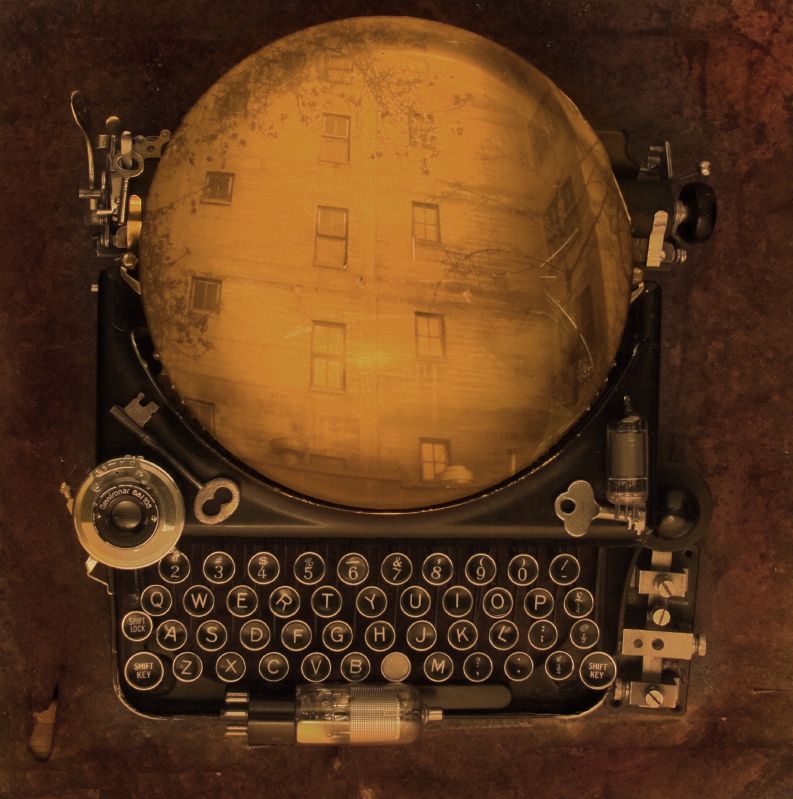
Steampunk’s key lessons are not about the past. They are about the instability and obsolescence of our own times. A host of objects and services that we see each day all around us are not sustainable. They will surely vanish. Once they’re gone, they’ll seem every bit as weird and archaic as top hats, crinolines, magic lanterns, clockwork automatons, absinthe, walking-sticks and paper-scrolled player pianos.
We are a technological society. When we trifle, in our sly, Gothic, grave-robbing fashion, with archaic and eclipsed technologies, we are secretly preparing ourselves for the death of our own tech. Steampunk is popular now because people are unconsciously realizing that the way that we live has already died. We are sleepwalking. We are ruled by rapacious, dogmatic, heavily-armed fossil-moguls who rob us and force us to live like corpses. Steampunk is a pretty way of coping with this truth.
It’s a really interesting insight into the movement and, thinking about it, I probably agree… though at the same time I still just plain like stuff like zeppelins because they’re cool.
But when I think about the story I’m writing in Humorless, and the steampunk/clockpunk tech that shows up, a lot of it (with the exception of the story’s namesake) has corollaries in today’s technology, and each example has something wrong with it — flaws that also have a modern corollary.
Is that what I’m writing about? No. 1 However, I think it’s fascinating that, in introducing steampunk elements into the story, my mind naturally bestowed these relics of a technological path-not-taken with the same points of failure as the technology we have today.
Doing that sort of thing is, according to this essay, a kind of definitive part of the steampunk ‘thing’, and one assumes that that commentary is a conscious effort on the part of the participants. The fact that the same sort of deconstruction happened in my own story without my being aware of this alleged underpinning of the genre implies something even more important: that this knowledge of the oncoming failure of our current technological culture and the way we can/could reflect it in the Brass Mirror of pseudo-Victorian tech-that-never-was is something deeply ingrained in the subconscious.
1 – Truth be told, I probably won’t know exactly or even generally what I’m writing about until I’m done, or probably well after that — I know that brothers and sisters seem to be figuring fairly prominently, and that’s about it.
The Mightiest of Chapters
Here, for your entertainment, is an entire chapter of the current W.I.P., Humorless.
Day Two
Thaddeus was lost.
Right. Back to work, then.