You may find yourself in a situation where someone you’re working with just doesn’t want to be constrained with guidelines on their creative output. Maybe you’re that person. Maybe it’s deadlines. Maybe it’s a specific word count you need to hit, or can’t go over. Maybe it’s some topic for a short story anthology you’re working on.
“What? I have to write something about a kid without any parents? So we’re going to have a book full of orphan stories? What kind of stupid requirement is that? And it’s a paranormal collection? Paranormal is so last year. What’s the point?”
Okay, precious, let’s talk about constraints. These are for your own good.
“The most gifted members of the human species are at their creative best when they cannot have their way.”
We’ve probably all heard (or thought) that a blank sheet of paper is terrifying – the point being, too much freedom is just that: too much. Artists love to wax rhapsodic about complete creative freedom, but a lot of the time, having total freedom to do or create anything at all tends to paralyze. I don’t have time to be an artist; craftsmen need guidelines.
“Write whatever you want — anything you do will be great.” That’s a terrible set of instructions, right there. It’ll take me months to get you anything, assuming I ever get you anything.
“I’m going to need something presentable in two weeks.” Now we’re getting somewhere.
“I need it in two weeks and it needs to involve two bishops from Papau New Guinea and their pet llama.” Excellent. Man, I can work with that.
But oh the horror — these constraints have taken things away from me! They’ve robbed me of choices! What if I wanted monks instead of bishops, and a surly binturong instead of a llama? How can my life as an arteest go on?
Surly Binturong is very Hurt that you have excluded him as an option.
Okay… yes, every detail and requirement that is added to a set of guidelines takes away options, but having obstacles to deal with means you’re more likely to take some path you might never have otherwise explored. Obstacles are a gift. The biggest secret to being a creative and productive person is embracing constraints instead of running from them. Small spaces lead to cool innovations. Walls in your way just mean you have something to grab when you need to climb higher.
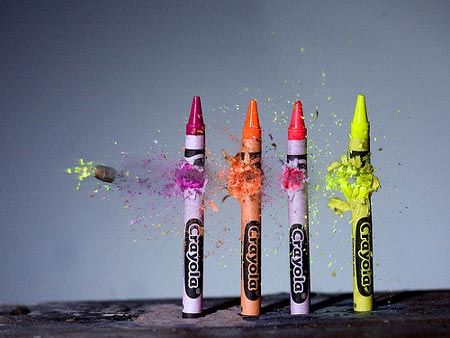
The other big benefit of constraints is that they focus your energy into a smaller space. A completely blank sheet of paper is like an open, featureless plain — it doesn’t matter how much you have, there’s very little chance you’re going to be able to fill that vast space up with energy. The best thing you can possibly do is compress your energy into a smaller space. Any amount of energy delivers more power when it is controlled, compressed, and directed. Start with an open plain, then keep pressing inward until you’ve squeezed all that down into the smallest package possible. A building. A room. A box. A bullet. Boom.
Maybe you’re floundering with your current project. See if there’s a way you can make the scope smaller. Compress it. Constrain it.
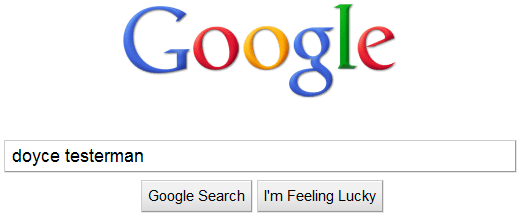
This is what I’m going to get printed up next time I get cards.
Yes, really.
Lots of white space to scribble personalized notes on and, seriously, this is pretty much all you need to get in touch with me. Email, comments, phone… it’s all there if you know what you’re looking at.
And… okay, let’s be honest: if this isn’t enough information for you — if you need more hand holding to locate and contact me? I’m probably okay with not hearing from you.
I was doing some yard work today (why do I always wait until the hottest part of the day?) and thinking about the hows and the whats and the whys of it. My house sits on a corner lot in and older part of one of Denver’s more grand suburbs (if it sounds like I’m bragging, you’ve never lived in a grand suburb), which means it’s a pretty good sized patch of earth. Moreover, I’ve done a lot of landscaping work over the years, so there’s a fair bit more to deal with than just mowing.
But mowing’s a big part of it.
I’ve got a process for those days when I need to get out and clean things up. Having a process is really helpful and, more to the point, it’s kind of appealing. I mentioned not too long ago that there are days when I’d rather mow the lawn in 100 degree weather than sit in a comfy chair and write, and maybe part of that (albeit rare) preference is the fact that I always know what I’m going to be doing out there, whereas the writing can be kind of a smoky, treacherous canyon full of quicksand and brain syphilis.
Where was I?
Right. Process.
Anyway, while I was poking around, letting the sun boil my brain, I identified a few parts of THAT task that might be useful for… oh, I dunno… some other task.
1. Yah Gotta Do It
It’s readily apparent that my approach to landscaping is a lot less “topiary sculpture” and a lot more “I think there should be some more flowers and stuff kind of over that way.” I put plant beds in where the the grass won’t grow, and if that doesn’t work, I plant a tree, and if that doesn’t work, I find some pretty rocks to stack there. It’s perhaps a little less apparent that I kind of like it when the grass gets longer and kind of shaggy. It looks better. Healthier. Greener. Maybe I’m compensating for my own nigh-mandatory buzzcut of a head-lawn, but the fact of the matter is I’d be perfectly happy surrounded by shaggy fecundity.
Until it finally got so bad that my kid came back into the house covered in grass ticks. That’s less desirable, so you gotta get out there and keep things in check.
There’s a guy I knew back in high school who still lives in my home town. He’s all grown up now with a couple kids of his own and, within the boundaries of our home town, he’s well-known for mowing his lawn regularly.
(Just… pause for a second and ponder the hotbed of intrigue in which a man can become well known for mowing his yard. Then wonder why I moved. Anyway.)
What do I mean, “regularly”? I mean the guy mows his lawn every two days.
When asked (by my mom, because she’s curious about such things and has no internal filter) why he mowed so often, he explained that it was simply because he didn’t like — hated, in fact — bagging the grass clippings, and the only way he’d ever found to avoid having to do that extra bit of work was to mow often enough that the lawn didn’t require it.
So: yah gotta do the work, if only to keep your kid free of blood-sucking parasites, and the job’s a hell of a lot easier if you do it often and regularly.
Check.
2. It helps to have an external force demanding your compliance
Since I live in a grand suburb, I get to experience the joy of regular interaction with a Home Owner’s Association. As much as I’ve tangled with them in the past (and continue to bitch about them and organizations like them), I do appreciate the way in which they generally keep the neighborhood looking like a place I want to live — no old beater vehicles up on blocks in the driveway or on the street, no old rusted appliances lining the side of the house… you know, obvious things like that.
They’re also quite… enthusiastic about sending out angrygrams reminding people to keep their lawns trimmed and — you know — alive. I know this because I’ve gotten a few in the past. Not a LOT, by any means, but a few here and there. (I recall more-than-two the summer Kaylee was born, for example; it’s possible that it’s the only thing I remember clearly from that whole bleary, sleep-deprived period.)
Now, I’m never happy about getting such letters, but I recognize that they’re a good kick in the pants reminder telling me that I need to keep my play area clean. Sometimes, I need that reminder.
As it pertains to other non-lawn related projects, I’m slowly coming around to the opinion that having some external entity that’s waiting not-so-patiently for your output is generally a good thing. I’m particularly bad about self-imposed deadlines, frankly, but I flat out refuse to under-perform for someone else. Therefore, having a “someone else” that I’m producing for makes me work more betterer.
3. Leave the Weeds Alone until they are Big Enough to Kill
My mom has a huge lawn. Huge. At least an acre, and probably more. She also has a pretty easygoing opinion about weeds, summed up fairly well as “Once you mow everything down to the same height, it all looks green to the folks driving by.”
I am not so sanguine.
I may leave my yard alone for most of the week, but when I get out there to do some work I pretty much want nothing left in the yard except for what I put there in the first place.
The problem is, sometimes I’ll spot the barest stub of a new weed coming up, and try to get that thing out.
Can’t be done. Try as I might, all I’m going to do is waste time sweating over something no one but me is going to see right now, and probably just snap the fucking thing off at ground level, which gives it time to get its roots in nice and deep before it pokes up where I can see it again.
Best thing? Leave it be. Next week (or the next), the cocky little bastard will be nice and big and bushy and, more to the point, easy to pull up and throw away — since I didn’t screw with it in the first place, the roots are usually shallow and useless — it’s all show and no hold, and I can get rid of it so much more easily now that I have a good place to get a grip.
Also, since it’s so obvious, other people (like my daughter) are really helpful about pointing it out.
4. Not Everything You Plant Gets to Stay
A couple years ago, I put some some daisies out in the yard. They looked nice, and I’d heard they were pretty hardy and well-suited to the climate.
They’ve done pretty well.
By “pretty well”, I mean to say that the original cluster of daisies is now five clusters located in militarily valuable areas of the yard, each one about three feet across, each flower coming up to somewhere around the middle of my chest. In the evening, you can hear them whispering and giggling to themselves, telling stories about the inevitable fall of mankind and the rise of the Petal Throne. It’s a bit out of hand.
Much as I like them, there’s going to be a Culling this fall, and it’s going to be a blood on the sand kind of event for the daisies. Them’s the breaks; sometimes you have to rip out the pretty stuff you put in yourself, especially when it’s overwhelming other stuff you that you like just as much (if not more).
5. Wear Sunscreen
Yeah… I’ve got no witty writing corollary here. Sunburns aren’t cool. Wear sunscreen or your face is going to look like a catcher’s mitt.
No, I haven’t seen the movie. No, I won’t see it. (Well, I will, but not until I’m in NYC on “movie mocking” night.)
Anyway, my point, briefly, so I don’t spend all day at the group gathering explaining it and reexplaining this point to people.
In a Google Buzz conversation, I said:
Frankly, the original iteration of the story always felt like ‘enough’ to me — even when I first heard about the movie, before all the racial hullabaloo and drama, my first thought was “what will this really add?”
I mean, with Lord of the Rings, a movie presented a whole new visual medium that had never been explored (okay, yeah, Bakshi, but it was (a) not great and (b) not finished); I could see the POINT, and Jackson delivered on that point — excellent visuals of stuff I’d only ever seen on the page and in my head up to that point.
We’ve SEEN a visual representation of the Avatar story already — it’s probably in my top ten TV shows all-time, and easily in my top five animated shows — and more to the point we’ve seen it in far more depth and detail and with more nuance than any movie series could ever manage, even a great one.
I guess I just never saw the point. The fact that that the final product sucks perhaps bothers me less, since I was never that excited about it to begin with.
Here’s the thing: this movie was doomed to disappoint. Didn’t matter who was in it, who directed, or anything. Doomed.
Why? Because the show was Great. Sometimes it was even Fantastic and, in my memory, it’s damn near perfect.
At it’s VERY BEST, a movie adaptation of the show could only be a Great movie, right? It’s not going to add anything: you won’t finally be able to see what Appa looks like, or finally see how cool the Fire Nation tanks are, or finally watch cool earth bending — you’ve always been able to see all that. To hear the words spoken by good actors. To et cetera et cetera.
Put another way, the very best a movie adaptation of the show could manage is to not make anything worse.
It won’t add anything. It’s like painting a copy of Starry Night — your ultimate goal in that endeavor — your overarching thought is: try not to fuck anything up.
Say you make a Buffy movie. Just pretend. Then you get enough interest in the movie to make a TV show. You don’t retell the movie again. You go to the sophomore year in a new school. You move on. If you ever do a movie after the show is done, you do something after the end of the show, you don’t make a “Season One, the Movie” movie. I mean… just look at that idea: it’s clearly stupid.
If your space western gets canceled, but you have enough fan support to make a movie with the same cast and setting, you tell the next thing.
If you make a show called LOST, you… well, you don’t make a movie after you’re done with the show, because the story is done, and the only thing you could do with a movie is go back and retell it again, and hope you don’t fuck anything up.
I’m not saying anything particularly insightful here, am I? This is obvious, or at least it feels obvious to me: if the best you can hope for with a ‘new’ creative offering (in essentially the same medium (visual)) is to maintain the status quo with regards to that creative property, you are working on the wrong thing.