

Mike Sugarbaker explains how we can take back entertainment from the networks and film industry by creating our own stories through story games.
Old School Dinner Plans: Cast Iron Skillet Magic
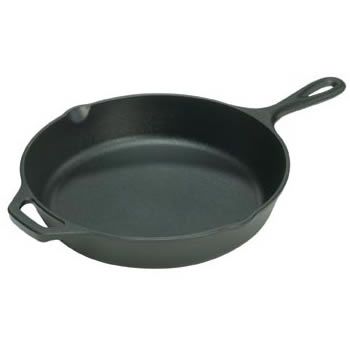 So, a few years ago, a guy I know posted about some pretty wonderful sounding food you could put together in a few minutes with fearless use of a cast-iron skillet. Sounded great, except I didn’t have one.
Then I got one – I think as part of our wedding registry, which it was on because of all that stuff I’d read – and… it sat in a cupboard, because it had a whole series of instructions on how to ‘season the pan’ and how you couldn’t actually wash the thing with soap, and you had to RE-season it after every use and…
Well, it just sounded hard.
Yes, I’m THAT lazy. Turns out that seasoning a cast-iron skillet consists of wiping it down with some vegetable oil and putting it away. Big deal.
Anyway, I decided to cowboy up this weekend and get that skillet going. Here’s what I did.
Continue reading “Old School Dinner Plans: Cast Iron Skillet Magic”
What am I not getting? Book marketing through context ads
Okay, all you schmott guys: this is not going to be about me going on about something – this is going to be about YOU going on about something.
me: You know what I’m curious about in terms of book-marketing money spent?
Kate: what’s that?
me: Google ads.
Kate: what about them?
me: For Instance, the ‘related sites’ stuff that shows up alongside GMail and on websites and stuff.They don’t cost much, relative to whatever, and lots of people embed them on websites, plus Gmail and Google search pages, it seems like the kind of thing that would be a no-brainer for people to do.
You’d need someone skilled doing the keywords for the ads, so that you’re showing up alongside the right searches, obviously, but it just seems like a good idea.
Related to that: Facebook ads; which is somewhere I actually do see book ads.
I almost never see them in Google ads though, which is WEIRD.
I have to assume people just… don’t do them for books, because if they did… the kind of emails I send and receive would call up book-related ads… or game products… whatever. Something.
I mean, I’m exchanging emails with a guy about his story, so it’s all about writing and characters and motivation and the genre the thing is set in… and the “related” Google ads alongside are… “Document management”, “Google TV ads”, “Convert PDFs to Word”… a Talking Smartpen, and “Google Docs Backup”.
Kate: I see a lot of ads from print-on-demands houses, and editorial services and such in Facebook, but no, not really for books themselves.
me: It feels like an marketing blindspot. Especially when many avid readers are also writers and talk about such things in email.
Right, so… what am I missing, people?

- Why is this not happening? Am I the only one not seeing ads for new books showing up in Google ads, or are people simply not doing them?
- If so, why?
- Is it so complicated as to make it a bad idea? What’s the cost outlay to set it up? How much tweaking do you have to do to get your “Product” showing up alongside things to which it’s related.
- Has anyone out there done this sort of stuff as part of their day job? Facebook ads, Google ads… whatever. I don’t care, I just want to learn.
Humorless, page 2
What the heck, here’s the second page of Humorless.
Humorless, page 1 is over here.
“I haven’t said why because I don’t know why,” the ship snarled. “And I haven’t said who because I don’t think there’s a word for them yet, but there are too many people,” the ship paused as though gathering its thoughts, “too many people here. ‘S too tempting for them. My whole crew was wiped out, to the man – and woman – by these things, just because there were so many of us. The crew of -”
“Wiped out, you say?” The city had gone from patronizing to ever so slightly amused. “How, then, did you make it back to us?”
“We -”
“For that matter,” the city continued, “how did you survive?”
“I didn’t, you twat. I died.” The airship paused. Below, the citizens of Bodea-Lotnikk murmured in concern and confusion, a slow sound, like the surf that one suspected might get quite a bit louder as the tide rose, if it was given half a chance.
“You died.” The city, unlike its people, did not sound particularly convinced.
“Yes. Have you not been paying attention? I’ve been trying to -”
“You’re very talkative for a dead man,” the city commented, somewhat dryly. 3
“Well, no.” This actually seemed to set the ship back for a moment.
“I’m… I’m not dead, now.”
“How lucky,” remarked the city. “What about your crew?”
Silence. The people of the city waited. The city itself seemed a bit smug. Finally:
“They’re not dead either,” the ship said, “but that is not -”
“OH, BUT IT IS.” The city shook. “You have come into our sovereign skies, trumpeting fear and creating panic in our streets, and for what? NOTHING.” 4
“I -”
“You,” the city cut in. “Will cease all broadcasts and remove yourself from our sky, or you will be blasted out of it.”
As one (very large) creature, the Bodeans and Lotnikkans exhaled a long oooohhh at this; the promise of fireworks, and not even a holiday.
The Grand Duke knew how to entertain his people.
3 – Deadpan delivery is a particular gift of inanimate objects, even large ones, owed in no small part to the lack of any discernible face.
4 – Not terribly effective, if panic was in fact the goal; most of those listening to the exchange were about as worked up as a crowd watching a tennis match.
In which I spend a little time talking as though I know something.
Yesterday, at the zombie-uprising commemorative gathering, we were talking about Dave’s current problem with his work laptop – specifically, the fact that he can only access the internet via Internet Explorer 6 (an affliction that I suspect I would quite literally be unable to cope with) – as part of the litany of ill effects this problem caused, he mentioned that he couldn’t use the Google Talk application and parenthetically noted that it was a small blessing that GMail embedded a kind of GTalk-lite that DID still work (albeit in IE *shudder*).
In response, I confessed that while I got a lot of use out of the GMail-embedded version, I had almost no use for the standalone GTalk application.
To which Dave replied, “Which might be because you are ALWAYS flagged as Busy.”
There was general chuckling at that, because it’s true. I am usually flagged as Busy, but as I explained at the time, that’s entirely intentional.
For me, the Busy flag is there to tell people “Don’t Bother Me Unless It’s Important.” I’m not an inherently anti-social person (somewhat the opposite), but the fact of the matter is, IM conversations require attention and nigh-immediate response, and (except in those situations where someone has decided what they need to talk to me about is important enough to justify ignoring that “Busy” flag) they very rarely deserve it. The “busy” status is my filter – one that I very consciously put in place.
One of the things that I don’t talk about too much is the work I do that pays the bills. It’s not that I dislike it — I find it pretty interesting, actually – but I’m not entirely convinced that other people will (and that’s really saying something, considering some of the niche-obsessions I go on about on here). I’m going to break that non-rule for just a few minutes to talk about one section of one of the classes that I teach, and how it led me to use that Busy Status the way I do.
“Time Management” is sort of the perennial New Hotness in corporate America – a catch-phrase that makes people nod along when it’s mentioned and roll their eyes when no one’s looking. Books like First Things First or Getting Things Done are often quoted, rarely read, and even more rarely put into use.

I read both books, but only because I was putting together a class on Time Management and my audience (a lot blue-collar guys in management roles) needed to get better at it but were never going to take the time to read a couple books and boil all that stuff down to something they could use. The end result of all that research was a two-hour class during which the students get a blank pocket notebook and a double-sided business card on which I printed the entire ‘manual’ for the class.
Most of that class focuses on Doing, because we suck at Doing.
Between coworkers walking in and babbling away with no provocation, dinging reminders from Outlook, our phones, IM clients, and all that junk, it’s just hard to block out uninterrupted time and then actually use it for whatever task it was intended to be used for.
So here’s a few things I (try to) do that help me DO during those times.
1. Focus on one task at a time.
- This doesn’t have to go on for hours at a time; for now, just try to block out 30-minute blocks during which you’re devoted to a single task.
- Eliminate all distractions. That means shut off Twitter, Outlook, Gmail, YIM, AIM, GTalk. Close your door, if you can. Make sure the cat, dog, kids, spouse, and coworker are all are fed.
- Don’t multi-task, and don’t let yourself get interrupted.
2. Seriously, don’t #*$#ing Multitask.
Multitasking: the fine art of avoiding two things you don’t want to do by working on both of them simultaneously.
The supposed efficiency of multitasking is an illusion — it hurts productivity, increases the chance of error, slows down your reaction time… plus it makes you go bald and lowers the production of pheromones that make you attractive to the opposite sex. Don’t do it.

The human brain is amazing in many many ways, but it positively sucks at concentrating on two things at once. As soon as you try, you can practically guarantee you’ll miss something important.
3. Control Who Has Access to You
Stop and think about something for a second: who (barring some kind of technology failure) has unrestricted access to you at virtually any time?
Ask yourself, seriously, because it says a lot about who you are.
I set my GTalk Status as Busy, because I know that there are very few people who will be comfortable sending me an instant message anyway (provided they feel they have a good reason). Here’s a happy (non-)coincidence: the people that know me well enough to ignore that message are the people on my All Access list.
4. No one else gives a crap if you get your stuff Done.
No.
No they don’t.
Not even that guy. Not her either. No one.
Not even your Boss – who is probably emailing you right now to remind you to get your stuff done – actually gives a crap if you get it done, if they have something they want to ask you right now.
It doesn’t matter if The Stuff You Need To Do is the daily TPS report or the Next Great American Novel; you are the only person who even has even a small chance of caring about getting it done, and the only way to make that happen is to viciously (perhaps anti-socially) defend the blocks of time you set up to Do Things.
Summed up
The tagline on this website is there for a reason. For a very very long time previous, it said something about Falling Down, and while that Something is still true, it’s not entirely relevant as an introduction (and warning) about what goes on with this site.
For those who know me (and who inexplicably choose not to flee as soon as they figure this out) it’s a familiar joke – wondering aloud about whatever my current obsession might be, or how one of my nigh-on-neverending projects is going. (My obsessions change often, but I am constant in my affections.)
Paul Tevis (whose podcasts I’ve enjoyed for quite awhile, but whose blog I’ve only just discovered) summed the whole problem up very nicely in this post, in which he inadvertently reveals that we share the same brain.
Time is a problem for a dabbler like me. When I want to do something, I want to do it well. I’ve learned enough to know that if I want to do it well, I need to do it regularly. There are only so many hours in the week, which means that if I want to do something, I need to not do something else. The problem is that I want to do everything. This inevitably means I want to do more things than I can do regularly, and thus I end up clinging to things that I do infrequently, taking time away from things I could do well, and spiraling into an overbooked and yet unproductive schedule.
Yeah… tell you what, Paul: whichever one of us figures out how to deal with this first, we’ll let the other one know, deal?
Humorless, page 1
With Hidden Things now revised and sent off into the ether, I have time to start (or resume) other projects. A little bird is whispering in my ear about a couple anthologies that are asking for short stories, but at least for today I’m reacquainting myself with Humorless (a story which, if nothing else, amuses me; sod you all).
Anyway, in honor of it being… (*checks date, then Googles*) ahh… the anniversary of the purchase of the Alaskan territory from Russia, I thought I’d post up the first page of the story.
So… right. Here ’tis; footnotes and all.
Who are your experts?
People like to get advice when they’re working on something they’re not too sure about that could easily blow up in their face. When my lovely wife is trying out a new-to-us, Classic Family Recipe, she calls her mom (which I’m pretty sure her mom loves).
Now, if she times it right (or, to be honest, wrong), she’s going to get a lot more advice than just her mom’s. I remember one call in which she asked about cooking a proper New York strip steak and ended up with her uncle on the line, giving her a ten minute coaching session on how to cut the thing once it was cooked. One of her sisters will remind her not to leave the gas stove burning all night (a: we have an electric, b: we’re not actually stumbling morons), another sister will suggest she just go out to eat. It’s charming, and familial, but it’s not necessarily all useful, you know?
But how to do we know what the crap advice is? Kate’s mom happens to be a good cook – we know this because we’ve eaten her food – but if she were just “ktsmom113@yahoo.com”, posting her suggestions in a forum, how much credence should we give her?
Not… you know… a lot. Unless the advice itself is good.
“But… Doyce?” I pretend you are asking, “How do we know if the advice is good? If we knew enough about the subject to tell the good from the bad, we wouldn’t need the advice.”
That’s a fair point, pretend-you-in-my-head; well said. It’s a tricky situation, and it’s not as though you can just look at what the person has done or not done in their life to determine if they’re a qualified expert.
Kate’s mom has a degree in chemistry, not culinary arts. I have a friend, De (hi, De!), who gives me wonderful (and harsh, and uncompromising, and brutally honest) writing advice (which I take! I really do! It just takes me a few days to agree…); but she hasn’t published a book any more than I have (to which I’ll add “yet” to placate both our egos) – where does she get off giving me advice on writing, and what turnip truck did I fall off that I’d listen to her? (The answer is: because she knows writing, and her advice makes my story better. Duh.) I have another friend who happens to be a very successful author, but I’d never take her advice on finding an agent (for example), because it would probably amount to “while in college, meet someone who will eventually become an agent, stay friends with them while you both learn your respective trades, then have them represent you”, because that’s what she did.
It’s confusing, so how do you check?
- Are they at least involved in the field in some way?
If it’s writing advice, are they a writer? Or an agent? Or an editor? Are they, perhaps, married to one of those types of people (you rarely find an expert’s spouse trying to give advice on their spouse’s field of expertise, but that doesn’t mean they can’t – it just means they have some sense). - Do they study the subject?
I don’t self-publish (epublish or make any of my work available via POD services/Amazon). I have nothing against it, but right now I’m working through Hidden Things with a tradition writer -> agent -> publisher approach, and that’s where my energy is going. However, while I’m not actually in the trenches of self-publishing at the moment, I am studying the HELL out of it, and I can quote you cost breakdowns and comparisons and marketing tips and distribution methods until you run screaming from the room. There are people out there who could give you better advice, by virtue of being in those trenches, but my advice would not, probably, be bad. - Do they listen to/make use of the experts?
There’s a web site out there that specializes in telling writers how to find an agent (okay, there are hundreds, but I’m thinking of one in particular). The punchline is that the person running the site is an author who has not, herself, gotten an agent. WHY would anyone listen to someone like that? Well, because get gets agents to guest star on her site every couple weeks or so, to give honest, from-the-gut response to the first 250 words of people’s stories. Funny tip: you don’t actually have to be good at the thing you give perfectly sound advice on. I mean, that teacher from Fame made Coco the best dancer he could be even though she couldn’t dance anymore. *tears up*
“Double-triple-quadruple check” is what it boils down to, I suppose. Ninety percent of everything is crap, including advice, so it stands to reason you need to check ten sources to even have a decent chance to getting to the good stuff. A hundred sources would be much better.
And don’t freak out too much if the advice is coming from a weird source.
Actually, that’s a fun question: what weird source do you get good advice from? (Like Casa Testerman’s cooking tips from a chemist.)
Even better: how do you identify your experts?