

Time Management

First I talk about money management advice from John Scalzi, and now time management?
Well, it’s a crazy time for me right now. When spring is in the air, and a wedding (and marriage) are on the horizon, a young(er) man’s thoughts turn to…
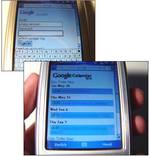
Google Calendar.
Thanks to a tip from the terribly useful Parent Hacks, I’ve been poking around the Zen Habits website, which has really been resonating with me, mostly due to the timing of my discovering it — right now, I NEED some good advice or organizing multiple, unrelated tasks.
How unrelated? Consider the bullet list of ‘to-do’ items on my ‘as they occur to me’ notepad:

  • Bendy straws.
  • Send hard copy of Hidden Things to [agent]
  • Copy [list of DVDs] to external HDD (DRM can Die in a Fire, in my humble opinion)
  • Get replacement tuxedo elements
  • Get tux info for groomsmen
  • Short story for Wicked Words
  • Car shopping
  • SPACE WHALES! BUBBLE NETS! SINGING!
  • Research preschools
  • For Galactic: […] (plot thing that people don’t need to see)
  • [TV Pilot idea I dreamt last night]
  • Editing Galactic RPG for Matt

And that’s just what I’ve written down in the last two days. Most of those have been crossed off in the last hour or so, as I have transferred them from the easy-to-carry notepad to Google Calendar and generous time slots where they have the best chance of getting done (early in the day, before other stuff can pile up) — all of which is part of the “Zen to Done, Mini-version” that’s proposed by the Zen-blog author, an edited version of which I have scribbled down in the front of that same notepad.

  1. Collect – tasks, ideas, projects, information. Categorize as you collect.
  2. Process – take that collected list (and/or your email or snailmail inbox) and:
    1. Trash it.
    2. Delegate it.
    3. Do it (if it’s quickly done).
    4. File it (such as writing ideas or tax information).
    5. Add it to the calendar/to-dos (see “plan”)
  3. Plan – Set up Big Jobs for the week: either Important Stuff or an intentially-clumped series of little things.
  4. Do – Do the big things early in the day. Don’t multitask. Focus.

I recommend checking out the site if it’s something that seems remotely useful; it’s helped me get a tremendous amount of important things done in the last week or so since I’ve started working through things with this method, and (far more importantly) leaves me the time I want for things like:

  • Date Night!
  • Swing dancing!
  • IMAX with Kaylee!

Which, to-do lists aside, are far-and-away the most Important Things.
Unasked-For Advice to New Writers About Money

John Scalzi offers up some tips on handling money when you’re working as a freelance writer.

Why am I offering this entirely unsolicited advice about money to new writers? Because it very often appears to me that regardless of how smart and clever and interesting and fun my fellow writers are on every other imaginable subject, when it comes to money — and specifically their own money — writers have as much sense as chimps on crack. It’s not just writers — all creative people seem to have the “incredibly stupid with money” gene set for maximum expression — but since most of creative people I know are writers, they’re the nexus of money stupidity I have the most experience with. It makes me sad and also embarrasses the crap out of me; people as smart as writers are ought to know better.

I’m lucky (*knocks on wood*) that in addition to fiction writing (which brings with it what I tend to think of as not-entirely-ironic Fictional Income), I have a ‘regular’ paying job that requires, at it’s core, good writing as a key talent (note: Scalzi’s rule #2, and my own realization, long ago, of rule #1). Thus, I continue to hone my use of those little word-thingies, and get paid like a regular joe (complete with all the behind the scenes tax-paying that I don’t have to deal with).
Still, it might be nice to one day work only on projects that interest me. If or when that day arrives, I hope I remember where I put this link.
For that matter, a number of his points are useful for anyone who — you know — uses money.

It makes absolutely no sense to save or invest money if the return rate for that investment is less than the annual percentage rate of your credit card debt. Net, you’ll lose money (especially if you’re investing from scratch). You need to buy down that credit card debt as quickly as you sensibly can. It is your number one debt priority. Once you’ve paid down your debt you can begin saving and investing. But pay that debt first.

On working with an agent

Having made it over a major hurdle on the track to getting your work published, I thought I’d send a secret communication out to let people know what it’s like working on your book with an agent.
That was the idea, anyway — problem is, I’m not sure that I have that much to tell.
Yes, I’m working with my agent on my book, but I’m starting to get the sneaking suspicion…
… wait for it …
I’m starting to think they all do things differently.
Now, the (wonderful) person I’m working with does a lot of the sorts of things that I had compartmentalized as “editor stuff.” Some of her feedback is along the ‘agenty’ lines of “the scene on page 8 feels kind of off” or “would Joe really ask her that?”, but just as many of her notes are detail-things like “you’re missing a ‘the’ on page 48” and “you switch to the wrong verb tense in the scene with the giant chicken.”
Now, I might begin to believe that I’d simply misunderstood what it is that an agent does for their author — I’m a tyro in many things literary; it wouldn’t be that big of a surprise — except for the fact that I work around (if not with) another agent, and her approach involves feedback like:
“What if the main character were japanese instead of romanian?” or…
“What if they were in high school instead of the CIA?”
Big picture stuff, if you see what I mean. Agenty-stuff.
I’m told that another agent I know doesn’t do either of those things, and approaches her job as something between a therapist and a legal representative the mentally unfit.
Are any of them wrong? Are any of them, in some strange way, not agents?
I don’t know. I don’t know if I ever will. I’m glad I found the one I did, and I think that will have to be enough.

Experiencing Technical Difficulties

While toddlers are generally soft and pliable creatures, it turns out they do not interact with one’s eyeball very well. Live and learn.
For the next few days I’m going to be cultivating a dashing new look and pretending that words like ‘avast’ and ‘matey’ and ‘swab’ are necessary adjuncts to an eye patch designed to protect a pretty badly scratched cornea.
Kate informs me that if my condition persists, we’re going to ditch the Double Down swing band for the reception and go with a Pirate-themed wedding, including a parrot sidekick for the bride.
I’m considering faking it.

Walking a thin line

I apologize, because this is going to be a bit long, and it really should be about a play I performed in high school, and it isn’t.

When someone asks me what I’m writing, now that I’ve had some time (and years) to actually think about it, I call it magical realism (except that it isn’t magical realism by some literary grognard’s definition of the term — it doesn’t obey the ‘rules’ of the official definition, but more the mindset). I don’t think of it as a genre as much as mode of writing — creating a story with two conflicting perspectives, one based on a rational view of reality and the other on the supernatural. Neil Gaiman’s Anansi Boys – with Fat Charlie and Spider representing the two views – is a really easy example, but there are many others.

Writing that kind of story — trying to — has a ‘gotcha’ that causes me a fair bit of stress during rewrites. I’m not going to be able to sum this up in a very tidy package, but here goes:

There are two ways you can approach the Fantastic in a story, regardless of the setting: there’s the ‘magical’ way and the ‘fantasy’ way.

The fantasy way is the most common, I think; especially in any book series where you learn more and more about the world in which the story is set. Basically, there is magic or something supernatural in the world, and as we spend more time in that place, more and more of the ‘system’ behind the magic is explained, until we know all the rules. There are lots and lots of examples of this, but Tolkien started it, and it’s carried into any number of series. Laurel K. Hamilton is one. Tamora Pierce. Harry Potter, certainly. Charles de Lint, sadly. George R. R. Martin, happily. In short, it’s a world with special rules, but once those rules are understood, the world works in predictable ways; what I think of as the Arthur C. Clarke version of magic. (To my mind, this often takes the ‘fantastic’ out of the fantasy, but that’s my own problem with some writers, and only really a problem when they mean not to do it and do it anyway.)

The magical way doesn’t quite explain how things work. Fairy tales are like this. Things aren’t predictable, and the magic isn’t ever quite explained. Some things are the way they are because that’s how they are. You don’t question it; it just is. There is a kind of childlike acceptance of the unreal here; ‘superstitious peasant’ reasoning. Neil Gaiman does this very well, as does Holly Black some of the time.
That kind of magical thinking is what I strive for.

Please understand: I love a good fantasy. Nothing wrong with them at all… unless that isn’t what you wanted to write. Fantasy for the sake of fantasy is great fun. Fantasy masquerading as a magical tale is going to feel flat and technical and lifeless.

And that’s the danger of the magical mode. You must be very true and accurate to the reader. Stuff has to be clear (more importantly, it has to be true, but right after that, it has to be clear), but you can’t explain everything, or you ruin it.

What happens and why it happens has to crystalline and solid, but at the same time you have to abide by the rule of magical thinking which is that sometimes, things are the way they are just because, and if you show someone all the gears and connections, the magic goes away.
Said from the point of view of the writer.: If you reveal too much of the wrong stuff, it’s not magical anymore – it’s just a fantasy.

That’s the balancing act I’m performing — there are some things in the story that aren’t clear, and I don’t want to alienate or confuse the reader (at least not unintentionally), but I am loathe to explain too much, because I do not. want. to. write. a. fantasy.

either/or

A good friend’s Google Talk status message reads:

“It’s only kinky the first time.”

I ask you, gentle readers: is that a reassurance, or a warning?

Overheard today

Guy: “I swear I tested it.”
Other guy: “Okay.”
Guy: “I mean, I swear I tested it. I swear.”
Other guy: …
Guy: “Maybe.”
Other guy: …
Guy: “I was pretty sure it worked.”
Other guy: …
Guy: “I can look at it. Again. If you want.”
Total elapsed time: 15 seconds.