
Extracting the Signal from the Noise

Over on Twitter today, I linked to three of the seven parts of an analysis of the Phantom Menace that was posted over on YouTube, and which I initially found on /Film:  70-Minute Video Review of Star Wars: The Phantom Menace.

The reason I didn’t link to all seven videos? I didn’t want that to be the main thing I linked to today.

Some folks retweeted it and seemed to enjoy it… others were put off by the video’s… odd tone.

Which I totally understand.

How should I explain this tone?

Ahh…

Okay, you know the serial killer guy in Silence of the Lambs?

Not Hannibal Lector, but the other guy? The “It puts the lotion on its skin / or else it gets the hose again.” guy?

Yeah. Him. Imagine if that guy, in between skinning girls to make a woman-suit, sharply and insightfully analyzed all the (multiple) failings in Phantom Menace… and periodically went off his meds.

That’s the video. It even sounds just like him.

It’s not to everyone’s taste.

The problem is, the insight is really good. It’s really useful, from the point of view of story construction and character building and even the use and purpose of cool-ass fight scenes.

But can I legitimately recommend a video like this to someone when I know the humor might be distasteful?

Yeah, I probably can. I’m sorry if the humor is not funny to you, or it goes over the line, but dammit, the analysis is too sharp to ignore. I always knew I didn’t like Phantom Menace, but I’d never put a lot of brainsweat into why. Thanks to this guy – his fucked-up sense of humor notwithstanding – I understand why, and I take away tools I can use to make my own stories better.

I guess I just have to remind myself it’s a joke. It’s part of the ‘brand’, maybe, and that’s his choice, but it’s also his problem – I’m just focusing on the useful signal. Sometimes I have to ignore the joke.

I mean, we all know Chuck’s not actually gaining carnal knowledge of vegetable or animal produce, right? We know Warren Ellis isn’t boiling hookers and shooting their cerebral juices into his femoral artery, yes?

Maybe this guy jumps over the line here and there. Fine. Yes. Not every joke is funny. Fuck knows I scratch my head at some people’s idea of humor sometimes, and at the twitter retweets that link back to my site with a parenthetical “Warning: NSFW”.

Really? Where the fuck do you work? I’ve known pastors that swear more than me.

Anyway.

If you really can’t stomach the meat because of the seasoning, I’ll try to summarize the guy’s points, below.

But I still think you should check out the video.

  1. Keep people around who will push back on your work and force you to make it better… or just make sense.
  2. People need to care about your protagnist – someone you can identify with – especially if you’re writing genre stuff. Get really basic. People should be able to:

    “Describe the character without saying what they look like, what kind of costume they wore, or what their profession/job is.”

  3. ACTION: in part two of the video, the guy’s analysis of what the first scene of the original movie conveys is brilliant.
  4. You might be able to skip part three, because it’s JUST about the movie’s plot holes. So’s part four and five.
  5. “Welcome to Coruscant, Home of the Mid-air Collision.” Heh.
  6. Part Six: five minutes in. What Fight Scenes Do.

    “When you’re worked up with emotion […] you expose your humanity a little.”

    Temptation, revelation, anger, redemption.

    “Lightsaber duels have less to do with the fight, and more to do with the characters.”

    “We need a deeper meaning to things.”

  7. Part Seven: the Ending Multiplication Effect — the simpler endings have more force and interest because we can focus on the important elements and the story.

So… yeah. The summary doesn’t really do the points justice. Not really.

I completely agree if you found the noise ratio too high to get anything out of the signal. Okay. I respect that. This is, I suppose, simply my explanation of why I chose to to the recommend the thing anyway.

(Also: I’m a huge Star Wars fanboy. There’s that too.)
Adrift, Episode 12 (podcast)

Starting to get the hang of this: one hour to record, clean up, render, and upload.

… and a nice little bit with Deirdre that I don’t even think Kate’s heard before.


Comments, as always, welcome. If you’d like to subscribe via RSS feed, the address for the podcast-only feed is http://doycetesterman.com/index.php/category/podcasts/feed/.

Keyboard evolution

So I’m teaching a basic business writing class last night, and someone asked about whether or not they should double-space after periods and colons. I said that that had been the rule at one time, but as a practice it was pretty much dying out. Like most things having to do with the dos and don’ts of writing, this is something I know to be true, but I’m more than a little fuzzy on the why.

They (of course) asked why.

And I heard my mouth say:

  • Much of it comes from graphic designers who think that the big white space after a sentence is ugly, especially now that few people use mono-spaced fonts  like courier. Those double spaces really stand out in true-type/proportional fonts.
  • But even if that weren’t the case, there is no point in wasting time with double-spacing after periods today, because most anything you write will end up on a website somewhere, and web browsers never show more than one space after the period, anyway. (Even if you do it, no one will see it, so it’s wasted effort.)

After my mouth was done talking, my brain was left wondering “Is that right? That actually sounds right.” (My brain is justifiably suspicious of my mouth.)

Turns out, it pretty much was. It’s fascinating to me, the way in which our environment (-cum-technology) visibly and continually redefines “normal” in writing/communication.

(And I’d like to thank Twitter for helping my unlearn a two-decades-old double-spacing habit.)

Why does YA rule?

I have a basic business writing and grammar class to teach today, so this is short, but I wanted to toss it out for discussion.

This spun off of a conversation I was having with my wife. For those of you who don’t know, Kate’s sekrit superhero identity is Daphne Unfeasible, the mastermind behind ktliterary.com, a literary agency that focuses mostly on YA (Young Adult) and Middle-grade fiction. Those types of books (and, to an extent, the individuals within that target audience) are a passion for her, one which I fully support.

But (as I said while sitting around at my family’s place over Thanksgiving) “YA” as a category of books kind of bugs me because from my point of view (as a consumer and as someone who catches very random snippets of agenting talk when I pop into Kate’s office to ask if she’s seen my shoes), the question of whether or not a book is YA (or middle-grade) pretty much boils down to “how old is the protagonist?” If the protag’s about the right age to fall within the target audience of such books, and the subject matter isn’t too dark, then you’re YA.

(Yes, I know I’m oversimplifying the process. I know. I KNOW. Understand that this is my perception as a consumer, not someone ‘inside’ YA. I will concede that I don’t know as much about the inner workings of the YA publishing industry as someone inside it. However, while I’ll concede that, I’d also like to point out that since I (the consumer) am the one spending money on the books, my (limited) perception matters just as much, if not more, than the people who know all the nuances.)

Anyway, back to the story. I was saying that it bugged me, because the whole thing just kind of seemed like cheating. I think I said something like “The genre of YA is basically nothing more than an age bracket. It’s sloppy.”

To which my super-keen wife said “Sure, it would be, if that were the case, but YA isn’t a genre.”

Then we argued about discussed that for awhile, and the fruitful result of that conversation looked something like this.

  • All the ‘real’ genres of fiction exist within the YA (or MG) age-grouping.
  • While that is true, consumers don’t see that because YA is not usually separated out by genre in bookstores or libraries in the way in which adult books are.
  • That may be one reason why YA books sell so well.

(This presupposes the fact that YA as a category-if-not-genre of books is a hot publishing commodity. Generally, that’s true.)

It looks like this.
It looks like this.

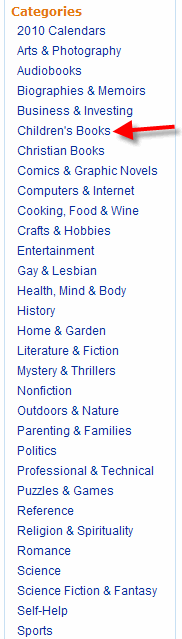
Here’s what I meant by that middle bullet point. Take a look at your local book store. Look at those signs over the book shelves. Mystery. Suspense. Literary Fiction. History. Science Fiction. Fantasy. Romance. Travel…

… and Young Adult.

There, all by itself, with no subheadings to be seen, are all the books aimed at YA readers, lumped together. Sweet Valley High rubbing up against Twilight. Thirteen Little Blue Envelopes next to Two Minute Drill. Catching Fire halfway down the shelf from Diary of a Wimpy Kid.

Dogs and cats, living together. Mass hysteria.

Or, possibly, genius.

See, if I’m browsing for books in the local store, I go to the genres I dig, right? For me, that means I go poke around in the Science Fiction and Fantasy section for awhile – a couple hours, whatever – and then I’m pretty much done.

The odds that I’m going to run across an interesting biography during that time? Low.  The same goes for randomly picking up, reading the cover copy on, and buying No Country for Old Men, or the latest hot suspense thriller. Not going to happen. One of my coworkers is a huge Stephen King fan. Huge. Until I mentioned it last week, she had no idea he’d written On Writing. Why? It’s in another section of the store.

Over in the YA section (of the bookstore or amazon.com or whatever), the odds of that sort of thing happening — cross-genre pollination, if you will — are exponentially higher, simply because everything is lumped together.

Let me tell you about me-as-a-young-reader: I was a slut.

William S. Burroughs? I was there. Random “sports” novels? Sure. Catcher in the Rye? Yep. Alfred Hitchcock collections? Of course. Stephen King? Heck yeah. Trixie Belden? All 34 books in the series, baby, and throw in the Hardy Boys and Nancy Drew as a snack, and chase the whole thing down with The Lord of the Rings (read 15 times during high school). Then the Old Man and the Sea for dessert.

Today? I pretty much stick to my genres of interest.

Why? Well, mostly because I don’t see the other stuff.

But the YA readers see stuff from all different genres. Moreover, they pick up, check out, and decide to read stuff from all different genres. Because it’s there, and ultimately they are readers and they (like the grown-ups) just like good stories.

I don’t think I’m any less voracious a reader than I was as a kid. I don’t think anyone is.

But I think we read less broadly than we used to, because as we age out of the YA area, our reading selection gets segregated.

Then we buy less, because we’ve ‘read everything’.

Maybe, just maybe, all those subsections in the grown-up section of the book store are stupid. Maybe.

I’m not sayin’, I’m just sayin’.

What I’ve learned about Bowling

Tonight marks the conclusion of the fall season of the bowling league in which I, my wife, and several of my game-geek friends participate.

It’s fun. Shut up.

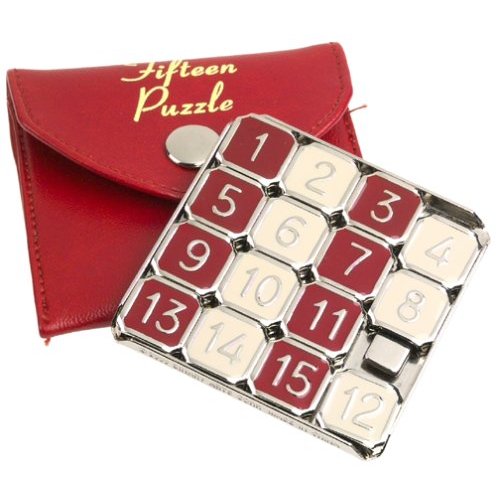
In a way, it’s a weird return to my childhood. While bowling continues to grow in popularity in the U.S., bowling league participation dwindles, but such was not the case when I was a little kid. Both my parents bowl (and bowled), and I can remember many Saturday nights when my folks couldn’t get a sitter and my sister and I spent the evening running around the alley, screwing up someone’s game of pool, or mastering a sliding tile game that I only got to mess with during league play.

So about a year ago, one of our gamer friends asked if we’d be interested, and my wife thought it’d be a good way to meet people in her new home town, and I thought “sure, I’m a pretty decent bowler, why not?” (Funny thing: being around bowling doesn’t actually make you a good bowler. Who knew?)

This is what I remembered about the fine points of bowling.
This is what I remember about the bowling alley when I was a kid.

So we dove in. We got shoes. (Those of you who know my wife know she needs very little provocation or encouragement to buy shoes.) I bought her a bowling ball for Christmas. We didn’t do that great that season, but we had a pretty good time.

The next season started up, and we decided to keep playing.

And the next…

And the next…

And now it’s eighteen months later. Tonight is the last week of play for the fall league. The team that Kate and I are on (Crazy Bowling Monkeys) is in first place. Kate’s the #1 Most Improved women’s bowler. I’m #1 Most Improved men’s. Between us and the other gamer-geek team (White and Nerdy, with Ninja Pin Action), there is not a “leader” category we don’t pretty much dominate. It’s kind of awesome.

Obviously, with the big showdown tonight, it’s on my mind, so I thought I’d write down some stuff I’ve learned about Bowling in the last year and a half.

blue_bowling_pin1. You gotta show up.

It’s a hassle. Sometimes you have to bring your kids along and keep them distracted (and in turn be distracted by them). But the only way to enjoy the game is to play the game, and (if you’re me) try to get better.

2. Getting better takes time. And lots of repetition.

I was never a horrible bowler. Sure, I’ve had horrible games, but I don’t know that I was ever really super-bad (and the nice thing about bowling is that you can still help your team out even if you kinda suck).

But I’ve always wanted to do well. I may not have learned a ton about the technical bits of bowling as a kid, but I did learn what good bowling looked like. I saw a lot of it. Hell, I heard a lot of it. I wanted my ball to do this, and the pins to do that, and the noise they all make to go cracka-boom.

So I keep working at it, and what used to be a 120 average is now a 160 average, and for all that that’s pretty respectable, not a game goes by that I can’t name a dozen things I did wrong, even on the strikes.

3. Don’t aim at the pins.

It seems counter-intuitive, but aiming at the pins you want to knock down is a pretty good way to ensure you’ll hit fuck-all when you throw the ball. There are these great little arrows on the lane that are about a third to half-way down, and you aim at those. They’re close enough to hit with some accuracy, for one thing, so you use them as your front-sight (shooting reference). Basically, it’s not the end result you think about, it’s the beginning and the middle that you work to get right, and the cracka-boom will follow.

4. Be consistent.

Generally speaking, if you start from the same spot every time, and you hit the right arrow, the end result is assured considerably more likely. That’s why you do the repetition — you figure out what works and what doesn’t, then you do the ‘what works’ thing over and over again until it’s hard not to.

5. Don’t be consistent when it’s not working…

Lanes dry out and suddenly the ball hooks too much. Or the lane-monkeys greased the damn thing up and nothing hooks at all. Or your pants are too tight. Or you shouldn’t have had a beer. Or you should have had a beer. Or you’re distracted from work, or family, or your kid with the tile-sliding game. Whatever the reason, The Thing You Do to Make the Pins Go Boom ain’t working: not by a little, but by a lot.

See when that’s happening, and try something else. If that doesn’t work either, sometimes you just have to laugh a little at the whole stupid game and have a good time while you rack up a terrible, terrible score.

6. … but don’t freak out when it’s almost working.

The hardest thing to deal with in bowling is a split — when you leave a couple pins behind, and they’re physically separated from one another by a great and terrible distance. And here’s a hard fact: the difference between a strike and a split is fractions of an inch. Or the exact same throw, but at a different speed. A spare is usually a strike that just didn’t quite strike.

So what do you do if you’re throwing a bunch of splits?

Nothing. The errors are small. Sometimes they aren’t even visible, and you’re left looking at the lane saying “are you kidding me?” In those situations, you just suck it up, go get your ball, and try to clean the mess up as best as you can with the second roll. You’re not doing anything wrong, it’s just not quite working, so keep throwing the ball the same way you have been, and eventually – probably – the kinks will work out.

7. Have fun. Don’t look at the scoreboard.

Is it a sport or is it a game? Could you go pro if you get good enough? Are we going to place this season?

These are all silly questions.

It’s something you enjoy, so do it. If you get really really good at it, maybe you’ll get back a little prize money when the season’s over. Maybe you’ll get a patch for your shirt, or a fridge magnet.

But seriously, who cares? If you can’t remember that it’s supposed to be something you like doing — maybe even love doing — why waste the time?

Yeah, you gotta show up, and you have to play a lot (a LOT) to get better (and take some other player’s advice, and maybe a few lessons, and, again, lots of practice). All good play is also good work, I think, and vice-versa.

But the fact is this: You will never be good if you forget how to enjoy it. Never ever.


There. I’m all done talking about bowling now. Too bad none of this applies to any other activity. Ahh well.

Maybe tomorrow.

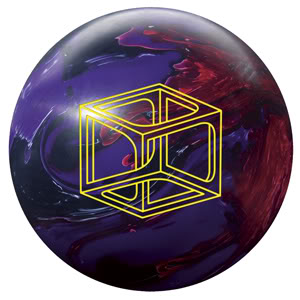
... totally buying this if we win tonight.

Updates for the week of 2009-12-13

  • Mount Rainier Considers Its Mental Health (http://j.mp/7D9a4L) – This should have been the geological apocalypse movie John Cusack made. #
  • Spent the day hiding from the snow, both movies and computer playing soft procrastination music. #
  • Also: watched LotR on tv today, instead of the Director's cuts I have on the shelf. Why do people do that? Far more importantly, why do I? #
  • My child is tryimg to out-stubborn me. She has apparently never met me. #
  • If you'd like to request that Scrivener be made for windows, the link's here: http://bit.ly/8rtola
    (via @rdonoghue) — pleasepleaseplease in reply to rdonoghue #
  • You know what's a hard word to type out? Description. Stupid 'r'. #
  • So, the McGuffin in Avatar is "unobtanium". It's like they wrote the 'plot' with [detail here] brackets and never filled them in. #
  • Thanks to everyone for the RTs on today's post. The whole topic still feels kind of mushy (ha!) in my brain, so I'm glad it's semi-lucid. #
  • The "I want a candy bar" part of my brain is staging an ill-conceived coup against the "nuh-uh, it's #!^&ing cold out" regime. And losing. #
  • Adrift: A voice shouts ‘ENOUGH’, blasting through comms loud enough to be heard over the can.. http://bit.ly/88BPAd #
  • RT @ChuckWendig: Quit While You're Behind: Why You Shouldn't Be A Writer. http://tinyurl.com/yj6up2f #
  • Google Chrome finally breaks out some 'official' extensions. Excellent. Helloooo ChromeBird twitter app. #
  • Adrift: In the silence, the new voice continues: “Captain Delain. Welcome. I received your message.. http://bit.ly/4yfNv4 #
  • My daughter is really concerned she doesn't know what she wants for Christmas. I have tried suggesting things; this agitates her. #
  • write write write bitch about cold write write write coldbitch write write writerglow coldbitch writerbitch coldglow go get daughter YAY #
  • Copenhagen climate summit: 1,200 limos, 140 private planes and caviar wedges: http://is.gd/5gQWp — Ur doin it rong. #
  • "…what a drag and a burden it is to sweat your 'personal brand' in the pursuit of a better-fitting mask." – http://is.gd/5gR1J #
  • Let's count this as my post today: More on Descriptions: the When and Why http://bit.ly/7u4ED3 #
  • RT: @glecharles: "Dear book industry, I'm sorry to tell you this, but your ebooks really aren't worth $25." @jmcquivey http://bit.ly/6Ohz9f #
  • RT @rdonoghue Simon & Schuster and Hachette – doing their part to guarantee ebook piracy becomes the norm. http://tinyurl.com/y9jl3b2 #
  • And yes, I know that's the second RT I've done about the same topic, but I'm too angry to tweet – even post – anything cogent about it. #
  • You know what? The fact that @ebertchicago is rocking the FUCK out of twitter fills me with joy. I look forward to the rest of my life. #
  • Adrift: It intercepted the comms I sent Kaetlyn – thinks it was the intended recipient. It wants to know.. http://bit.ly/4ZwBd3 #
  • Adrift, Episode 10 (podcast) http://bit.ly/5NFxO7
    – in which there is little bit of kissing. #
  • How cold is it in Denver? So cold it breaks the laws of thermodynamics. http://brizzly.com/pic/O43 (Thanks, Mark.) #
  • At the child's Christmas Show, waiting for the Jingle Bells to be rawked. #
  • Amazon Disc+ On Demand: Buy a DVD, Stream it Immediately (http://j.mp/6fivbW) – Here's an idea: do the same thing with books. #
  • Rt @lumpleygames Bad movie writing: "He taught me everything I know … and then some."
    Wait, he did what now? #
  • RT @MuppetsStudio: Watch "The Muppets: Ringing of the Bells" http://bit.ly/5SHbl0
    @youtube #muppets (@agentshana has excellent taste) #
  • RT @paulandstorm: [P] @Molly23 & @TheDoifter's uke-based adorableness + @jonathancoulton's lyric-retention skills = http://bit.ly/4Yy90N #
  • Adrift: I explain I meant it for my daughter, who is here. Somewhere. Voice tells me no DNA-descendants .. http://bit.ly/8VbvhC #
  • Random Average: Big Problems, Little Solutions: E-book Publishing Ideas Stolen from Gamers http://bit.ly/4Yyk0Q #
  • I feel I should play MtG at some point. Would this provide enough stuff to play real games with people? http://bit.ly/5pjh4v #
  • #agentappreciation Thanks to @agentshana for putting up with me, and @daphneun for telling me how to be easier to put up with. #
  • 2009-12-12: Sinfest – The Meaning of Christmas Trees (http://j.mp/6u1pNQ) – G'head, look it up. #
  • Homebrew, $300 book-scanner (http://j.mp/74CSSL) – In case anyone thought I was making up how easy it is to scan a book. #

Big Problems, Little Solutions: E-book Publishing Ideas Stolen from Gamers

Yesterday’s post generated a lot of interest. And emotion, yes, but mostly interest. If I can be allowed to revisit that post for a second, I’d like to sum the whole thing up like so:

Ignore questions of infrastructure and the costs of ebook file development; those things are tangential to the current issue. What Simon & Schuster, Hachette, and HarperCollins are doing by delaying release of ebooks has nothing to do with those issues. It is about money. Period. It’s either about pushing readers toward the purchase of hardbacks, like the good old days, or it’s about the shoving match going on between Amazon and the Big Six over the price of ebooks. Either way, it’s about money.

However, the tunnel-vision focus from the Big Six on that single issue means that they are missing something critical: by delaying the release of official ebooks, they are creating an environment in which ebook piracy (thus far, a negligible issue) can and will thrive. This will hurt them, and I believe they will transfer that pain – which they caused themselves – to their authors.

This makes me angry.

This.
This.

There. That’s all of yesterday TLDR post, in three paragraphs. You’re welcome.

Now then.

Generally, I try to avoid pointing out a problem without proposing some possible solutions. Doing otherwise is what the kids these days refer to as a “dick move”.

So:

What could the Big Six do, with regard to the release of ebooks, that would be better than the idea they’re currently going with?

As I said yesterday:

Some folks asked me yesterday what I thought of James McQuivey’s idea to delay the ebook-as-a-separate-thing by four months, but also give it away as a free thing with every purchase of a hardback edition. I think it’s a great idea. I thought it was a great idea when I suggested it to my agent about six months ago on Twitter. However, I won’t take credit for it – the indie gaming industry has been doing that for years; as a smaller, more nimble publishing organism, it has already felt and adapted to the changes of the digital age, and could teach the ‘real’ publishing world a thing or two about what works and what doesn’t.

I told Joanna Penn in an interview last year that the tabletop role-playing gaming industry started out by trying to model the methods of traditional publishing, found out the hard way that that really didn’t work for them (in the long run, it’s not working for big publishers either, but they’re BIG, so they didn’t notice as soon), and had to find new solutions.  They were the first to adopt electronic publishing, shame-free POD printing, electronic-only publishing, podcasting-modules, mixed media releases, and every other experimental method anyone could think of, good or bad. That’s fine: they’re small, and experimenting is something  small groups of people can DO that big groups can’t.

But what that means is that they’ve come up with some things that consistently seem to work, which, to a greater or lesser degree, might translate into solutions for Big Publishing that would please even the greedy bastards longing for the golden profits of yesteryear.  I don’t have much time, so let’s get right to it.

Package the ebook with the hardback as a value-add

This works. More to the point it IS WORKING. Not just in gaming, but on Amazon, with the Kindle. For gaming examples, go to indie press revolution and take a look at the options for games like Penny for My ThoughtsSpirit of the Century, or Mouse Guard.  I’m not going to discuss this further; this is the granddaddy of ‘new’ ideas, and dead-fucking-simple to implement.

Subscriptions

Whazza? Subscriptions?

Eleven million WoW players tells me that this is a sales method that can work.

Take a look at Paizo.com. They have a brilliant kind of deal set up for all their games and plain-old books: set up a subscription to one of their channels (like Planet Stories, which is your classic pulp “planetary romance” stuff). It costs you X dollars a year or whatever. Every month, you get an email about the new releases within that “channel”, on ebook. NEW releases. If you decide to buy, you get 30% off the unwashed-masses price. (Edit: Or hey, you get it on day-of-hardback-release. Even better: Both.)

Or, how about the Big Dog of gaming, Wizards of the CoastWotC has done some stupid stuff with regard to PDFs of their products in the past, but DnD Insider is smart. Pay for a monthly subscription to the service, and you a couple magazines every month with articles and useful stuff, written by the names you’re already fans of, some cool apps, and ‘free’ access to every one of their current books, as searchable PDFs.  I’m not a member, but I gather that members also get access to ‘preview’ copies of upcoming books, months before they’re released, which generates stir and interest and maybe a few advance reviews posted on —

Oh, you know what that sounds like in publishing? Advance Reader Copies (ARCs).

Yeah: “Sign up for our monthly subscription, and get digital ARCs of our upcoming titles, and a discount on the REAL digital copy when it’s released.” What book nerd wouldn’t jump at the chance?

The Ransom Model

There are a couple game designers who do stuff like this, notably Greg Stolze and Daniel Solis. There are a couple different ways it gets implemented. With Stolze’s Reign supplements, if Greg collects enough money from contributors (the “threshold pledge”) he releases the ebook as a free download for anyone and everyone.  An easy tweak for this in Big Publishing works like this: “If we get enough preorders for the ebook, we’ll release it the same day as the hardback comes out. If not, you have to wait.” I like this, because it lets consumers tell publishers what they want — a ransom model works pretty well as a market study — the consumer has power, and if they don’t exercise it, the publisher feels justified in delaying release.

I can’t help but note that this is a pretty workable thing for indie authors. (If you don’t want to take preorder money for something you might not end up doing, run it like a publish-athon and just take pledges — it’s still a good a way to gauge interest.)

You can also reward the ransom-preorder people in lots of fun ways. A thank-you list on the website or inside the book, mentioning people who helped make that version of the book happen when it did. A unique cover for the advance-order people. Hell, I dunno – what else would be cool?


That’s stuff off the top of my head, stolen from people who are making it work in gaming (and thanks to Chris Weeda for the suggestion).

The important take-away is this: ideas and implementations vary, but they all have one thing in common: they require embracing e-publishing, not holding it at arm’s length like a used condom you found in the spare sheets for your hotel room.

Embracing it. That’s the first thing publishers need to do. That’s the first step.

Right now? I’m not seeing it.

And that’s not a problem anyone but the publishers themselves can fix.