
doyce testerman Rotating Header Image

Writing

Working Like a Rockstar (The October Forecast)

My short-term contract job came to an unhappy/happy end on Friday. And while you might assume ‘unhappy for me’, I’d have to say that the real unhappiness was felt by my now-ex-employers, who really wanted me to stay and really liked me; they just ran out of budget.

They liked me so much that my boss basically wrote the new update to my resume, bragging me up even more than I usually do myself. Contract jobs are actually pretty good in that way — you can come in like a superhero, smash the crap out of problems, gird yourself in accolades, and leave before office politics sully your fancy spandex costume.

The big trick is making sure you’ve got somewhere to land when you leap over the next tall building in a single bound. (Freelance writers will find this kind of thing very familiar; it’s a kind of rockstar lifestyle, assuming one reads that to mean “striving to see the difference between homelessness and living out of a tour van.”)

I may have a new gig lined up pretty soon — another -opolis that needs saving from an Atomic Menance — but to be perfectly honest I’ll be happy if there’s a bit of a lag before the next corporate thing.

I am ready to do some other things.

Let’s review what’s on the to-do list.

New cub.

There’s a new kid on the way to the Casa, so there are more than a few home projects going on. The kid’s room is actually pretty much ready to go, but in the meantime we’ve been working on other rooms in the house.

We’ve painted our bedroom and the front greatroom, and of course Kaylee’s new bedroom needs to be framed in and painted and carpeted and all that cool stuff, but we’re letting some professionals handle that, even though I’m pretty sure I could nail (heh) the framing part.

Then there’s painting the house itself. The outside. We must — absolutely must — paint the whole thing before winter, or we’ll need to replace all the siding next summer, and if I’ve got some time before the next gig, I’ll probably be doing that myself and saving us mumble-hundreds of dollars.

The main problem with this cunning plan is that there are three spots where the siding needs to be replaced, and of course the problem spots aren’t anywhere a mook like me could handle it — they’re complicated places like where the chimney meets the house, right under the eaves.

By the way: if you’re in the market for a house, or planning to build one? Fuck chimneys. I don’t care how much you want a fireplace; don’t do it. Embed a firepit in your deck or something. Chimneys are to houses what a bad smoking habit is to an otherwise healthy person.

Anyway. I am pretty much ready to go with the painting thing, but we’re going to have to wait until we can get these sections fixed by someone competent experienced.

Why isn't it ever simple?

NaNoWriMo is on the horizon, and the prepatory murmurs are audible even at this great distance. Some folks have asked if I’m ‘doing’ it again this year which… c’mon. Of course.

But I’ve got a lot of other stuff to do first. A publisher handed me some revision requests which — damn them — are actually really good, so I want to get those done and handed back to my awesome agent before October is dead and gone.

What will I be writing?

Actually, I have a story to finish that needs at least another 50k (well, two, actually, but I’m picking one over the other), so I’ll be getting it down. Yes, I know you’re not supposed to do that with NaNoWriMo, but at this point, I think I’ve done it legit often enough to pfff those kinds of restrictions.

But that’s just me; if you’re trying to finish NaNoWriMo for the first time, BY ALL MEANS OBSERVE THE RULES. Doing it my way (picking up an unfinished story) is actually making the whole thing harder; I’m just stupid self-challenging that way.

What would I write if I weren’t working on something extant? I dunno.

I’ll tell you what I wouldn’t suggest, though: steampunk.

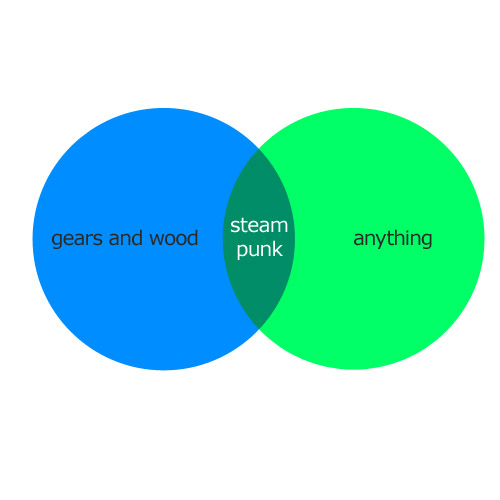
I love the stuff currently lumped in under the heading of ‘steampunk’. Love it. But steampunk is kind of like vampires right now; something people mix in because it’s cool, not because the elements are being used in any kind of meaningful way. I’m getting sick of it.

You want to use the trappings? Fine. Call it whatever it really is, though — zeppelin fantasy, gogglerotica, or whatever.

Punk anything requires class struggle, the social effects of technological revolution, and people with no influence and power rebelling against a monolithic Authority.

Slapping goggles on your protagonist doesn’t make it steampunk.

Ahem. Anyway. Rant over. There’s my advice for NaNoWriMo. At least for today.

Hey, that reminds me.

Last year, I wrote a bunch of NaNoWriMo advice, broken down for day-by-day consumption. People seemed to dig it (and I’ll probably repost them to twitter as appropriate), but would there be any interest in seeing all those posts brought together into some kind of ebook-like thing prior to the start of the madness?

Not to buy, obviously — I’m not wondering if there’s money in it — I’m wondering if there’s enough interest to justify the work of putting it together before 11.01.10.

Is that it? I think that’s it. Damn but I’m out of practice writing these things — this post was all over the place — I’ve got blog-rust all over the keyboard now. Hopefully tomorrow will be better.

Nothing like being blocked from your own site during the day for the last two months to make you really pine to get some blogging done.

Constraints: Tie me up, Tie me down

You may find yourself in a situation where someone you’re working with just doesn’t want to be constrained with guidelines on their creative output. Maybe you’re that person. Maybe it’s deadlines. Maybe it’s a specific word count you need to hit, or can’t go over. Maybe it’s some topic for a short story anthology you’re working on.

“What? I have to write something about a kid without any parents? So we’re going to have a book full of orphan stories? What kind of stupid requirement is that? And it’s a paranormal collection? Paranormal is so last year. What’s the point?”

Okay, precious, let’s talk about constraints.

These are for your own good.

“The most gifted members of the human species are at their creative best when they cannot have their way.”

We’ve probably all heard (or thought) that a blank sheet of paper is terrifying – the point being, too much freedom is just that: too much. Artists love to wax rhapsodic about complete creative freedom, but a lot of the time, having total freedom to do or create anything at all tends to paralyze. I don’t have time to be an artist; craftsmen need guidelines.

“Write whatever you want — anything you do will be great.” That’s a terrible set of instructions, right there. It’ll take me months to get you anything, assuming I ever get you anything.

“I’m going to need something presentable in two weeks.” Now we’re getting somewhere.

“I need it in two weeks and it needs to involve two bishops from Papau New Guinea and their pet llama.” Excellent. Man, I can work with that.

But oh the horror — these constraints have taken things away from me! They’ve robbed me of choices! What if I wanted monks instead of bishops, and a surly binturong instead of a llama? How can my life as an arteest go on?

Surly Binturong is very Hurt that you have excluded him as an option.

Okay… yes, every detail and requirement that is added to a set of guidelines takes away options, but having obstacles to deal with means you’re more likely to take some path you might never have otherwise explored. Obstacles are a gift. The biggest secret to being a creative and productive person is embracing constraints instead of running from them. Small spaces lead to cool innovations. Walls in your way just mean you have something to grab when you need to climb higher.

The other big benefit of constraints is that they focus your energy into a smaller space. A completely blank sheet of paper is like an open, featureless plain — it doesn’t matter how much you have, there’s very little chance you’re going to be able to fill that vast space up with energy. The best thing you can possibly do is compress your energy into a smaller space. Any amount of energy delivers more power when it is controlled, compressed, and directed. Start with an open plain, then keep pressing inward until you’ve squeezed all that down into the smallest package possible. A building. A room. A box. A bullet.

Boom.

Maybe you’re floundering with your current project. See if there’s a way you can make the scope smaller. Compress it. Constrain it.

Think inside the box. See what happens.

Mowing the lawn in your brain

I was doing some yard work today (why do I always wait until the hottest part of the day?) and thinking about the hows and the whats and the whys of it. My house sits on a corner lot in and older part of one of Denver’s more grand suburbs (if it sounds like I’m bragging, you’ve never lived in a grand suburb), which means it’s a pretty good sized patch of earth. Moreover, I’ve done a lot of landscaping work over the years, so there’s a fair bit more to deal with than just mowing.

But mowing’s a big part of it.

I’ve got a process for those days when I need to get out and clean things up. Having a process is really helpful and, more to the point, it’s kind of appealing. I mentioned not too long ago that there are days when I’d rather mow the lawn in 100 degree weather than sit in a comfy chair and write, and maybe part of that (albeit rare) preference is the fact that I always know what I’m going to be doing out there, whereas the writing can be kind of a smoky, treacherous canyon full of quicksand and brain syphilis.

Where was I?

Right. Process.

Anyway, while I was poking around, letting the sun boil my brain, I identified a few parts of THAT task that might be useful for… oh, I dunno… some other task.

1. Yah Gotta Do It

It’s readily apparent that my approach to landscaping is a lot less “topiary sculpture” and a lot more “I think there should be some more flowers and stuff kind of over that way.” I put plant beds in where the the grass won’t grow, and if that doesn’t work, I plant a tree, and if that doesn’t work, I find some pretty rocks to stack there. It’s perhaps a little less apparent that I kind of like it when the grass gets longer and kind of shaggy. It looks better. Healthier. Greener. Maybe I’m compensating for my own nigh-mandatory buzzcut of a head-lawn, but the fact of the matter is I’d be perfectly happy surrounded by shaggy fecundity.

Until it finally got so bad that my kid came back into the house covered in grass ticks. That’s less desirable, so you gotta get out there and keep things in check.

There’s a guy I knew back in high school who still lives in my home town. He’s all grown up now with a couple kids of his own and, within the boundaries of our home town, he’s well-known for mowing his lawn regularly.

(Just… pause for a second and ponder the hotbed of intrigue in which a man can become well known for mowing his yard. Then wonder why I moved. Anyway.)

What do I mean, “regularly”? I mean the guy mows his lawn every two days.

When asked (by my mom, because she’s curious about such things and has no internal filter) why he mowed so often, he explained that it was simply because he didn’t like — hated, in fact — bagging the grass clippings, and the only way he’d ever found to avoid having to do that extra bit of work was to mow often enough that the lawn didn’t require it.

So: yah gotta do the work, if only to keep your kid free of blood-sucking parasites, and the job’s a hell of a lot easier if you do it often and regularly.

Check.

2. It helps to have an external force demanding your compliance

Since I live in a grand suburb, I get to experience the joy of regular interaction with a Home Owner’s Association. As much as I’ve tangled with them in the past (and continue to bitch about them and organizations like them), I do appreciate the way in which they generally keep the neighborhood looking like a place I want to live — no old beater vehicles up on blocks in the driveway or on the street, no old rusted appliances lining the side of the house… you know, obvious things like that.

They’re also quite… enthusiastic about sending out angrygrams reminding people to keep their lawns trimmed and — you know — alive. I know this because I’ve gotten a few in the past. Not a LOT, by any means, but a few here and there. (I recall more-than-two the summer Kaylee was born, for example; it’s possible that it’s the only thing I remember clearly from that whole bleary, sleep-deprived period.)

Now, I’m never happy about getting such letters, but I recognize that they’re a good kick in the pants reminder telling me that I need to keep my play area clean. Sometimes, I need that reminder.

As it pertains to other non-lawn related projects, I’m slowly coming around to the opinion that having some external entity that’s waiting not-so-patiently for your output is generally a good thing. I’m particularly bad about self-imposed deadlines, frankly, but I flat out refuse to under-perform for someone else. Therefore, having a “someone else” that I’m producing for makes me work more betterer.

3. Leave the Weeds Alone until they are Big Enough to Kill

My mom has a huge lawn. Huge. At least an acre, and probably more. She also has a pretty easygoing opinion about weeds, summed up fairly well as “Once you mow everything down to the same height, it all looks green to the folks driving by.”

I am not so sanguine.

I may leave my yard alone for most of the week, but when I get out there to do some work I pretty much want nothing left in the yard except for what I put there in the first place.

The problem is, sometimes I’ll spot the barest stub of a new weed coming up, and try to get that thing out.

Can’t be done. Try as I might, all I’m going to do is waste time sweating over something no one but me is going to see right now, and probably just snap the fucking thing off at ground level, which gives it time to get its roots in nice and deep before it pokes up where I can see it again.

Best thing? Leave it be. Next week (or the next), the cocky little bastard will be nice and big and bushy and, more to the point, easy to pull up and throw away — since I didn’t screw with it in the first place, the roots are usually shallow and useless — it’s all show and no hold, and I can get rid of it so much more easily now that I have a good place to get a grip.

Also, since it’s so obvious, other people (like my daughter) are really helpful about pointing it out.

4. Not Everything You Plant Gets to Stay

A couple years ago, I put some some daisies out in the yard. They looked nice, and I’d heard they were pretty hardy and well-suited to the climate.

They’ve done pretty well.

By “pretty well”, I mean to say that the original cluster of daisies is now five clusters located in militarily valuable areas of the yard, each one about three feet across, each flower coming up to somewhere around the middle of my chest. In the evening, you can hear them whispering and giggling to themselves, telling stories about the inevitable fall of mankind and the rise of the Petal Throne. It’s a bit out of hand.

Much as I like them, there’s going to be a Culling this fall, and it’s going to be a blood on the sand kind of event for the daisies. Them’s the breaks; sometimes you have to rip out the pretty stuff you put in yourself, especially when it’s overwhelming other stuff you that you like just as much (if not more).

5. Wear Sunscreen

Yeah… I’ve got no witty writing corollary here. Sunburns aren’t cool. Wear sunscreen or your face is going to look like a catcher’s mitt.

Suspicious Hoboman is Suspicious

That’s it for my musing. Back to work.

How do I make “What works for me” work for me?

or…

Why I’d Rather Mow the Lawn than Write

(In which the author raises – rather than answers – a question.)

I’m an extrovert.

Most people hear “extrovert” and think “friendly and outgoing” — let me dissuade you of that notion. Basically, an extrovert is a person who is energized by being around other people.

Extroverts tend to fade when alone. Extroverts tend to think as they speak, and think best while they are communicating the thing they’re thinking about. Ideas just don’t seem real unless they can talk about them; reflecting often isn’t enough. There’s a necessary feedback loop as well: talking to yourself (like masturbation) is a temporary substitute at best and tends to hamper you in the long run, if overused between sessions of the Real Thing. (Now there’s an example I didn’t plan on using today.)

So anyway: extroverts. Extrovert. Me. Feeds on feedback. Got it? Good.

The Problem

I write. I’m a writer. Assembling words in an order best suited to enter the eye or ear and, thence, to stick your brain meat is basically what I get paid to do.

In most examples of this kind of work, the feedback loop is slow. Feedback on commercial work is Pretty Darn Slow. Freelance stuff or writing for Big-P publication varies, but tends to range from Fucking Slow to Publishing Industry Slow, with “Glacially Slow” sitting at what’s generally agreed to be the arithmetic mean.

For someone like me, that’s a pretty hard row to hoe. Usually, I can find a work around that gets me by, but I’m struggling right now.

One of the reasons that I like twitter as much as I do is the immediate feedback. Positive or negative, if I put some energy out there, I’ll probably get some energy back. It may not be the response I’m looking for, but something happened. Same’s generally true for blogging or forums or whatever. Feedback. Energy. I recently wrapped up a contract gig that involved me creating coursework for a company. The work cycle was three days of me making something, one day for feedback, two days for implementing feedback, and repeat. Tight cycle of energy transferral is what I’m saying, even though I was working remotely and never saw the client face to face for the twelve week duration.  In that time, I created 14 polished hours worth of online courses.

Then there’s long-form writing. Months of getting that first draft out. Then maybe two people read it. Then a rewrite. Then maybe six more people read it. Sweet Fancy Moses with Bows On, it’s slow. (It’s likely the reason I’m at my best levels of productivity during NaNoWriMo; even if I’m not sharing the actual stuff I’m writing, there’s a lot of loose energy bouncing around.) Using #amwriting tags on Twitter and dipping into that stream only goes so far, and lacks both immediacy and often a sense of connection — it’s not getting the job done.

It gets to the point where, in the midst of the worst mid-afternoon heat, the pull to go mow the lawn is stronger than the pull of the keyboard, because at least with the lawn, someone will point out I missed a spot. Interaction. Feedback. Energy. I’m a junkie.

So what do I need? I dunno. A writer’s group with weekly deadlines? An MFA program? Fucked if I know — I said at the outset that this isn’t a post with answers, just questions. I welcome your input. In the meantime, this is about all the whiny navel-gazing I budgeted for 2010, so I need to get back to work.

A bit of conversation

SO here’s a talk I had this morning:

Website: *explodes*
Me: …the hell?
Website: What?
Me: You just exploded.
Website: Nuh uh.
Me: Yes. You did. You are still exploded, in fact.
Website: Well…
Me: What?
Website: At least you noticed me.
Me:
Website: Sorry.
Me: I’ve had a lot on my –
Website: I know. I know. Sorry. I shouldn’t have said that. Here… I’ll unexplode for you. Gratis.
Me: You don’t have to –
Website: It’s fine. It’s fine. Really. Just… it’s fine. You should finish up your job aps and the new coursework. I know it’s how you spend your mornings right now.
Me: Actually…
Website: *sigh* What?
Me: Well, the apps are in, the course is done — I’m writing this morning.
Website: Oh, on Adrift? I thought I saw something about that on your other site.
Me: My other…
Website: You know. The Twitter.
Me: The Twitter?
Website: Shut up.
Me: The Twitter? Who are you, Betty White?
Website: Maybe I am.
Me: What? What does that even mean?
Website: Nevermind. Shut up.
Me: Listen. *sigh* The reason I noticed you exploded is because I was going to write something with you.
Website: Pff. Sure.
Me: Really. Look, I got some pictures to go along with it.
Website: *glances sidelong* That’s a pretty random collection.
Me: It’s kind of a potpourri post.
Website: … thus marking the one and only time that “potpourri” will show up on your website.
Me: Well, two, now.
Website: Whatever. *rubs scalp with fingers* Grab-bag post, huh?
Me: If you like. I don’t have to if you –
Website: Just get over here and type.

Why Hello There

Hello?

Yes, it’s been pretty quiet around here, but that’s only because it’s been really noisy everywhere else, and while I love me some oversharing, there’s a point at which the day to day slog of doing contract instructional design and job hunting gets a little banal, and that point is somewhere just before I ever start talking about it on the blog. I’ve been working out my schedule (which keeps changing), and the points during the day when I would normally write here have been swallowed by writing for other stuff.

That picture, by the way? That’s totally me — lots of tappity tappity tap, lots of phone calls, and a growing feeling that I’m having two conversations at once, all the time. I’m hoping that’ll pass.

Let’s see what else is going on…

The death of the paper book! Again!

There’s been a lot of very intelligent talking about books and writing and piracy lately, and while I’ve been keeping my eye on all of it, I haven’t jumped in because my feelings haven’t really changed, which means the music I’d be adding to those jam sessions isn’t substantively different than the stuff I’ve played before, and everyone’s already heard that.

Print is dead, long live print.

I’ll tell you this for free: I agree with Konrath — the changes that are coming to publishing will, in the end, come from the rainmakers (the writers), not the people manufacturing buckets (huge props to Rob Donoghue for that analogy). I look around at our greatest living shamans today — the mightiest rainmakers — and I examine what they’re doing, and it looks a lot like someone marking a trail for others to follow. That Steven King dude? He’s training a LOT of readers to like ebooks. I’m just sayin’.

There’s a lot more to this conversation than just paper vs. plastic, but it is one of the sides to the dodecahedron, and I truly feel that electronic (self-?) publishing will be the thing that melts traditional publishing down to its composite goo, remoulds it, and forges it into something new in the next two decades.

It’s important.

I’m Done with Facebook

Yeah, I'm done.

It’s not that I’m a particularly private person. It’s not that I think anything I post on facebook is that inherently valuable.

But it bothers the fuck out of me when someone takes any portion of me — any fraction of my anima — and sells it off like erection-inducing rhino horn powder to the nearest advertising megacorp. No. Not me. Not anymore.

Facebook. Initially welcoming. Ultimately crap.

Arizona

Nuff said.

The Beard

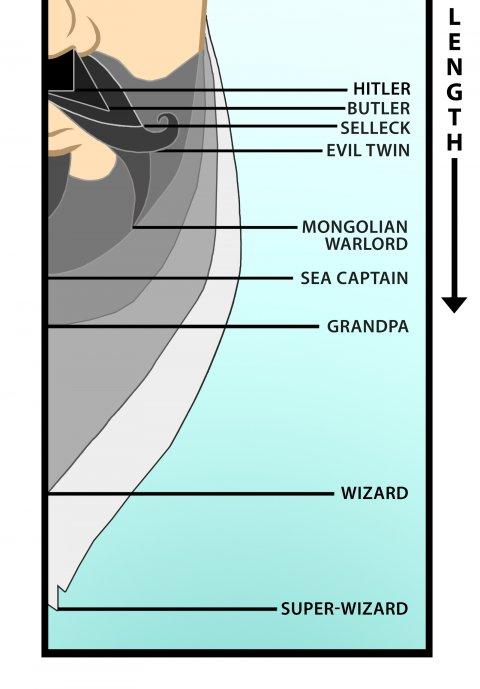
It comes and goes, oscillating between “sea captain” and “gruff grandfather”. At some point in there, Kaylee decides that Daddy Don’t Get No More Lovin’ til the thing comes off, so off it comes. Wail, my brothers, but know that I will soon be with you again.

Someday, I will be a super-wizard.

Gaming stuff

Hoping for a little tabletop Dragon Age this weekend, maybe even next weekend — two weeks in a row. That’ll be fun.

Still playing the FATE-based Diaspora, and it’s good. It’s probably the best FATE iteration I’ve played, but I suspect that’s only because I haven’t played Dresden Files yet. It’s good – don’t get me wrong, it’s damn good – but it’s good in the way that reading Ekaterina Sedia is good: you simply cannot shake the sense that the authors are not communicating with you in their mother tongue. The Diaspora guys speak FATE fluently, but one gets the sense that they’ll never be wholly comfortable within it.

Games overwhelm me at times.

On the computer front, Kate and I are still really enjoying, of all things, Wizard 101. Enough so that we’re playing when we don’t “have to” with Kaylee, and have a pair that we’ve taken well ahead of the trio we play with our youngest gaming partner. It’s good times, and frankly it’s a good game. I even like the dueling arena, which gets back to the game’s MtG/Pokemon deck-dueling roots in a way that I find very satisfying, even when I’m getting my ass kicked.

Also? Teaming up to play a game with my daughter? Awesome.

Back in Middle Earth

We’re not spending a ton of time in Lord of the Rings Online at the moment, due to our Wizard 101 binge…

You're Tolkein my language.

… but I’m getting my fix all the same.

Kaylee and I are reading The Hobbit. By my best reckoning, this marks the realization of a personal dream probably 20 years in the making, and I am very very happy about it.

The dwarves are stuck in the barrels now, floating down to Laketown. Bilbo has a cold.

Kaylee keeps telling me that none of this would have happened if they’d stayed on the path, like Gandalf said.

Sooth, child. You speak sooth.

In the Meantime

I write. I’m coming to the tail-end of my contract work, and I’m taking the opportunity to let go of my job-search stress and use the time to find out what I can do when I’m not cramming my writing time in wherever it will fit, like mortar between boredom bricks. It’s a bit scary, and more than a little stressful, but the words keep moving from my fingers to the screen, and some of them really make me happy, and there are so many many worse things than that.

I have all the direction I need.

I’ll talk to you soon.

Musing about Great Stories

First, a brief linkage: yesterday, I wrote a post on ktliterary.com. It was supposed to be about what it’s like to live with a literary agent, but it really ended up being about what an agent’s job is like, from the point of view of a writer. People seem to like it a lot, which is kind of a happy surprise. Check it out.


A couple days ago, I blogged/reposted a comment I made about Games and Stories and Could One Be the Other and Other Big Questions Like That.

Today, not so much.

Reasons:

  • Chuck is already talking about that, and
    • I chimed in there (a number of times) and really can’t bear to repeat it all here (twice in the same week)
    • That “can games, which inherently have more than the author creating the end product/story, really produce Something of Meaning, if the creators didn’t really have final say in the end product?” question, while worthy and interesting, wearies me, because I’ve been having that discussion for about (checks game blog)… huh. Almost exactly six years ago, to the day. Interesting.  ANYWAY, it’s all good discussion that I’ll follow avidly, but after thinking about it this morning, I really can’t bear to get into all of that again personally.
  • While the “are games breaking into that high-level of story product” question is interesting, there’s something else I find more interesting. Here’s the quote that got me thinking about it.

Chuck: ME2 is [...] a dumb story in a rich storyworld — a generic adventure amidst great characters, fascinating situations, and troubling moral quandaries.

Which got me thinking. (Obviously. I mean, here I am, thinking.) When Chuck talks about ME2′s dumb story, what he’s referring to is “the plot”. I infer this because he then mentions great character, situations, and quandries, so “plot” is about the only other story element left.

I want to make this clear: this post isn’t about/attacking/defending ME2 or Dragon Age or anything. I have a post I want to write for the game blog about those games, but I’m waiting until Kate’s done with ME2, and it’s much more about the games as games, hence the eventual location of the blog post. That’s not what this is about. Suffice it to say I enjoy games and move on.

I like some games more than others.

I like some games more than others.

It’s also not about taking apart Chuck’s statement. I feel like I’ve been picking at his stuff for the last couple days, and that makes me hate myself a little.

In this case, I’m quoting Chuck because he got me thinking about what stories are — what elements they must contain in order to be called a story, and how “concentrated” those elements have to be to be called a good story.

So. I just posed two questions.

One: what elements must a story contain in order to be called a story? I go back to that quote, above, and extract this list:

  • Plot
  • Characters
  • Situation/Setting
  • Quandaries

I’m sure I could google up some kind of official list of story elements that hundreds of literary experts agree on, but frankly I don’t care to; this list works for me. If you have a list you like better, use that one.

Two: How “concentrated” do those elements have to be to be called a good story?

Okay, in order to judge levels of ‘concentration’, we need some kind of rating system.

Hmm. I see where I’m going here. No. No, I don’t think I’m going to use the FUDGE rpg’s “ladder” to rate literature. The end result is going to sound like that horrible essay the kid reads near the beginning of Dead Poets Society. No.

(Even though it would totally work.)

So anyway, let’s just focus on the descriptive words.

“Man, the plot is piss-poor, but the characters, the quandries, and setting/situation? All great.”

Okay… so, looking at that, that’s three elements where the story is ‘great’, and the one where it’s ‘poor’.

Is it a great story at that point? Over all?

I think it is.

Disagree?

Okay, well, what if I told you that that quote above wasn’t Chuck talking about Mass Effect 2, but me talking about Cormac McCarthy’s Pulitzer Prize winning The Road?

Because it totally is.

Great characters. Gut-punch quandaries. Very compelling setting/situation. Plot?

Plot?

A guy and his kid walk from Point A to Point Z. They almost starve and almost freeze to death… about a half dozen times. I mean, I don’t mean to spoil the book for you, but… that’s the plot. The Road is (in my opinion) ALL in the characters and quandaries.

Or I can make it a little more personal: I’ve got a book out with an agent right now where, so far as the plot is concerned, nothing changes. The situation in terms of plot as it exists on page 3 remains completely unchanged at the end. The characters travel from point A to point Z. That’s it. I’m willing to mention this ‘weakness’ because, judged objectively, that doesn’t seem to fucking matter to anyone.

I’ve done seven full revisions on the story at this point, as requested by my agent, a publisher, and others, and not once did anyone say ‘this lack of plot kills it for me.’

You know what they ask for? Over and over? More stuff with the characters. More psyche delving.

So I have to wonder: if some of the elements are strong enough, does it matter if one of the others is weak? Or absent?

Or… dare I say it… unimportant?

Another example: I love reading Greg Rucka’s stories, in part because he writes really good yarns that I could never write myself, not in a thousand attempts. Densely packed international intrigue, these things, with double- and triple-crosses and international political ramifications you need the CIA Factbook to comprehend, let alone create.

I wouldn’t say moral quandaries are very important to the story, though. They’re there, but the characters don’t sit there and agonize over them. They might drink themselves into a coma about what they did later, but at the point of decision, they just pushed the button/flipped the switch/pulled the trigger and walked away.

Does that matter? Nnnnoo… actually, it’s a spy story; that’s sort of the point.

Slightly different example: Neal Stephenson and Dan Brown don’t hinge their (quite amazing) stories on great, deep characters. In my opinion.

Hell, neither does Tolkien. Compelling archetypes and “great characters” aren’t the same thing.

I’m not saying you couldn’t have a wonderful, amazing, mind-blowing story that really gets all these four elements up in the “great” range. Certainly you can.

But… certainly you must?

I don’t know. I’m still thinking about it. But I don’t think so.

Moonlighting elseblog

I’ve got a post percolating about stories, games, and plot vs. character, but I’ll save that for tomorrow and instead point out that I wrote a guest blog over at ktliterary.com today: On Being Rexroth: Living with a Literary Agent.

Enjoy.

Enjoy.

What I’ve learned about Bowling

Tonight marks the conclusion of the fall season of the bowling league in which I, my wife, and several of my game-geek friends participate.

It’s fun. Shut up.

In a way, it’s a weird return to my childhood. While bowling continues to grow in popularity in the U.S., bowling league participation dwindles, but such was not the case when I was a little kid. Both my parents bowl (and bowled), and I can remember many Saturday nights when my folks couldn’t get a sitter and my sister and I spent the evening running around the alley, screwing up someone’s game of pool, or mastering a sliding tile game that I only got to mess with during league play.

So about a year ago, one of our gamer friends asked if we’d be interested, and my wife thought it’d be a good way to meet people in her new home town, and I thought “sure, I’m a pretty decent bowler, why not?” (Funny thing: being around bowling doesn’t actually make you a good bowler. Who knew?)

This is what I remembered about the fine points of bowling.

This is what I remember about the bowling alley when I was a kid.

So we dove in. We got shoes. (Those of you who know my wife know she needs very little provocation or encouragement to buy shoes.) I bought her a bowling ball for Christmas. We didn’t do that great that season, but we had a pretty good time.

The next season started up, and we decided to keep playing.

And the next…

And the next…

And now it’s eighteen months later. Tonight is the last week of play for the fall league. The team that Kate and I are on (Crazy Bowling Monkeys) is in first place. Kate’s the #1 Most Improved women’s bowler. I’m #1 Most Improved men’s. Between us and the other gamer-geek team (White and Nerdy, with Ninja Pin Action), there is not a “leader” category we don’t pretty much dominate. It’s kind of awesome.

Obviously, with the big showdown tonight, it’s on my mind, so I thought I’d write down some stuff I’ve learned about Bowling in the last year and a half.

blue_bowling_pin1. You gotta show up.

It’s a hassle. Sometimes you have to bring your kids along and keep them distracted (and in turn be distracted by them). But the only way to enjoy the game is to play the game, and (if you’re me) try to get better.

2. Getting better takes time. And lots of repetition.

I was never a horrible bowler. Sure, I’ve had horrible games, but I don’t know that I was ever really super-bad (and the nice thing about bowling is that you can still help your team out even if you kinda suck).

But I’ve always wanted to do well. I may not have learned a ton about the technical bits of bowling as a kid, but I did learn what good bowling looked like. I saw a lot of it. Hell, I heard a lot of it. I wanted my ball to do this, and the pins to do that, and the noise they all make to go cracka-boom.

So I keep working at it, and what used to be a 120 average is now a 160 average, and for all that that’s pretty respectable, not a game goes by that I can’t name a dozen things I did wrong, even on the strikes.

3. Don’t aim at the pins.

It seems counter-intuitive, but aiming at the pins you want to knock down is a pretty good way to ensure you’ll hit fuck-all when you throw the ball. There are these great little arrows on the lane that are about a third to half-way down, and you aim at those. They’re close enough to hit with some accuracy, for one thing, so you use them as your front-sight (shooting reference). Basically, it’s not the end result you think about, it’s the beginning and the middle that you work to get right, and the cracka-boom will follow.

4. Be consistent.

Generally speaking, if you start from the same spot every time, and you hit the right arrow, the end result is assured considerably more likely. That’s why you do the repetition — you figure out what works and what doesn’t, then you do the ‘what works’ thing over and over again until it’s hard not to.

5. Don’t be consistent when it’s not working…

Lanes dry out and suddenly the ball hooks too much. Or the lane-monkeys greased the damn thing up and nothing hooks at all. Or your pants are too tight. Or you shouldn’t have had a beer. Or you should have had a beer. Or you’re distracted from work, or family, or your kid with the tile-sliding game. Whatever the reason, The Thing You Do to Make the Pins Go Boom ain’t working: not by a little, but by a lot.

See when that’s happening, and try something else. If that doesn’t work either, sometimes you just have to laugh a little at the whole stupid game and have a good time while you rack up a terrible, terrible score.

6. … but don’t freak out when it’s almost working.

The hardest thing to deal with in bowling is a split — when you leave a couple pins behind, and they’re physically separated from one another by a great and terrible distance. And here’s a hard fact: the difference between a strike and a split is fractions of an inch. Or the exact same throw, but at a different speed. A spare is usually a strike that just didn’t quite strike.

So what do you do if you’re throwing a bunch of splits?

Nothing. The errors are small. Sometimes they aren’t even visible, and you’re left looking at the lane saying “are you kidding me?” In those situations, you just suck it up, go get your ball, and try to clean the mess up as best as you can with the second roll. You’re not doing anything wrong, it’s just not quite working, so keep throwing the ball the same way you have been, and eventually – probably – the kinks will work out.

7. Have fun. Don’t look at the scoreboard.

Is it a sport or is it a game? Could you go pro if you get good enough? Are we going to place this season?

These are all silly questions.

It’s something you enjoy, so do it. If you get really really good at it, maybe you’ll get back a little prize money when the season’s over. Maybe you’ll get a patch for your shirt, or a fridge magnet.

But seriously, who cares? If you can’t remember that it’s supposed to be something you like doing — maybe even love doing — why waste the time?

Yeah, you gotta show up, and you have to play a lot (a LOT) to get better (and take some other player’s advice, and maybe a few lessons, and, again, lots of practice). All good play is also good work, I think, and vice-versa.

But the fact is this: You will never be good if you forget how to enjoy it. Never ever.


There. I’m all done talking about bowling now. Too bad none of this applies to any other activity. Ahh well.

Maybe tomorrow.

... totally buying this if we win tonight.

... totally buying this if we win tonight.