After a holiday hiatus (and… ahem… an extra week off), we’re back.
With a couple new character to voice, once of which is giving me some heartache. Suffice it to say that Mak (the human, not the squirrel) sounds a lot more like Badger in my head than he does in my mouth. Ahh well.
Short post today; I love you (I do, really. Put this mask on.), but I have other writing to do.
So last night, I spoke to Twitter and said:
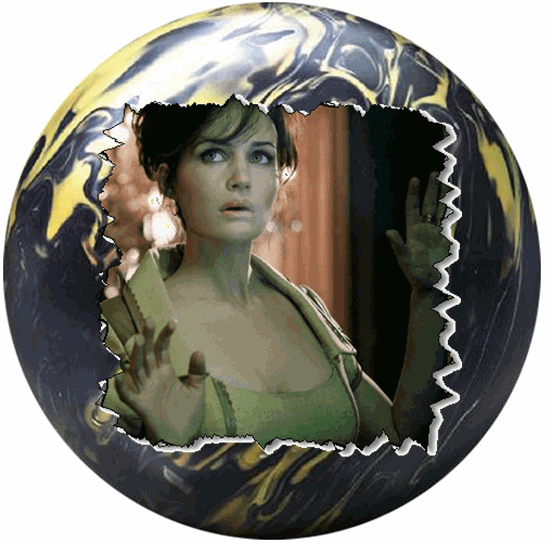
I love my new bowling ball. My new bowling ball hates me and is filing for a restraining order. I think I’ll name her ‘Carla’.
Yeah. I’m going to talk about bowling again.
As I’ve mentioned previously, my bowling game has improved quite a bit in the year since I got started in a league with some other gamer nerds in the area. Good times and steady improvement led to a pretty surprising second-place finish for the fall season. Our team was edged out of 1st place in a nail-biter of a final game, our salty tears diluted somewhat by the fact that Kate and I were first in the Most Improved categories for our respective genders and we both got second place in our “High Handicap Series” categories.
Oh, and the prize money. That helped too.
I decided to farm the filthy lucre back into the habit that spawned it and get myself a new bowling ball.
See, for the last 18 months or so, I’ve been using a ball generously given to me by Chris (the guy who got us into the league in the first place). It’s an old ball of his, drilled for both his hand measurements and for a ‘beginner’s’ grip. It’s a little beat up, and I have to kind of crook my thumb a bit to wedge it into its hole well enough, but… well, it works. It doesn’t do anything too fancy, but clearly I can make it hit the pins.
So why get a new ball? Well, I can turn in a very nice score with the Old Ball, but it doesn’t really let me do those fancy curving shots that you see the pro guys put out, and those fancy curving shots actually help the ball hit the pins in a way that makes it more likely they’ll fall down and go cracka-boom.
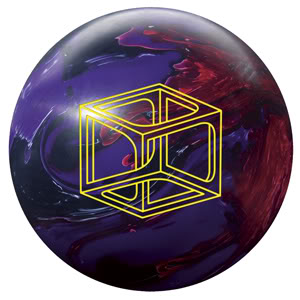
So I dug around a bit, and took some suggestions from Chris, and ordered up a nice new ball. It’s pretty. It does lovely curvy things. I named it Carla. You know, just in my head. As a joke. Totally a joke. Say hello, Carla.
Before the new season started last night, I went in and got the ball drilled. Oh, shush: quit snickering.
Okay, fine: “I got new finger grips added to the ball.” Happy now?
The guy at the shop told me that he would allow no stinking beginner’s grip on a ball like that, so I drilled me up a ‘fingertip’ grip.
Which is fine; that’s kind of what I was expecting. When he was done, the ball was finally ‘finished’. Ready.
And damn she was pretty.
But there’s a saying in bowling: “Pretty balls don’t throw strikes.”
The ball curves, yeah. WAY more than I’m used to, but that hardly matters, cuz I can’t get the damn thing to come off my hand; that fancy fingertip grip basically means that everything I’ve trained myself to do with Old Ball is wrong wrong wrong. So wrong that I damn near hurt myself last night. I’m going to have to completely relearn how to play, pretty much from the ground up.
So after an abysmal first game (95 pins! Woo!) during which I threw more gutter balls than I think I ever have in a game, and air-balled a fifteen-pound hunk of stone more than I’d like to admit (encouraging many nearby bowlers to look around for the moron noob who didn’t know how to play), I put Carla back in my bag, mumbling something like “It puts the lotion on its skin…” and pulled out Old Ball. My security blanket. Security ball. Whatever. Shut up.
Old Ball didn’t fail me. The approach I used was simpler. Crude. Basic.
But the pins fell down and went cracka-boom.
Frustrating, to have the New Pretty Thing and to have to actually WORK before it produces… well, forget about ‘something better than the old ball’; I’ll be happy with ‘something comparable to the old ball’.
Is this about writing? It might be. I’m a pretty basic guy when it comes to putting words down. As Papa said “I know the 10 dollar words, but there are older words; better, simpler, and those are the ones I use.” Could be that the thing I’m working on right now also includes some fancy-schmancy tricks that I’ve seen used by writers I admire, and I thought “I can do that. How hard can it be? It’s just writing.”
Yeah. Gutterball.
So what happens to Carla now? Do I stick with Old Ball and my respectable-but-maybe-not-as-good-as-it-could-be game?
No. This weekend, I go to the lanes and I practice. A lot. First I figure out how to simply deliver the damn thing, then I’ll figure out how much that changes the roll, until finally, maybe, I’ll get the results I want. Practice practice practice. Lots of people throw tricky balls like mine; they do just fine, and dammit, they aren’t any better than me.
But last night I bought a bowling bag that holds two balls. Old Ball will never be very far away.
Sometimes you need old and simple and crude and ugly. I see no reason to give up the simple things that work, just because I’m working on a fancy new thing.
Once upon a time, I was a pretty hard core MMO raider.
Now, I’ve been playing MMOs since long before they were called that (or had graphics) and I’ve enjoyed almost all the time I’ve spent on such pastimes, but I’m not talking about the play of MMOs in general — just about a very specific activity: raiding.
For the uninitiated, ‘raiding’ is a term for an activity in a multiuser game like World of Warcraft. In this activity, you and a largish group of other like-minded people assemble at a set time online and in somewhat organized fashion attempt to defeat some boss in the game who is designed to be too tough for a single person or even several people to beat. These fights are usually quite challenging, with multiple phases and ‘tricks’ that you need to figure out and learn how to deal with before you can finally put all the pieces together, do all the dance steps in the right order, avoid the specter of Plain Ol’ Bad Luck, and beat the guy.
All MMOs with which I am familiar have this mechanic, though some (CoH) have it to a much smaller degree, which others (LotRO, WoW, many others) use the idea of ‘added complexity’ to bring interest to boss fights that would otherwise be “the big guy gets the guy’s attention, and we all beat on him with relative impunity.”
Because of those little tricks and features, it’s a situation where you go into each new fight pretty much assuming that you won’t win the first time. You’re not really even trying to win — you’re gathering information. What kinds of attacks is he using? Fire? Okay. Do his special attacks have any visual or audio clues that provide warning? Do we have to stay moving or fight in a particular location, or both, depending on what’s going on? How hard is he hitting? How hard are WE hitting? Is he resisting our attacks too much? Can we fix that?
And, ultimately: “How can we avoid the thing that just killed us, the next time?”
Victory does not come easily, and it rarely comes quickly — when I played World of Warcraft, I participated in a raid a couple nights a week, for two to three hours each night, and it would often take us several weeks of attempts to learn how to reliably down a new boss. During those weeks, there were no rewards — nothing but the ongoing drain of repair bills, consumables consumed, and the ever present specter of Time Spent Without Victory.
In terms of gaming, I don’t think there is anything else like this try-fail-try-fail-try-again experience in other games. Certainly not tabletop rpgs.
Sounds pretty depressing, but I’ll tell you a secret: The Win Made it Worth It. There was nothing at all like finally putting it all together and making it work.
And I still enjoy it. I certainly don’t raid like I used to (or play WoW, come to that), but probably my second favorite thing to do in Lord of the Rings Online is to get in a group with Kate and a few other good players, chat about our day, and figure out how to beat a new fight.
Sometimes, we don’t figure it out.
There’s this new fight we tried this weekend that looked like it would be pretty easy to beat. I mean, tricky, yes, but even during the first attempt we pretty much had it figured out: when he says THIS, you run away; when he says THAT, we all bunch up; don’t stand on the open grates with the fire underneath; stay behind him.
And then, suddenly, we were dead.
“What happened? Oh. Fire. Fire bad. Stay out of the fire. Okay. Good tip. Let’s try again.”
Almost beat him… and boom. Fire. Weird.
And again, and again, and again, and again.
Finally, we called it for the night, said we’d ponder it, and come back to it later — maybe ask around on the forums to see What The Hell?
So we ask around, and everyone says we’re idiots. No one knows what we’re talking about. No one’s having that problem.
Well, dammit, what do we do now?
Easy.
We go back and try it again.
Like I said, there is no real corollary (that occurs to me) between this experience and any other kind of gaming.
That’s not to say it doesn’t remind me of something; it reminds of several things, one of which is writing.[1]
In November, I blasted through writing Adrift. I didn’t finish it, because it’s considerably longer than 50k — probably twice that — but I knew that would happen, and I was prepared to continue on in December.
Which, to be clear, I have done. But man has it been painful.
How painful?
I’ve been working on the same scene — not editing it, mind you, just writing it — pretty much for the whole of December. Nothing is working right. Everything is coming along hard; every sentence is like pulling out my own front teeth with a pair of pliers.
Just when I think I’ve got it, boom. Fire. Dead. The looming specter of Time Spent Without Victory. Right now, I’m not even trying to win; I’m just trying to gather as much information as I can, so I can improve my performance in the next attempt.
Then, I stare at my screen, and I think “well what do I do now?”
And sometimes, there’s no poetic answer. There’s no author’s quote that shines a light ahead. There’s no technique or skill or talent to get you out of it.
There’s just the answer I learned from Boss Fights in MMOs.
“Go back in. Try again.”
Maybe, eventually, succeed.
1 – The other thing it reminds me of is submitting your work and trying to get published, but that’s a whole different post.
Over on Twitter today, I linked to three of the seven parts of an analysis of the Phantom Menace that was posted over on YouTube, and which I initially found on /Film: 70-Minute Video Review of Star Wars: The Phantom Menace.
The reason I didn’t link to all seven videos? I didn’t want that to be the main thing I linked to today.
Some folks retweeted it and seemed to enjoy it… others were put off by the video’s… odd tone.
Which I totally understand.
How should I explain this tone?
Ahh…
Okay, you know the serial killer guy in Silence of the Lambs?
Not Hannibal Lector, but the other guy? The “It puts the lotion on its skin / or else it gets the hose again.” guy?
Yeah. Him. Imagine if that guy, in between skinning girls to make a woman-suit, sharply and insightfully analyzed all the (multiple) failings in Phantom Menace… and periodically went off his meds.
That’s the video. It even sounds just like him.
It’s not to everyone’s taste.
The problem is, the insight is really good. It’s really useful, from the point of view of story construction and character building and even the use and purpose of cool-ass fight scenes.
But can I legitimately recommend a video like this to someone when I know the humor might be distasteful?
Yeah, I probably can. I’m sorry if the humor is not funny to you, or it goes over the line, but dammit, the analysis is too sharp to ignore. I always knew I didn’t like Phantom Menace, but I’d never put a lot of brainsweat into why. Thanks to this guy – his fucked-up sense of humor notwithstanding – I understand why, and I take away tools I can use to make my own stories better.
I guess I just have to remind myself it’s a joke. It’s part of the ‘brand’, maybe, and that’s his choice, but it’s also his problem – I’m just focusing on the useful signal. Sometimes I have to ignore the joke.
I mean, we all know Chuck’s not actually gaining carnal knowledge of vegetable or animal produce, right? We know Warren Ellis isn’t boiling hookers and shooting their cerebral juices into his femoral artery, yes?
Maybe this guy jumps over the line here and there. Fine. Yes. Not every joke is funny. Fuck knows I scratch my head at some people’s idea of humor sometimes, and at the twitter retweets that link back to my site with a parenthetical “Warning: NSFW”.
Really? Where the fuck do you work? I’ve known pastors that swear more than me.
Anyway.
If you really can’t stomach the meat because of the seasoning, I’ll try to summarize the guy’s points, below.
But I still think you should check out the video.
Keep people around who will push back on your work and force you to make it better… or just make sense.
People need to care about your protagnist – someone you can identify with – especially if you’re writing genre stuff. Get really basic. People should be able to:
“Describe the character without saying what they look like, what kind of costume they wore, or what their profession/job is.”
ACTION: in part two of the video, the guy’s analysis of what the first scene of the original movie conveys is brilliant.
You might be able to skip part three, because it’s JUST about the movie’s plot holes. So’s part four and five.
“Welcome to Coruscant, Home of the Mid-air Collision.” Heh.
Part Six: five minutes in. What Fight Scenes Do.
“When you’re worked up with emotion […] you expose your humanity a little.”
Temptation, revelation, anger, redemption.
“Lightsaber duels have less to do with the fight, and more to do with the characters.”
“We need a deeper meaning to things.”
Part Seven: the Ending Multiplication Effect — the simpler endings have more force and interest because we can focus on the important elements and the story.
So… yeah. The summary doesn’t really do the points justice. Not really.
I completely agree if you found the noise ratio too high to get anything out of the signal. Okay. I respect that. This is, I suppose, simply my explanation of why I chose to to the recommend the thing anyway.
(Also: I’m a huge Star Wars fanboy. There’s that too.)
So I’m teaching a basic business writing class last night, and someone asked about whether or not they should double-space after periods and colons. I said that that had been the rule at one time, but as a practice it was pretty much dying out. Like most things having to do with the dos and don’ts of writing, this is something I know to be true, but I’m more than a little fuzzy on the why.
They (of course) asked why.
And I heard my mouth say:
Much of it comes from graphic designers who think that the big white space after a sentence is ugly, especially now that few people use mono-spaced fonts like courier. Those double spaces really stand out in true-type/proportional fonts.
But even if that weren’t the case, there is no point in wasting time with double-spacing after periods today, because most anything you write will end up on a website somewhere, and web browsers never show more than one space after the period, anyway. (Even if you do it, no one will see it, so it’s wasted effort.)
After my mouth was done talking, my brain was left wondering “Is that right? That actually sounds right.” (My brain is justifiably suspicious of my mouth.)
Turns out, it pretty much was. It’s fascinating to me, the way in which our environment (-cum-technology) visibly and continually redefines “normal” in writing/communication.
(And I’d like to thank Twitter for helping my unlearn a two-decades-old double-spacing habit.)
I have a basic business writing and grammar class to teach today, so this is short, but I wanted to toss it out for discussion.
This spun off of a conversation I was having with my wife. For those of you who don’t know, Kate’s sekrit superhero identity is Daphne Unfeasible, the mastermind behind ktliterary.com, a literary agency that focuses mostly on YA (Young Adult) and Middle-grade fiction. Those types of books (and, to an extent, the individuals within that target audience) are a passion for her, one which I fully support.
But (as I said while sitting around at my family’s place over Thanksgiving) “YA” as a category of books kind of bugs me because from my point of view (as a consumer and as someone who catches very random snippets of agenting talk when I pop into Kate’s office to ask if she’s seen my shoes), the question of whether or not a book is YA (or middle-grade) pretty much boils down to “how old is the protagonist?” If the protag’s about the right age to fall within the target audience of such books, and the subject matter isn’t too dark, then you’re YA.
(Yes, I know I’m oversimplifying the process. I know. I KNOW. Understand that this is my perception as a consumer, not someone ‘inside’ YA. I will concede that I don’t know as much about the inner workings of the YA publishing industry as someone inside it. However, while I’ll concede that, I’d also like to point out that since I (the consumer) am the one spending money on the books, my (limited) perception matters just as much, if not more, than the people who know all the nuances.)
Anyway, back to the story. I was saying that it bugged me, because the whole thing just kind of seemed like cheating. I think I said something like “The genre of YA is basically nothing more than an age bracket. It’s sloppy.”
To which my super-keen wife said “Sure, it would be, if that were the case, but YA isn’t a genre.”
Then we argued about discussed that for awhile, and the fruitful result of that conversation looked something like this.
All the ‘real’ genres of fiction exist within the YA (or MG) age-grouping.
While that is true, consumers don’t see that because YA is not usually separated out by genre in bookstores or libraries in the way in which adult books are.
That may be one reason why YA books sell so well.
(This presupposes the fact that YA as a category-if-not-genre of books is a hot publishing commodity. Generally, that’s true.)
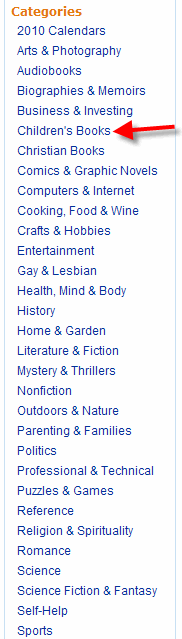
It looks like this.
Here’s what I meant by that middle bullet point. Take a look at your local book store. Look at those signs over the book shelves. Mystery. Suspense. Literary Fiction. History. Science Fiction. Fantasy. Romance. Travel…
… and Young Adult.
There, all by itself, with no subheadings to be seen, are all the books aimed at YA readers, lumped together. Sweet Valley High rubbing up against Twilight. Thirteen Little Blue Envelopes next to Two Minute Drill. Catching Fire halfway down the shelf from Diary of a Wimpy Kid.
Dogs and cats, living together. Mass hysteria.
Or, possibly, genius.
See, if I’m browsing for books in the local store, I go to the genres I dig, right? For me, that means I go poke around in the Science Fiction and Fantasy section for awhile – a couple hours, whatever – and then I’m pretty much done.
The odds that I’m going to run across an interesting biography during that time? Low. The same goes for randomly picking up, reading the cover copy on, and buying No Country for Old Men, or the latest hot suspense thriller. Not going to happen. One of my coworkers is a huge Stephen King fan. Huge. Until I mentioned it last week, she had no idea he’d written On Writing. Why? It’s in another section of the store.
Over in the YA section (of the bookstore or amazon.com or whatever), the odds of that sort of thing happening — cross-genre pollination, if you will — are exponentially higher, simply because everything is lumped together.
Let me tell you about me-as-a-young-reader: I was a slut.
William S. Burroughs? I was there. Random “sports” novels? Sure. Catcher in the Rye? Yep. Alfred Hitchcock collections? Of course. Stephen King? Heck yeah. Trixie Belden? All 34 books in the series, baby, and throw in the Hardy Boys and Nancy Drew as a snack, and chase the whole thing down with The Lord of the Rings (read 15 times during high school). Then the Old Man and the Sea for dessert.
Today? I pretty much stick to my genres of interest.
Why? Well, mostly because I don’t see the other stuff.
But the YA readers see stuff from all different genres. Moreover, they pick up, check out, and decide to read stuff from all different genres. Because it’s there, and ultimately they are readers and they (like the grown-ups) just like good stories.
I don’t think I’m any less voracious a reader than I was as a kid. I don’t think anyone is.
But I think we read less broadly than we used to, because as we age out of the YA area, our reading selection gets segregated.
Then we buy less, because we’ve ‘read everything’.
Maybe, just maybe, all those subsections in the grown-up section of the book store are stupid. Maybe.
Tonight marks the conclusion of the fall season of the bowling league in which I, my wife, and several of my game-geek friends participate.
It’s fun. Shut up.
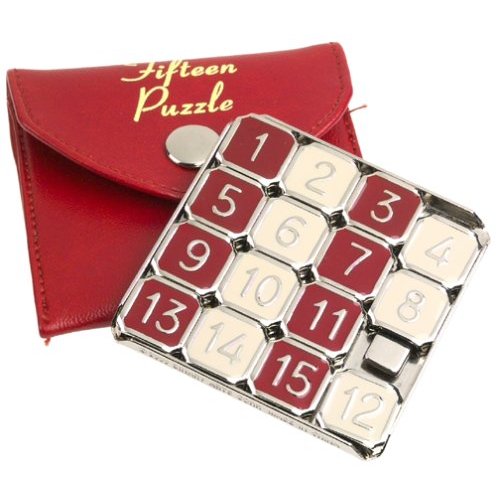
In a way, it’s a weird return to my childhood. While bowling continues to grow in popularity in the U.S., bowling league participation dwindles, but such was not the case when I was a little kid. Both my parents bowl (and bowled), and I can remember many Saturday nights when my folks couldn’t get a sitter and my sister and I spent the evening running around the alley, screwing up someone’s game of pool, or mastering a sliding tile game that I only got to mess with during league play.
So about a year ago, one of our gamer friends asked if we’d be interested, and my wife thought it’d be a good way to meet people in her new home town, and I thought “sure, I’m a pretty decent bowler, why not?” (Funny thing: being around bowling doesn’t actually make you a good bowler. Who knew?)
This is what I remember about the bowling alley when I was a kid.
So we dove in. We got shoes. (Those of you who know my wife know she needs very little provocation or encouragement to buy shoes.) I bought her a bowling ball for Christmas. We didn’t do that great that season, but we had a pretty good time.
The next season started up, and we decided to keep playing.
And the next…
And the next…
And now it’s eighteen months later. Tonight is the last week of play for the fall league. The team that Kate and I are on (Crazy Bowling Monkeys) is in first place. Kate’s the #1 Most Improved women’s bowler. I’m #1 Most Improved men’s. Between us and the other gamer-geek team (White and Nerdy, with Ninja Pin Action), there is not a “leader” category we don’t pretty much dominate. It’s kind of awesome.
Obviously, with the big showdown tonight, it’s on my mind, so I thought I’d write down some stuff I’ve learned about Bowling in the last year and a half.
1. You gotta show up.
It’s a hassle. Sometimes you have to bring your kids along and keep them distracted (and in turn be distracted by them). But the only way to enjoy the game is to play the game, and (if you’re me) try to get better.
2. Getting better takes time. And lots of repetition.
I was never a horrible bowler. Sure, I’ve had horrible games, but I don’t know that I was ever really super-bad (and the nice thing about bowling is that you can still help your team out even if you kinda suck).
But I’ve always wanted to do well. I may not have learned a ton about the technical bits of bowling as a kid, but I did learn what good bowling looked like. I saw a lot of it. Hell, I heard a lot of it. I wanted my ball to do this, and the pins to do that, and the noise they all make to go cracka-boom.
So I keep working at it, and what used to be a 120 average is now a 160 average, and for all that that’s pretty respectable, not a game goes by that I can’t name a dozen things I did wrong, even on the strikes.
3. Don’t aim at the pins.
It seems counter-intuitive, but aiming at the pins you want to knock down is a pretty good way to ensure you’ll hit fuck-all when you throw the ball. There are these great little arrows on the lane that are about a third to half-way down, and you aim at those. They’re close enough to hit with some accuracy, for one thing, so you use them as your front-sight (shooting reference). Basically, it’s not the end result you think about, it’s the beginning and the middle that you work to get right, and the cracka-boom will follow.
4. Be consistent.
Generally speaking, if you start from the same spot every time, and you hit the right arrow, the end result is assured considerably more likely. That’s why you do the repetition — you figure out what works and what doesn’t, then you do the ‘what works’ thing over and over again until it’s hard not to.
5. Don’t be consistent when it’s not working…
Lanes dry out and suddenly the ball hooks too much. Or the lane-monkeys greased the damn thing up and nothing hooks at all. Or your pants are too tight. Or you shouldn’t have had a beer. Or you should have had a beer. Or you’re distracted from work, or family, or your kid with the tile-sliding game. Whatever the reason, The Thing You Do to Make the Pins Go Boom ain’t working: not by a little, but by a lot.
See when that’s happening, and try something else. If that doesn’t work either, sometimes you just have to laugh a little at the whole stupid game and have a good time while you rack up a terrible, terrible score.
6. … but don’t freak out when it’s almost working.
The hardest thing to deal with in bowling is a split — when you leave a couple pins behind, and they’re physically separated from one another by a great and terrible distance. And here’s a hard fact: the difference between a strike and a split is fractions of an inch. Or the exact same throw, but at a different speed. A spare is usually a strike that just didn’t quite strike.
So what do you do if you’re throwing a bunch of splits?
Nothing. The errors are small. Sometimes they aren’t even visible, and you’re left looking at the lane saying “are you kidding me?” In those situations, you just suck it up, go get your ball, and try to clean the mess up as best as you can with the second roll. You’re not doing anything wrong, it’s just not quite working, so keep throwing the ball the same way you have been, and eventually – probably – the kinks will work out.
7. Have fun. Don’t look at the scoreboard.
Is it a sport or is it a game? Could you go pro if you get good enough? Are we going to place this season?
These are all silly questions.
It’s something you enjoy, so do it. If you get really really good at it, maybe you’ll get back a little prize money when the season’s over. Maybe you’ll get a patch for your shirt, or a fridge magnet.
But seriously, who cares? If you can’t remember that it’s supposed to be something you like doing — maybe even love doing — why waste the time?
Yeah, you gotta show up, and you have to play a lot (a LOT) to get better (and take some other player’s advice, and maybe a few lessons, and, again, lots of practice). All good play is also good work, I think, and vice-versa.
But the fact is this: You will never be good if you forget how to enjoy it. Never ever.
There. I’m all done talking about bowling now. Too bad none of this applies to any other activity. Ahh well.