Last week, I flew back home with my daughter. Side benefits included lots of play time on the farm for Kaylee, but the main reason for the trip was because I’d been asked to come back and do a reading and signing at the county library in my old home town.
Very cool, you might think, and as far as I’m concerned, you’d be absolutely right: it was cool, and I was extremely flattered and excited and not a little humbled by it.
Then the librarian (who is also the librarian for the high school) told me that he’d spoken with English teacher at the school, and she was also interested in having me in to speak with her seniors, specifically the seniors who were gunning for the horizon with college-level or college-prep curricula.
At which point, things went from very cool to semi-terrifying, for reasons I doubt I need to explain to over thirty.
Still, I got myself under control and made contact with the teacher, who told me that what the seniors were interested in more than anything (she guessed) would be me talking about how I’d gotten started writing seriously, and how that had turned into a finished, published book.
Oh, I thought, that’s just me talking about NaNoWriMo, then. I shrugged at my computer screen. Well, that’s a piece of fucking cake.
And not to give the ending away, it really kind of was.
The school building I went to as a senior was torn down a few years after I graduated, so it wasn’t quite a perfect homecoming, but there was a enough there that I recognized (names, faces, a particular sandstone archway), and enough new stuff (the theater, oh my god you guys, the theater) that I didn’t mind. Like finding a favorite bit of memory, but restored and updated, rather than perfectly preserved and sterile.
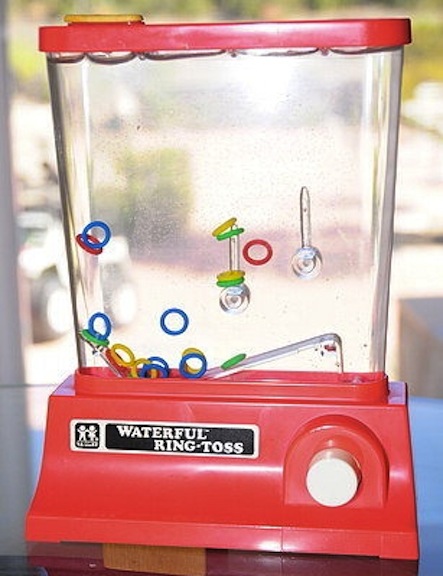
Or finding one of these things in the back corner of your closet.
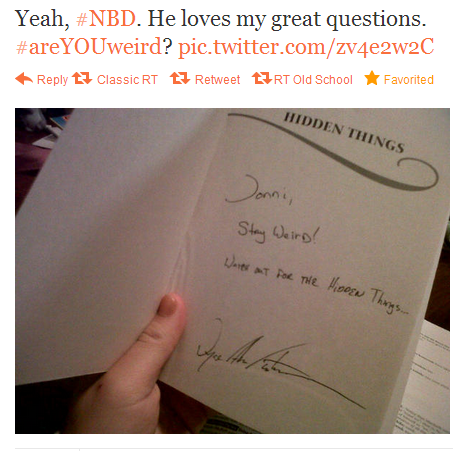
And then there were the kids. Holy crap, the kids were awesome. I’m sure I’ve done many things in my life that were more fun than talking with two groups of high school seniors about to graduate from my old high school, but it easily tops the list of Hidden Things-related events I’ve gotten to do.
So I talked about writing. About where ideas come from. About my first few years doing NaNoWriMo. About bad guys I’d covertly named Shit-Eater. About the inspiration that comes from living in a place so harsh and simultaneously amazing.
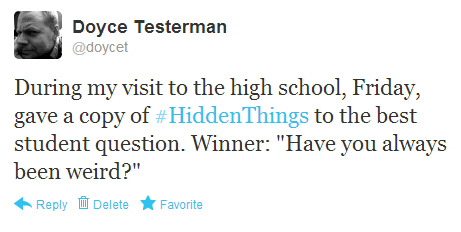
I answered a lot of questions — easily the best questions I’ve been asked in a long while. Funny questions. Serious questions. Tough questions.
Best of all, questions that didn’t worry about whether or not they were too mean or too hard or too silly — questions that wanted nothing more than an honest answer.
I wish I could remember them all, and what I said. I tried to be as honest as they deserved.
I had a great time.
I did. The teacher did. I had no idea if the seniors did.
I mean, I hoped. I thought maybe the answer was yes, but I didn’t know.
Until the next day, their teacher emailed me.
Of the twenty kids I talked to, five wanted to try writing a book. Right now. Wanted pointers. Had her send along their contact information and one more big question:
“What’s the deal with the NaNoWriMo thing? How do we do it?”
And just like that, I’m back to semi-terrifying territory again.
Is your reading group meeting to talk about Hidden Things? Are you just discussing it over coffee with a friend? Did you assign it to your Modern Lit class during a fit of whimsy? Then this reading guide (long promised, finally finished) might be for you!
… and that’s it! I don’t have much more to add to this little announcement, except to thank Edi for inadvertently giving me well over half the material for this guide. (Writers: treasure a reader who asks good questions!)
But THIS time, I actually got in with the cool kids and finagled a sit-down with Chuck to talk about his work in advance, so I could could share it with you guys in a vaguely timely fashion.
Without further ado, let’s talk…
First off, the most important question: Explain the disgust and/or horror you feel when faced with Goodnight, Moon. I’m genuinely curious, because I’ve read it to my kids so many times I have it memorized like a 1st level Basic DnD Sleep spell.
It’s like a David Lynch bedtime story. It’s kind of eerily one-note with the primary colors mixed with the black-and-white, and the bunny has empty eyes and the old lady bunny has empty eyes and there’s a moon outside and a moon on the wall and creepy bears and then there’s, like, a bowl full of gruel? And then we’re saying goodnight to it? And goodnight to nothing? And goodnight to the spooky old bunny broad who keeps whispering for us to shut up? Man. It gives me this eerie Eraserhead vibe every time.
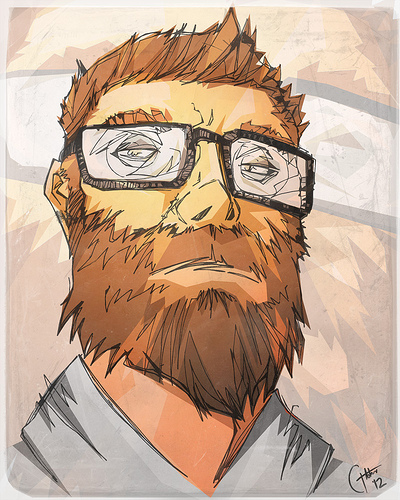
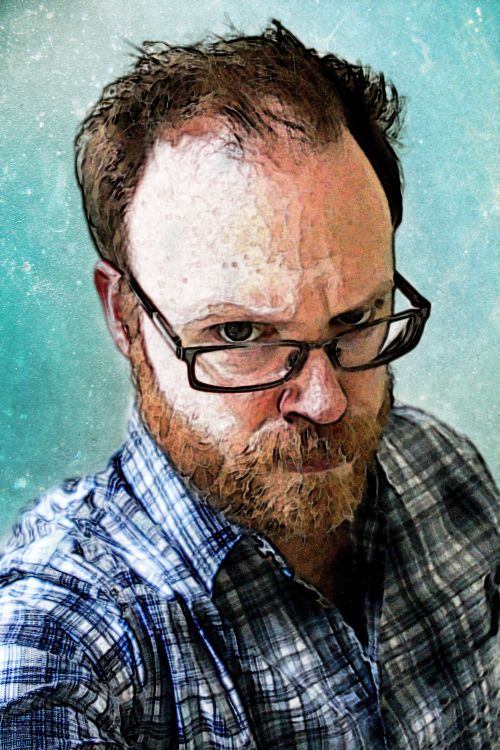
Portrait of the artist. (Moon: waxing gibbous.)
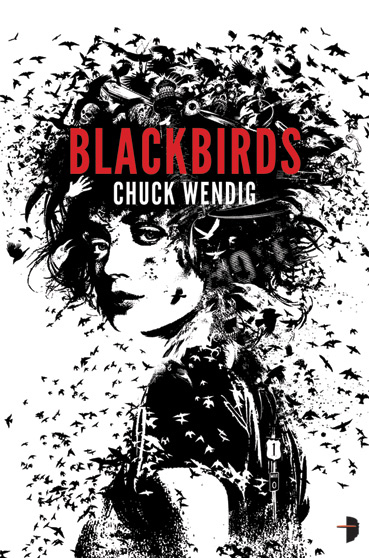
So what’s Blackbirds: Horror story? Urban fantasy? Science Fiction? Paranormal road trip? No one seems to know where it fits, and probably that’s a good thing, but how did you think of it in terms of genre when you were writing it? Was there a point where you just said, a la Miriam Black, “fuck it; it is what it is.”
I never knew. Even when I was writing the query letter, I thought, “I don’t know what to call this.” Which is against all the advice they give you, right? It needs to fit in a nice box, a thin slot, it needs to have a clear label in legible handwriting stuck over the whole thing.
Now, when I look at it, I think of it as “horror.” It’s labeled and shelved as “urban fantasy,” but to me, it’s horror. Though, I saw someone call it “noirror,” which I like.
You grew up in the eastern U.S. and live, as you put it, in Pennsyltucky, all of which I can’t help but notice is the basic geographical stomping grounds for Blackbirds. Many of the locations in the book gave me the sense I could probably look the names up and drive there, especially the [spoiler] with the [spoiler] near the end. Are there any locations from the book that you visited and said “Oh, yeah, this needs to go into a story,” even before Blackbirds made it onto paper?
Yeah, Blackbirdshops around a bit — mostly between North Carolina and Pennsylvania, not coincidentally both places I’ve lived. For me it wasn’t so much about traveling to locations and having them scream to be included, it was more that, during the writing, my brain wandered to these places, like they’d been pinpointed on a secret map that was then rolled up and tucked away into one of my skull-cave’s many cubbyholes.
These were, for lack of a better term, “Miriam places.”
I feel bad for Miriam, because she gets hammered with death — all around her, all the time — it makes her a very vivid character (and sympathetic, despite not always being totally likable). As a writer, how did you come to find out about Miriam? Did you start at her origin story (for lack of better term), or with “this woman knows how anyone she touches is going to die” and work backward from there, or something else?
I started with the power, but not just that — it was about the shame and guilt and tragedy of that power. And all that ties into our own relationship with death which is that it remains ineluctable and uncontrollable. In a twisted sense, many of my characters are (often inadvertently) power fantasies: Miriam’s is tragic and horrible and soaked in blood but — but! — just the same, she finds that she has a way, however distant, however terrible, to control fate. A power that none of us really have, not in terms of staying the Reaper’s scythe.
There’s a couple scenes in Blackbirds that make me tell people “You should read this book! Except maybe skip this part…” Without tossing in too many spoilers, where there any bits in there that creeped you out when you were in the middle of them, or are you the black-hearted, soulless machine that everyone seems to suspect?
The gory bits don’t bother me. Not in a deep and emotional way — I’m sure, I squick out and shift in my seat as I think of a particularly wretched scene. For me it’s about a deeper kind of horror. Like, there’s a scene where a little kid dies, and that got me then and, now that I have a kid, it gets me ten times as much. It’s such a sad and, I think, telling scene that it really gets me. I tried to tell the story and talk around it without getting into the gory details, but that almost made it worse — like, painting with shadow reveals a much more sinister picture since our imaginations are left to do the rest.
And the imagination of the audience is far worse than anything the writer could come up with. Because the audience puts into place their own most intimate fears.
Your website, terribleminds.com, has justifiably become well-known as a good spot to get no-nonsense, no-bullshit writing advice, and you’ve published several books of writing advice in that same style. Many readers love them, some hate them, but what do you think of them? Were they harder or easier to write than fiction like Blackbirds or Irregular Creatures? Bonus Question: How often is your daily dose of writing advice inspired by a screw-up that you just made it through with your own work?
What do I think of them? I don’t really know. It’s me yelling at me, a lot of the time — as you note, it’s often a response of me coming up against my own shortcomings or exposing some vulnerability in my writing or the industry as a whole. It’s all personal, even when it doesn’t seem to be.
It’s not difficult to write; it all flows naturally. That said, it’s a bit of a time-sink to keep up the blog with the five-days-a-week schedule. I think it’s worth it, but some days, it’s hard to say.
The fiction is always harder to write, but ultimately, more satisfying.
Speaking of Blackbirds and Irregular Creatures, what’s your preference; if you could make the same living either way, would you rather write novels or short stories?
Novels. Hands-down, any day of the week. I love short stories, I do, but novels have oxygen and fat and room to move. I feel like the stories I want to tell fit into that form better than short stories.
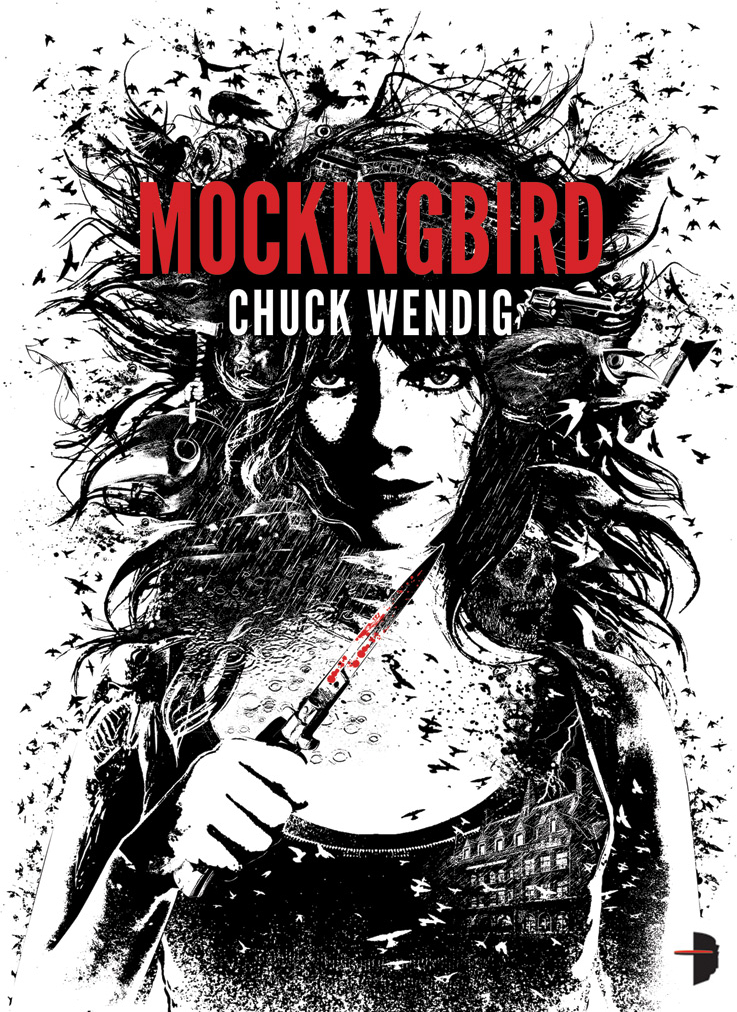
Mockingbird, the Blackbirds sequel, is coming out in a heartbeat or two today. Had you always seen Miriam as someone a series of stories could/would be built around, even before you got through Blackbirds, or did it become more obvious as you got to know her and see what there was to work with? Bonus round: do you see Miriam’s personal development in the second book progressing in parallel to the evolution of her power, or more of an inverse? Does great power come with a great shitty pile of stress, in the world of Blackbirds?
Miriam was like Schroedinger’s Cat for me in terms of a character — she was both alive and dead (as a series character) at the same time. If Blackbirds did well, hey, on she goes. If not, well, maybe she’ll just live inside my head. As such, Blackbirds works as a standalone novel but now, thankfully, doesn’t have to. And I’m at the point where I’ve got six or seven books in me at least — if a publisher wants ’em, I’m happy to have that relationship. If not, I’m just as happy writing them on my own and putting them out into the world.
As to the new book and Miriam’s development — it’s tricky, because you want to hit those bases, you want to grow her powers and deepen the mythology but not at the cost of character. For her, I think, as her powers grow, it’s key for Miriam to define and redefine her place in her own world and the world at large. We learned in the last book what she can do to sway fate, and this book is about whether or not she can fully embrace that role.
There’s a lot of family history with Miriam that still looms in the background by the end of Blackbirds. How much does that move towards center stage in the new book?
We see a little more of Miriam’s family — but I’ll go on record now as saying that her powers and her place are not some family legacy, not some secret supernatural bloodline. Trauma begets trauma and sometimes that trauma leaves some very clear — and in this case, very psychically active — fissures in one’s persona. Her family helped to make Miriam who she is as a character, but not as a psychic individual.
Just the same, family is a big thing for her — and will become doubly so in the third book, The Cormorant.
And that’s where I think we ought to leave it. You can check out Chuck at terribleminds.com, or on twitter.
Also, if you don’t already have it winging your way thanks to a preorder, MOCKINGBIRD is out today on Amazon, B&N, and Indiebound. Check it out!
As most of you are aware, the Hidden Things ARC has been out for awhile, and the book has been earning reviews from many legitimate, intelligent people and institutions, including the Library Journal, Kirkus Reviews, and a number of independent reviewers with good reputations. The most recent review that came in is by Bill Capossere at FantasyLiterature.com; I like it especially because it is a truly nuanced evaluation of the book — he doesn’t think it’s perfect, and his critiques are fair and make total sense to me — and despite a hitch here and there, he gives it a solid 4 out of 5 stars and recommends it to his readers.
Now I’ll be honest: with all the reviews popping up on independent sites and on Goodreads (a site I’m still trying to get a handle on), I hadn’t paid much attention to Amazon. After all, these reviews have been coming from ARCs, prior to release, so there’s only been a two- or three-day window in which regular readers could post anything there.
Hidden Things has a single review on Amazon, right now. It’s four stars, and it’s from a “professional reviewer” who works the new release pages of Amazon. That’s a nice way of saying they basically shill for whatever books get dropped on their desk for review.
And I use the term ‘review’ advisedly — you can tell they didn’t actually read the book — it’s pretty much just a reprint of the back cover copy. I don’t know why this person reviewed Hidden Things — I certainly didn’t ask them too, and I very much doubt the professionals I’ve been working with at HarperCollins would do so.
I said before that Hidden Things has earned reviews; I chose that word very specifically, because that is what I feel has happened, up to this point. The story has to immediately grab a potential reader, get them to stick around, reward them and encourage them as they read, and finish with the reader — if not crying tears of joy — at least satisfied that it was time well spent.
The five-star reviews. The two-star reviews. I have seen them all, read them all, and every single one of them has taught me something about Hidden Things that I didn’t know.
Except that one on Amazon.
Guys, I need your help.
If you’ve read Hidden Things, be it the ARC or the just-released book, go on Amazon and review it. Tell people what you thought. Be honest. I don’t care how many stars you tick off, or what you say, as long as what you say is the truth that’s in your head, and in your heart.
Like the title says, today (well, at 7pm central) I will be on Reddit answering All The Things during an AMA or “Ask Me Anything.”
The basic idea is quite simple. I make a post to start things off, the ENTIRE INTERNET shows up and asks me stuff, and this evening I answer their questions.
If you have a Reddit account, I’d encourage you to drop in and ask something (because five random questioners will win a copy of Hidden Things).
If you do not have a Reddit account, I’d encourage you to make one and then drop in and ask something (because five random questioners will win a copy of Hidden Things).
So: possibility of free stuff for the low low price of bugging me on the internet. WHERE IS THE DOWNSIDE?
My interview with Chuck Wendig is up at Terribleminds, and as part of that interview, he asked me for a story “as long or as short as you like.”
Mine ran kind of long. Ahem. (It’s not my fault! He said!)
ANYWAY, in order to prevent reader attention from drifting down the Waverly River, Chuck and I agreed that I’d host the whole story here, so he could focus on the more interview-type stuff.
I never thought of Hidden Things as urban fantasy (which is the way it’s often characterized) because ‘urban’ doesn’t really come into it very much, and it didn’t seem to have any of the trappings I typically associated with the genre. Vampires, sexy or otherwise, are nowhere to be seen; neither are werewolves. Ditto Chosen Ones, surly street wizards, or talking animal companions. There is magic, to be sure, but no spellbooks. Tattoos don’t factor in any significant way, and everyone’s is hair a reasonable, manageable length, and generally the right color.
My inspirations came from other areas: Hammett’s stories of Sam Spade and Continental Op gave me a frame of reference for early parts of the story, and the style and pacing of pulp science fiction and fantasy writers like Roger Zelazny have imprinted themselves on me so deeply I probably have Doorways in the Sand encoded somewhere in my DNA. Neil Gaiman’s light touch with the supernatural is something I’ve always loved, as well as Stephen King’s gift for characterization.
If you are at all on the fence about picking up the story, I suggest checking it out.
Hidden Things is out today! Here are the latest reviews (that I know of — if you spot one I missed, let me know). Let’s see what people are saying…
Kirkus Reviews, notorious purveyors of the cutting one-liner, gave the book a pretty terrific review, calling it “agreeably creepy” (which makes me smile) and Calliope a “clever, determined, dauntless protagonist.”
Though not exactly a review, the Library Journal gave Hidden Things a great shout-out in their “Hungry for SF” Genre Spotlight.
Reminiscent of Neil Gaiman’s dark fantasies and the early books of Stephen King, Doyce Testerman’s fantasy debut Hidden Things (Harper Voyager, Aug.) follows a young woman as she embarks on a surreal cross-country road trip after receiving a phone call from her dead business partner and former lover. This exploration into the supernatural places that lie hidden in the American heartland was a pick of “Books for Dudes” columnist Douglas Lord at the Fourth Annual Librarian Shout & Share program at June’s BookExpo America conference.
My Bookish Ways (really gorgeous website, by the way) put up a very touching review of the ARC. The reviewer says lots of nice things, none of which I’m (quite) shameless enough to repeat verbatim, but that doesn’t mean you shouldn’t go and read it.
Finally, if you just can’t get enough of these reviews (or want to write one of your own), Goodreads provides, with reviews ranging from five-stars down to no-stars-did-not-finish. (Hey, you can’t please everyone.)
My favorite reviews?
The ones that say “I want to know more; when’s the sequel?!”