Before I get into this, I need to lay out a couple concepts that I’m referencing here.
Concept One: The Long Tail
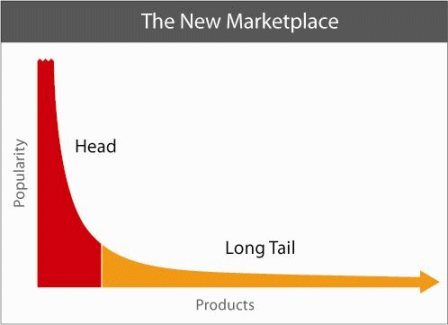
 “The Long Tail” describes the “niche” strategy of businesses like Amazon.com or Netflix which can be expressed – in my own words – as “sell many different products, in relatively small quantity, per product”. This is different from traditional business models, where the basic idea is “sell a large quantity of only a few things.” Traditional publishing is built on – no surprise – a traditional model; so much so that only 5% of all published authors account for 95% of the profit in publishing today.
Conversely, the way companies like Amazon and Netflix work allows them to profit by selling small volumes of ‘niche’ items across a broad customer base, instead of only selling large volumes of a few popular items. The group within that broad customer base that purchases a large number of “non-hit” items is the demographic that is also sometimes called the Long Tail.
This model acknowledges that the upper 20% of items listed for sale will account for most of the sales, but without negligible stocking and distribution costs, the other 80% of available products will still be profitable per unit sold and will, as a group, outsell that top 20%.
The main benefit to consumers is vastly increased product variety.
The main benefit to the distributor is that they can keep a much bigger ‘inventory’ of products in a particular niche, since warehousing isn’t such an issue, letting them outperform traditional competitors (example: Netflix can supply many titles that Blockbuster simply doesn’t offer in-store, because said title is not *already* popular).
The main (two) benefits to the independent author are:
- Those whose products could not — for economic reasons — find a place in pre-Internet information distribution channels can realize a burst of financially successful creativity that finds its audience. One example of this is YouTube, where quality artists within any number of disciplines have found success that they would never have gotten via traditional channels.
- The new ability to maintain a large ‘niche’ inventory without warehousing overhead means that the creator has time to find their audience via a new method of marketing that has only recently become viable, let alone profitable.
That new method of marketing is Concept Two.
Concept Two: First, Ten
 Seth Godin came up with this name and this concept, but in his own words “Three years from now, this advice will be so common as to be boring.”
The basic idea is this:
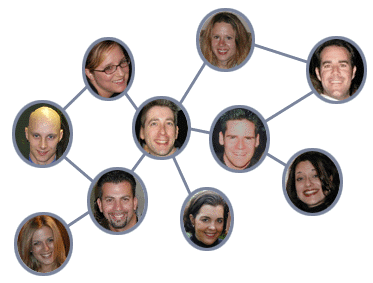
Find ten people who trust you/respect you/need you/listen to you…
Those ten people need what you have to sell, or want it. And if they love it, you win. If they love it, they’ll each find you ten more people (or a hundred or a thousand or, perhaps, just three). Repeat.
If they don’t love it, you need a new product. Start over.
As he points out, this approach changes everything, as compared to typical publishing. You don’t market to the anonymous masses. They’re not anonymous and they’re not masses. You market to people who are willing participants. The idea of a ‘launch’ and press releases and the big unveiling is a bad one. Instead, a gradual build turns into a swell turns into a wave.
(Seth is very smart – damn sight smarter than me. You should be reading his blog.)
So the basic idea is that (a) you have this Long Tail demographic you can market to, and you have the time to do so, because you don’t have to worry about running out of time and getting your book backlisted/discontinued — that’s just not an real concern anymore. You just need to Find Ten, over and over again. This includes things like:
- New Media Marketing: building and managing a presence on social networks and online or virtual communities. This is very low-frequency, low-intensity, and cost effective.
- Buzz: Basically word of mouth, the transmission of commercial information from person to person in an online or real-world environment. There was a statistic bounced around this year’s Technology of Change conference that 85% of book sales were thanks to word-of-mouth, 10% were thanks to the book cover, and everything else anyone did for marketing accounted for the final 5% of sales. Word of mouth is clearly pretty huge.
- Viral Marketing: Using preexisting social networks, with an emphasis of the casual, non-intentional and low cost.
Look at those three things: anything there strike you as something a publisher can do better than the author, plus perhaps their first “Ten” people?
((To be fair, there’s no reason at all this doesn’t apply to an author working in Traditional publishing as well. In that case, you want/need your Agent and Publishing Editor to be two of your First Ten, so that they can evangelize within the existing Trad Publishing networks that you-the-author could never reach. That’s obviously valuable, if the option is available to you.))
Now, ponder this: all this marketing theory stuff is not hypothetical. This is something already happening today in one of the publishing niches that has raced ahead of the mainstream publishing genres (fiction, non-fiction) by virtue of never having been part of mainstream publishing in the first place.
I’m speaking of roleplaying game publishing (which you might have guessed from the title of the post). Lemme ‘splain.
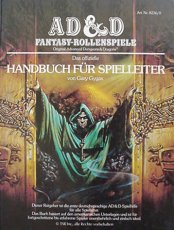 Back in the late 70s and early 80s, roleplaying games were on their first upswing and, since the primary product of the roleplaying gaming industry at the time was books, game developers looked, naturally, to the publishing industry for ideas on how to MAKE books – how to publish.
And let me tell you, those were some meticulous, geeky bastards back in the day; they figured out how publishing worked and in most cases they followed the traditional publishing model to the letter. Also, they usually aimed for the highest quality products they could (or, often, couldn’t) afford to produce. You should SEE some of the books they turned out – big, beautiful, heavily illustrated, hardbound, double-stitched – you could kill a caribou with the first (or second) edition of Advanced Dungeons and Dragons – don’t even get me started on the original Champions rulebook.
There was, of course, a problem. Roleplaying games are a niche market. Super-niche. The nicheiest. You could have one, probably two, MAYBE three or four product lines successfully pushed into this niche market using traditional publishing methods (each additional line taking a bite out of the success of the other lines) before the niche was full and anything that came after failed. Perhaps not right away, but they’d fail.
TSR (publishers of DnD) was even bought out, and all the others? There is one handful of gaming companies (full-time employing a double handful of people) that have survived from then to now. Meanwhile, the list of those that went under, trying to publish using traditional means, would fill a phone book.
Most people gave it up.
Then came the internet.
With the internet came mailing lists, usenet, and (eventually) forums that in some cases became places of collaboration and creation for that niche market. Some of the early products of that time (FUDGE, to name one) are still popular today, but the basic idea here is that this experience informed some game designers that their ideas had merit, and even an audience.
They just didn’t have any idea how to turn that idea into a PRODUCT without bankrupting themselves. First, the book publishing cost was prohibitive and Second: even if they found an affordable way to publish, how do you get your niche-within-a-niche idea out to the right people?
Then came Dungeons and Dragons 3rd edition, which did a remarkable thing by releasing their rules set as Open Source, basically allowing anyone legal permission to write adventures and source material for the game, and publish it however they like, with one simple caveat: “write it in such a way that the customer still needs our main rulebooks to play.”
Suddenly, the problem with “How do you get your work to the right audience” was gone (provided you wrote stuff for DnD – the biggest product line within Gaming, so not much of a hardship), which left hundreds of creators with only one problem to solve: how to get our work out to people without bankrupting ourselves.
More importantly, this was a group of people who never really associated themselves (mentally) with traditional publishing – they’re gamers, man – so there’s no stigma to the idea of self-publishing. Quite the contrary: in that niche market, self-publishing was the DREAM – a mix of “rock and roll” and “my god, I might actually make some money off this hobby I love!”
Now these were geeky, meticulous bastards (notice a theme?), and when faced with a problem like that, they worked the HELL out of it. By a glorious bit of serendipity, available technology on the internet was finally catching up to their needs at almost the same time: relatively affordable and good-quality print-on-demand, secure and user-friendly online ‘storefront’ software that let you sell electronic files easily. FREE services for acquiring legitimate ISBN numbers and getting listed on sites like Amazon, so that your new DnD module would show up in Amazon searches alongside products from the “big boys.”
Heady times.
When the wave of 3rd edition DnD publishing waned, what was left behind was all that knowledge, experience, creative forums, and the services to make publishing your own stuff possible.
 Which is exactly what people did. Today, there are HUNDREDS of products available to this roleplaying gaming niche, and no one ‘going out of business’. Sure, some stuff never sells (because it’s crap), but the good stuff rises – slowly, most of the time – to the top, and finds its target audience, who evangelize and market for those games without much help from the original creator at all, aside from their participation in the social networks surrounding that niche market.
Most of their sales come from:
- Building a presence on social networks and online or virtual communities (The Forge, Story-Games.com, RPG.net, Indie Press Revolution and dozens more, including (of course) Facebook and Twitter).
- Word of mouth, from one successful Actual Play report to the next.
Sound familiar?
Sounds like a real-world example of what people are theorizing indie publishing will look like.
Here’s the thing: indie publishing ALREADY works like the ‘theory’ posits: it’s just that only a small group has realized it so far.