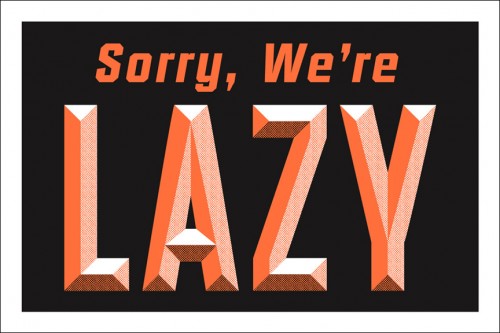
Okay not so much lazy as really busy recording the next two podcasts.
“Occasionally, there arises a writing situation where you see an alternative to what you are doing, a mad, wild gamble of a way for handling something, which may leave you looking stupid, ridiculous or brilliant – you just don’t know which. You can play it safe there, too, and proceed along the route you’d mapped out for yourself. Or you can trust your personal demon who delivered that crazy idea in the first place. Trust your demon.” — Roger Zelazny
No insightful (or inciteful) post today, guys, just the advice above and a request for some comments from you: what’s the craziest thing you’ve done so far to solve a problem that’s cropped up in your story? Please share – I love hearing stuff like that.
See, we actually get five weekends this November, and that’s like a whole extra week! Kinda. Sorta.
Okay, I don’t math.
But the point is still valid! Weekends are incredibly useful for NaNoWriMo — most of us didn’t get to take the month off just to write, so for a lot of folks this is our opportunity to catch-up, relax, or even get ahead in anticipation of the crappy schedule NEXT week. It’s when we can really buckle down, close all the doors, shut the world out, and write.
In this, our third weekend of NaNoWriMo, I want to make a suggestion:
Do not just close all the doors, shut the world out, and write.
Most of us have People of Significance in our lives (I’m not only talking about Significant Others, although they’re a subset of this group.); spouses, children, close family, close friends, bowling buddies, whatever. They’re out there. Most of them know you’re doing this NaNoWriMo thing. Some of them are actively helping you find the time to get your writing done (deflecting noisy children, doing the dishes alone, taking everyone out of the house on three-hour excursions), but even if they aren’t THAT active as a NaNo-supporter, they’re probably cutting you a lot of slack this month: not bugging you about unreturned phone calls and emails, letting you off the hook for poker night, not punching you in the junk when EVERY SINGLE CONVERSATION ends up being about the story you’re writing.
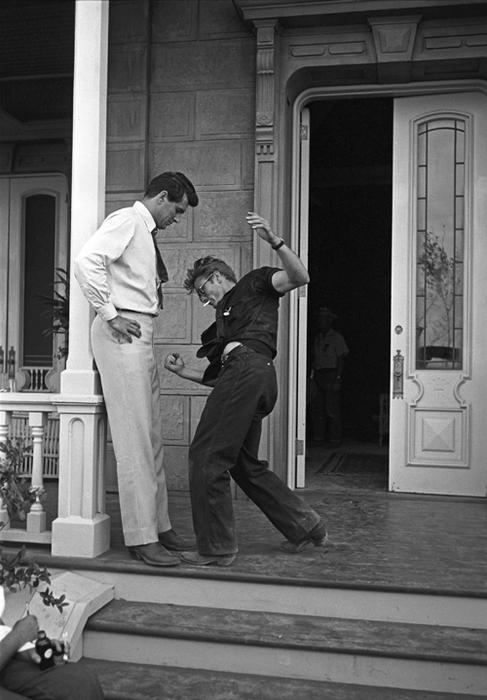
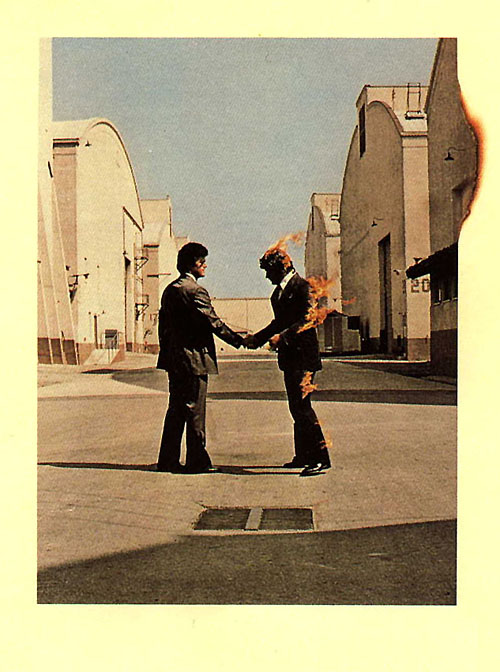
And here's what I think of your struggle with First Person, Present Tense...
One year, I decided to do NaNoWriMo without any support at all. I told NO ONE I was doing it. That was my third run through on a NaNoWriMo project so I had some data for comparison, and let me tell you — the stuff our friends and family do for us is huge. HUGE.
Don’t make them fucking regret it, people.
This weekend, you’ve got a new task: get your writing done, yes, but also open up the door to your writing space, step out, and do some stuff with or for the people who are cheering you on through this thing. Here’s a few nice things that don’t eat up an entire day and which can actually be a good thing for YOU, too.
Do the dishes. Unasked. Do it during one of those stretches when everyone got out of the house to give you some writing time, and THEN go write. It won’t take that long.
Go for a bike ride, or just a good walk. They don’t take that long and the views will give you ideas.
Drive out to the airport and watch the planes take off and land, or go to a lake and watch the boats. Bring some snacks.
Cloud watch.
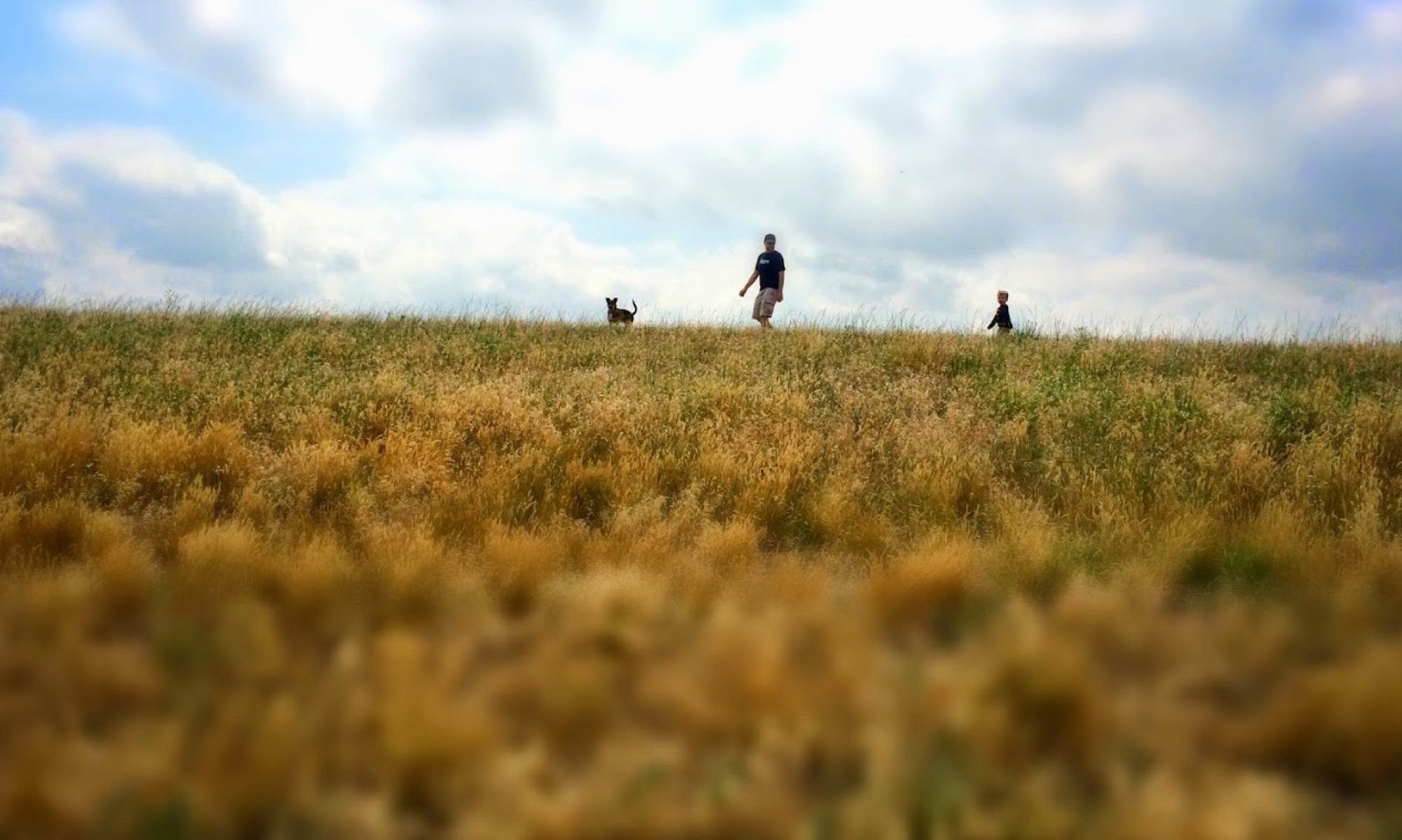
Go to a park (combines well with cloud watching). Maybe take a frisbee. (Can you tell it’s warm out here in Denver?)
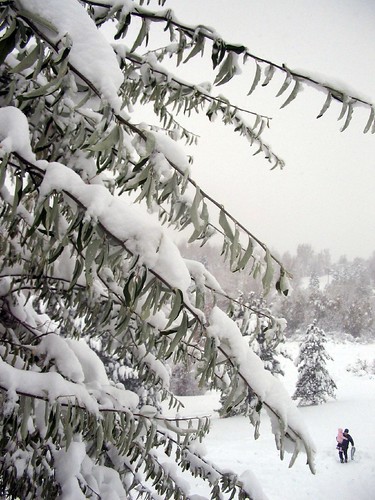
If it’s not warm where you are, go sledding. They’ll get cold soon enough, this won’t take that long.
Miniature Golf. Mini-golf is awesome.
Play some Happy Birthday, Robot! (If you aren’t sufficiently nerdcore to own fudge dice, just use regular dice and consider 1 and 2 to be -, 3 and 4 to be ‘blank’, and 5 and 6 to be +.)
Buy them a little present. Little. Not big. Grab a cute bookmark at one of the Tattered Cover write-ins. Something to show you appreciate them. Doesn’t have to be much of anything.
I’m sure you have some other ideas. Post em in the comments.
Finally, make sure this time is not just “Time”; make it Quality Time.
By that, I mean: Don’t Multitask. If you’re writing, Write. If you’re Doing Something with Them, then DO ONLY THAT. Don’t mix the two. Don’t. Fucking Don’t; I’m serious.
(More on that some other post.)
For now, that’s it.
Get back to work.
Have fun.
… and go do something with the people cheering you on. They deserve it.
Totally. Worth it.
(This post is dedicated to Kate, Kaylee, Dave, Margie, Tim, Randy, Chris, and everyone else who puts up with this crap all the time. You guys are my heroes.)
Not you, the one who’s a little behind you wordcount. You’re fine. Get back to work.
Not you, the one who writes exactly 1,667 words every day, and then stops. You’re… well, you’re not fine, but you’re beyond my help.
And not you two over in the corner, who write a little extra most days, and then maybe a little less other days cuz you can afford to, and then make it up.
I’m worried about you, over there: the one who’s at 31,000 words already, breathless and bloodshot. We need to talk.
(Take all the following with a grain of salt, guys: everyone writes differently, and everyone’s daily productivity is different, blah blah blah, we’re all unique snowflakes, et cetera. Also, this post is probably coming a little earlier than it needs to, and that’s fine — I’d rather talk about this now and have it be early than next week and have it be late.)
I’m worried you’re going to burn out or, worse, physically damage yourself (Repetitive Stress, et cetera) by just doing the same thing too much every day. I’ve been there, quite by accident, and it ain’t a fun place.
You need to pace yourselves.
A lot of folks who are doing NaNoWriMo don’t do a ton of writing the rest of the year. Cool. Fine. Nothing wrong with that. November becomes a special time — an event — you get to ignore other stuff in favor of writing, instead of the other way around (which is how it normally goes), and that’s some heady stuff.
As a result of this decadent blank check of writing prioritization, some folks go a little crazy. They churn 6000 words out day after day, cackling gleefully. After the first week, the cackles get a little less gleeful and a little more maniacal. In week three, the cackles get a little raspy – a little plague-stricken; also, those folks start rubbing their wrists a lot and taking handfuls of aspirin. Week 4? Week 4 ain’t pretty.
Don’t let this happen to you.
Listen, some of you out there can do that level of production every day with no ill-effects. You’ll have you’re fifty thousand words sometime Monday, and you’ll probably hit 113k by the end of the month. I’m not talking you.
(Seriously: I’m not talking to you, like, ever, because I both hate and fear you. We will not let the machines win.)
Most people can’t do that. Even if they can, they shouldn’t. Let’s take a look at Stephen King for a few seconds. Love him or hate him, no one can argue that the guy isn’t a productive and prolific writer1; he’s basically turned out at least one book every single year since he was about 20 or so, and he’s somewhere in his mid-60s now. The big secret to his productivity is pretty simple: write 2000 words, every single day. On Christmas. On Sundays. Whatever.
The astute reader will notice that’s pretty much what you’ve got to do to finish NaNoWriMo. The very astute reader will note that King’s been doing that pretty much non-stop2 for 40 years without burning out.3. A bit of word-math let’s us deduce that if he can maintain that pace for 40 years, we should be able to sustain that pace for a month, assuming we have something to say. (And the going wisdom says that everyone has at least one book’s worth of something to say inside of them, so you’ve got that advantage.)
What you don’t hear about are guys who write 3 times as much as King every single day for 40 years. Those that tried to maintain something like that either came to their senses or don’t write anymore, for any number of progressively depressing reasons.
So cool your jets. You want to enjoy yourself throughout the project, and that means not blasting away so hard that you burn out too early.
Ultimately, some of you may want to turn this into a Real Thing. A thing you do all the time. A lifetime pursuit and perhaps even profession. For that, you need to establish realistic, sustainable writing habits, and I’m sorry: your wrists might be young and supple now, but they won’t stay that way – six thousand words a day ain’t sustainable.
The guy on the right has written 1500 words while you read this post.
Here’s a few telltales to see if the stress of NaNoWriMo (which is normal) is turning into Burnout (which isn’t).
(*unlimbers some very dusty html table-making skills*)
Stress
Burnout
Over-engaged
Disengaged
Emotions are overreactive
Emotions are blunted
Urgency and hyperactivity
Helplessness and hopelessness
Loss of energy
Loss of motivation and hope
May kill you prematurely4
May make life seem not worth living
Sorry for the downer points, but it’s kind of important, you know? NaNoWriMo’s supposed to be fun, and sometimes it ends up being the very opposite of that.
Solution: Burnout Prevention
Start the day with something relaxing. Spend a couple minutes doing some easy yoga or stretches (BACK Rx is on it’s way to me as I write this), writing something not-the-story longhand in a journal, or just reading a book you really like.
Stick to healthy eating, exercising, and sleeping habits. As much you might want to, this is NOT the month to let yourself stay up til 2 am every night or to switch to your all-chicken-skin diet. You WILL be pulling some late nights, and you will be munching on some crap like halloween candy and ohmygodyumturkey, but don’t make it a daily habit, and try to get plenty of rest and some regular physical activity to make up for it. Take short naps.
Set boundaries. Don’t overextend. Don’t agree to do more stuff than you can legitimately do. (But also: DON’T just leave your family and friends hanging in the wind all month – that’s a dick move about which I will write more another day.) Seriously, though: no new commitments on top of this one: learn to say no.
Set a time each day when you completely disconnect. Put away your laptop, turn off your phone, and stop checking email. Doesn’t have to be a long time, but you should do it.
Try to do something every week as a fun thing that has nothing to do with the project.
That’s about it. I’m not a genius about this stuff (said the guy trying to learn how to podcast at the same time as write this month), so if you have any good tips for avoiding stress and burnout, let’s hear it in the comments.
1 – I, like Neil Gaiman, think he’s one of the finest living American writers; possibly one of the finest living or dead. Only time will tell. 2 – Except for when he got hit by the truck. That put a dent in his writing for awhile. 3 – No, the alcoholism and mid-80s coke habit don’t count as burnout – just stupid. 4 – But not in just one month. Chill out.
So, once again, I’m starting off with a Twitter quote:
@barelyknit: Do I make myself finish just so I can say I did? Is that what #NaNoWriMo is about? ‘Cause I am NOT LOVING this novel.
@doycet: Pushing past the not-loving is one thing NaNoWriMo makes happen. The not loving thing happens every single time at some point.
@barelyknit: Good to know. This is my first larger project, so I’m not used to going on despite the apathy.
Now, I’m not posting this to pick on Jennifer. At all. She is not the only one thinking this.
People keep leaving comments (yay!) and twitter DMs (woot) about how I must be wired right into the NaNoWriMo GroupBrain, because I just seem to know exactly what’s about to happen to their nano project, day by day. Fact is, I’m just writing advice for whatever thing I happen to be having a problem with that day, because… surprise surprise… I am not a unique snowflake. None of us are. These problems are everyone’s problems, and if I have some insight into them, or Jennifer happens to mention out loud what lots of people are thinking, that is why.
I write about it cuz I’ve worked through these projects mumblety-times before. That’s it. I don’t always see it coming, but I always recognize it when it gets here, and I kinda-sorta remember how to deal with it.
Now then, bit of background: in my dayjob, I teach things to people – mostly, to adult people. That’s the simplified summary of it, anyway – it involves project management, and regular management, and online course development, and classroom course development, and a metric buttload of writing, as well as doing that actual thing that people think of when they think of ‘teaching’.
There’s a key thing to understand about learning: at some point, with anything that you’re learning how to do, you have to… you know… do it.
The first ugly fact about writing a full-length … well, anything … is that it’s a fuckton of work. The first draft isn’t even most of it; that’s like a decifuckton. A portion, is what I’m saying, but still a lot.
The second ugly fact about writing a full-length anything is that you don’t know if you can do it til you do it. That’s part of what NaNoWriMo is about — giving you a relatively fun way to determine if you can do it (and lots of company if you find out you can’t, yet).
The third ugly fact is that there is stuff you will NEVER learn about writing until you actually sit down and try to write the thing that you want to learn to write. That’s really the other thing that I think NaNoWriMo is good for… it let’s you take that final step in learning how to write a novel by writing a novel. In the end it’s the only damn thing you can do to really learn how, and one of problems that the process teaches you about is how to deal with not always liking your story.
So let’s talk about not liking your story.
This will actually happen a couple times per project, probably. If you’re lucky, you’ll just have one instance of it, but if so, it might go on a few days. There are (at least) Two Things you can do to deal with this. Note: these are not different options you select from — do both of these things.
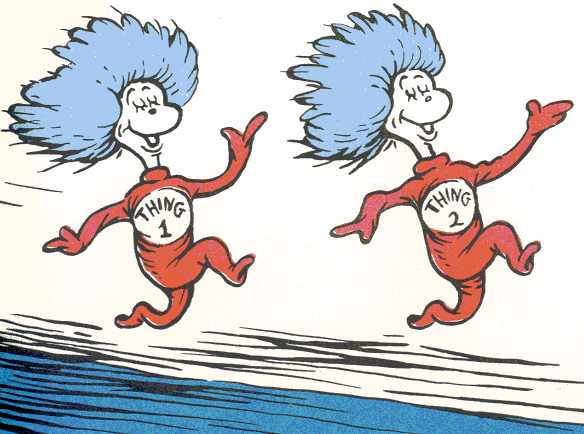
Thing 1
Close your eyes and think of NaNoWriMo.
So you’re not happy with the stuff going on right now? Sorry, but that’s tough. You’ve got a story to deliver, and sometimes you just have to soldier through.
Simple truth: some days, the words just come hard.12 Sometimes they’re hard because you’re not really loving the scene, or it’s just very tricky, or you suck at action sequences, or whatever.
This is one of those moments that defines. This is the thing that culls people from the herd before they get to the finish line, and there isn’t a better way to put it; if you want to finish your novel(la) length story, you learn to power through the days where you aren’t loving your work. Not the work – YOUR work, specifically.
If this seems like a NaNoWriMo thing, I have to tell you, it isn’t; this is a writing thing. NaNoWriMo may seem silly to some, but it does teach us – via the experience – to write long stuff, and this is one of the lessons: Sometimes, you gotta write anyway.
Thing 2
Try to leave out the part that readers tend to skip. – Elmore Leonard
Stop and ask yourself: “Why don’t I like what I’m writing? Why is this not working for me?” That’s an important question, because if the author doesn’t like it, who the hell else is going to?3
Are you over-describing stuff? Stop. Switch to nothing but dialog for awhile. If you’re protag doesn’t have anyone to talk to, FIX THAT RIGHT NOW.
Is the scene boring you? Drop it and skip to the next. Flag it with a [finish this later] and move on.
Do you not care about the character? Get them in some conversations with other characters, so you can find something to like (or find out that you’re writing about the wrong person as the protagonist).
Are you hung up on how to get through the current scene, but you’re writing a solution anyway? STOP. Go write some other scene — that reluctance is your brain telling you that you’re writing something stupid and that it will give you something not-stupid LATER.
If all else fails, attack the scene with genre-appropriate ninjas. I am totally not kidding.
Bottom line: your lack of enthusiasm might be your brain telling you “Dude, I would skip this bit if it were in a book I was reading.” So skip it. If you need it, skip it and come back.
Let me give you an example.
Earlier this week, I was working on Adrift, and I got stuck. I’d written my characters into a bit of a corner, and I just… I didn’t know how to get them out of it. I wrote about 400 words that day, most of which involved the characters looking at each other, scratching their heads and saying “Well, fucked if *I* know.”
So I went and wrote something else. My main character (Finnras) is a dad, trying to find his daughter, so I went and wrote out one of the bedtime stories that he used to tell his daughter when she was a little girl and Everything Was Good. That was my writing for the next day, and it was good: one of those rare 3000+ days on word count.
And when I was done?
When I was done, the characters I’d left back in that nasty corner had figured a way out.
Thing #2 is a really good trick, by the way. I highly recommend keeping that particular tool handy.
So, to sum up:
You don’t like the story right now.
Above all, keep writing.
Find out what’s making you not like it, and either stop it, fix it, or leave it be and write a different bit.
That’s it. Get back to work.
Have fun.
These Things are good Things.
1 – Actually, for me, the words rarely just fly onto the screen in mighty 5000 word clumps — it just doesn’t happen that often; maybe a half-dozen times in as many years. Maybe. I almost never get ‘ahead’ on my daily wordcount, because the daily deliverable is what gets my ass in the chair, and that habit is far more valuable than a 6000 word day. But I digress.)
2 – You totally thought I was going to make a ‘come hard’ joke, didn’t you? Perv.
3 – The answer to that is somewhat dependent on how many revisions the author has done. Finishing revisions sometimes leaves me with a very strong desire to never ever ever ever see that particular work again. Ever.
Me: Guys, can we move things along? Characters: We are. Me: But, the outline… Characters: Shush. Grown-ups are talking.
I had forgotten about this part of the project.
See, I’ve been doing revisions for quite awhile. Revisions are nightmarish and purgatory-like, but in some important ways they’re very comforting, because you’re working on a project where you and the characters are old friends. They probably aren’t going to do anything TOO crazy and unexpected. Also? They probably don’t hate you.
The first draft characters? It’s not like that. They wander off. They don’t go where you want. They won’t SHUT. UP. And they think your outline is an adorable list of suggestions. They definitely don’t trust you yet. You’re a week into the project, and you know in your head where you want to go, but the story just doesn’t seem to be going that way. If you’re working from an outline, you haven’t seen anything that resembles a point on the outline for the last four days.
So how do you deal with these characters?
I’m going to suggest you give them their heads for awhile.
Let me tell you a quick story.
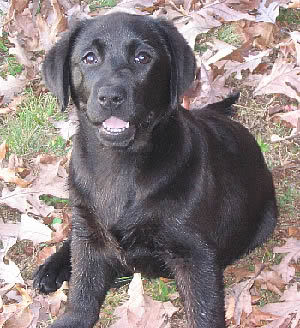
My granddad got a hunting dog pup. Good dog, but damn he was hyper. If you took him out for a hunt around the end of the day, he was all right, but in the morning? Forget about it. My granddad hunted for most of his life, and he understood animals and people (and stories, but that’s a post for another day), so this is what he did.
Every day – usually before I was even awake – he drove out to this stretch of gravel road between his house and ours. He’d let the dog out and lead him down into the ditch. He got him to sit still, walked back up to the truck, got in, rolled down the window, put the truck in gear, hollered “Come on!”, and hit the gas.
About a mile later – sometimes more, depending on how hyper the puppy had been acting that morning – he’d slow down, stop, get out, and walk around to the back of the truck.
The dog would be standing right there, panting, with his big, dumb, dog smile plastered over his face.
My granddad bent down (which took awhile, on some mornings), looked the dog in the face, and said “You ready to listen?”
What was that you said about a plotline? That sounded good.
That. Right there. You do that.
Your characters are hyper. They’re just fucking thrilled to be in a story and living and breathing and just doing stuff.
Let ’em run it out.
Once they’ve got it out of their system (it’s coming up soon — probably today or tomorrow), get back in there and take the reins back.
Just so we’re clear about what I’m saying, let me put it in clear points.
Your characters aren’t listening to your grand plans. Don’t panic.
Let them run. Stay with them, so they don’t run off somewhere completely horrible, or get badly hurt, but let them run.
When they bleed off that wild edge, step back in and assert control.
Now, caveats.
With #1, it’s not okay if they’re not listening and not doing anything interesting. Screw that. Kick em in the ass and get em in line.
#3: This part is important. You are the author. You really are in charge, so get the fuck back in there and take charge. It’s just a quick run – not anarchy. We aren’t poets.
-=-
On Writing
That’s the end of this post, but I wanted to add a little postscript here that harkens back to one of the main tips of NaNoWriMo: “It’s okay if you write crap.” I’ve said similar things before, but I want to fine tune that statement a bit; include something I unconsciously add for myself, but don’t say aloud often enough.
“Write bad stuff, but as much as possible, don’t write it badly.”
I’ve seen some folks do these NaNoWriMo projects and… it’s like they saw “it’s okay to write crap” and thought it meant “it’s okay to forget everything you know about writing.”
Yes, it’s okay to have big, fat scenes with too much dialog and some unnecessarily long descriptions — you’re feeling your way in a new space; some of that exposition and over-description is for YOU, to find out what’s going on and to get to know the characters — you can write it now and chop it later.
But it’s not okay to ignore your tools. Solid sentence structure. Decent grammar. Spelling as good as you can do without actually running a spell checker. (That’s a treat to save for this coming Saturday.)
You have these tools. Treat them with respect. Use them well. That’s all.
Trying for a slightly cleaner delivery, despite the headset mic.
Pretty happy with how the story’s going, actually. Highly unlikely I’ll ‘finish’ it in November, though, so expect these through December at least.
What I should do is put this whole thing on hold until I finish writing the damn draft. That’s what everyone with any experience tells me to do, and probably what I’ll tell anyone else in three months time.
But for now, what I’m going to do is aim for a new ep going out on Tuesday and Thursday, probably recorded the weekend before. We’ll see how that goes.